


Listen to the article
EU–Western Balkans Media Literacy Conference Tackles Growing Disinformation Challenges
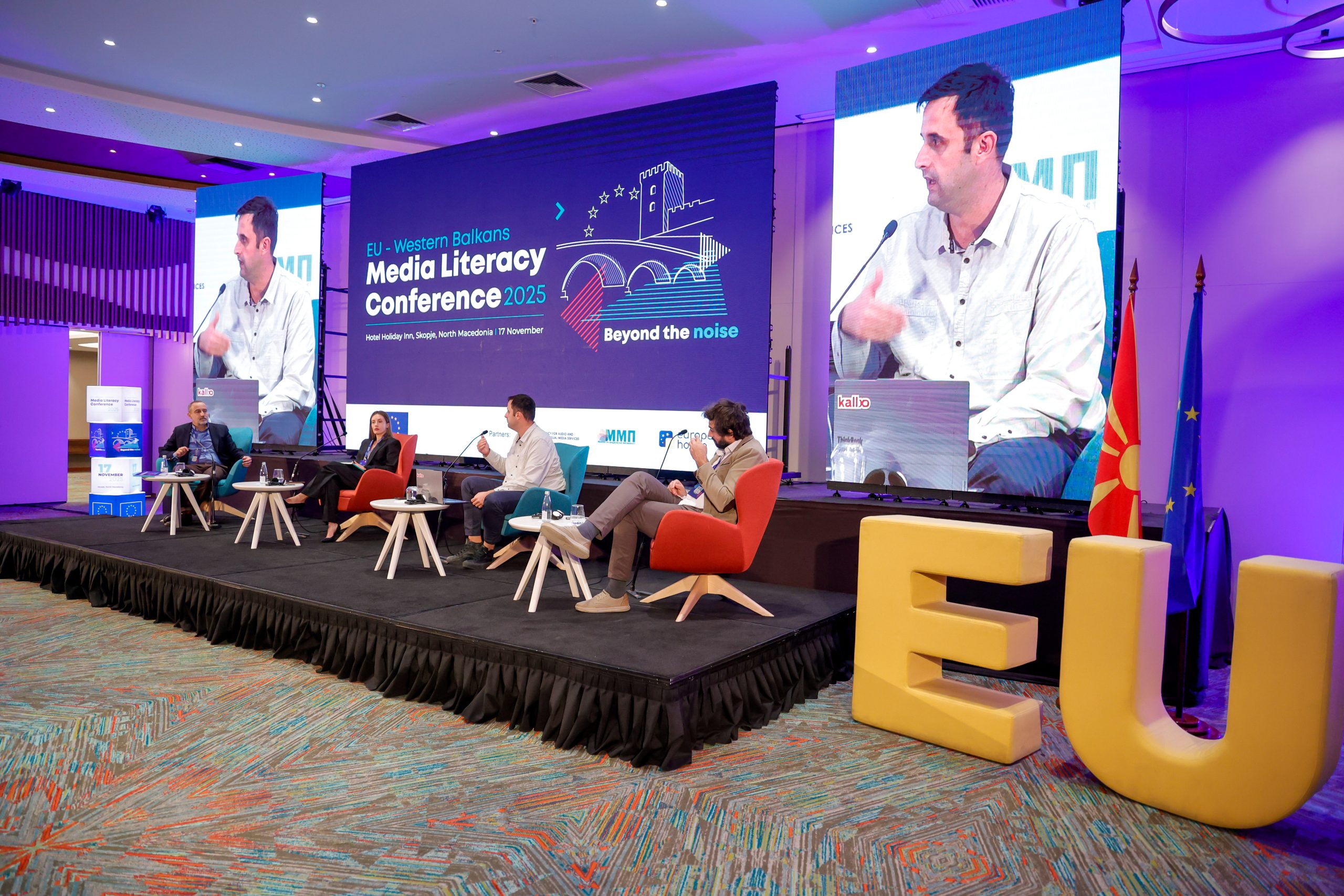
More than 150 participants from across the Western Balkans, European Union, and Eastern Partnership gathered in Skopje on November 17 for the EU–Western Balkans Media Literacy Conference 2025, focusing on combating disinformation and foreign information manipulation in an increasingly complex digital landscape.
The high-profile event drew representatives from North Macedonia, Albania, Serbia, Montenegro, Kosovo, Bosnia and Herzegovina, the Republic of Moldova, Denmark, and other nations. Participants included media regulators, journalists, editors, civil society leaders, academics, digital policy experts, and international partners, creating a diverse cross-sectoral dialogue on pressing information security issues.
In his opening address, EU Ambassador to North Macedonia Michalis Rokas emphasized the critical role of media literacy in today’s rapidly evolving information environment, particularly as artificial intelligence and coordinated disinformation efforts reshape how citizens consume news.
“Media literacy is not just an educational tool; it is a pillar of informed citizenship and democracy,” Rokas stated, highlighting the urgent need to equip citizens with advanced skills to navigate increasingly sophisticated digital manipulation. He detailed the European Union’s strengthened collective response to disinformation, specifically mentioning the European Democracy Shield initiative as part of a broader strategy.
The ambassador underscored the importance of cross-border collaboration, noting, “This conference brings together the European Union, the Western Balkans, and the Eastern Partnership to build stronger resilience and safeguard our shared democratic values.”
The conference agenda featured several high-level panel discussions examining critical challenges facing the regional information ecosystem. Sessions explored social media platforms’ dual role in both enabling and countering information manipulation, the troubling rise of gendered disinformation, and digital hate speech targeting women in public discourse. Particular attention was given to how younger generations interact with digital platforms, highlighting both opportunities and significant risks.
Speakers analyzed how EU policy frameworks, particularly the Digital Services Act, might be adapted to Western Balkan contexts through human rights-based approaches that engage all sectors of society. This reflects a growing recognition that regulatory frameworks developed for EU member states may need contextual adaptation to function effectively in neighboring regions facing similar challenges.
Beyond strategic discussions, the conference placed significant emphasis on practical learning and capacity building. Four parallel breakout sessions allowed participants to deeply explore institutional responses to foreign information manipulation and interference (FIMI), science-related misinformation, and artificial intelligence’s impact on information integrity. Interactive workshops examined the ethical use of AI tools, enabling participants to share expertise and best practices across national and professional boundaries.
Professor Roman Jurowetzki of Aalborg University delivered the closing keynote address, offering a forward-looking perspective on AI-enabled defense systems. He emphasized that effective responses to disinformation must combine institutional capacity, cooperation mechanisms, and trusted verification systems rather than relying solely on technological solutions.
The conference represents a cornerstone of the European External Action Service’s regional engagement strategy since its inception in 2020. As disinformation threats continue to evolve and target democratic institutions across Europe, this annual gathering has become an essential platform for regional cooperation, knowledge exchange, and coordinated responses to information manipulation.
The 2025 edition comes at a particularly crucial moment for the Western Balkans, as the region continues its complex path toward further European integration while facing sophisticated external information operations designed to undermine this process. By strengthening media literacy and information resilience, the EU aims to support regional partners in protecting democratic discourse and institutions from both domestic and foreign interference.
Fact Checker
Verify the accuracy of this article using The Disinformation Commission analysis and real-time sources.

16 Comments
As AI and coordinated disinformation campaigns continue to evolve, the need for effective media literacy programs has never been greater. This conference seems timely and important for the region.
You’re right. Equipping citizens with the skills to critically evaluate information sources and detect manipulation is crucial for informed decision-making and healthy democracies.
Kudos to the organizers for bringing together such a diverse group to tackle this challenge. Interdisciplinary collaboration is essential to develop comprehensive solutions.
I agree. The participation of stakeholders from different sectors suggests a holistic approach, which will be key to addressing the complex problem of disinformation.
This is an important initiative, but addressing disinformation is an ongoing challenge. Maintaining momentum and continuing to innovate will be critical after the conference concludes.
That’s a good point. Disinformation is a persistent problem that requires sustained, long-term solutions. Ensuring follow-through and adaptation will be key.
Curious to see what specific strategies and best practices emerge from this conference to strengthen regional cooperation against disinformation. Sharing knowledge and coordinating efforts will be key.
Agreed. I hope the conference leads to tangible outcomes and commitments that can be implemented across the Western Balkans and beyond.
This conference sounds like a valuable effort to address the growing challenge of disinformation in the Western Balkans and beyond. Media literacy is crucial for citizens to navigate today’s complex information landscape.
I agree, strengthening regional cooperation on this issue is important. Tackling foreign manipulation and AI-enabled disinformation will require a coordinated approach.
While media literacy is important, I wonder if the conference will also explore the role of technology companies in curbing the spread of disinformation online. That seems like a critical piece of the puzzle.
That’s a good point. The responsibility of tech platforms to moderate content and combat coordinated disinformation campaigns should be a key part of the discussion.
It’s encouraging to see so many diverse stakeholders come together to discuss this critical topic. Combating disinformation requires a multi-faceted strategy involving media, policymakers, and civil society.
Absolutely. The participation of media regulators, journalists, and digital policy experts suggests a comprehensive effort to address the problem.
While media literacy is vital, I wonder how effective this conference will be in actually curbing the spread of disinformation. Tangible policy changes and enforcement may be needed.
That’s a fair concern. Raising awareness is a start, but concrete actions by policymakers, tech platforms, and others will be crucial to make a real impact.