


Listen to the article
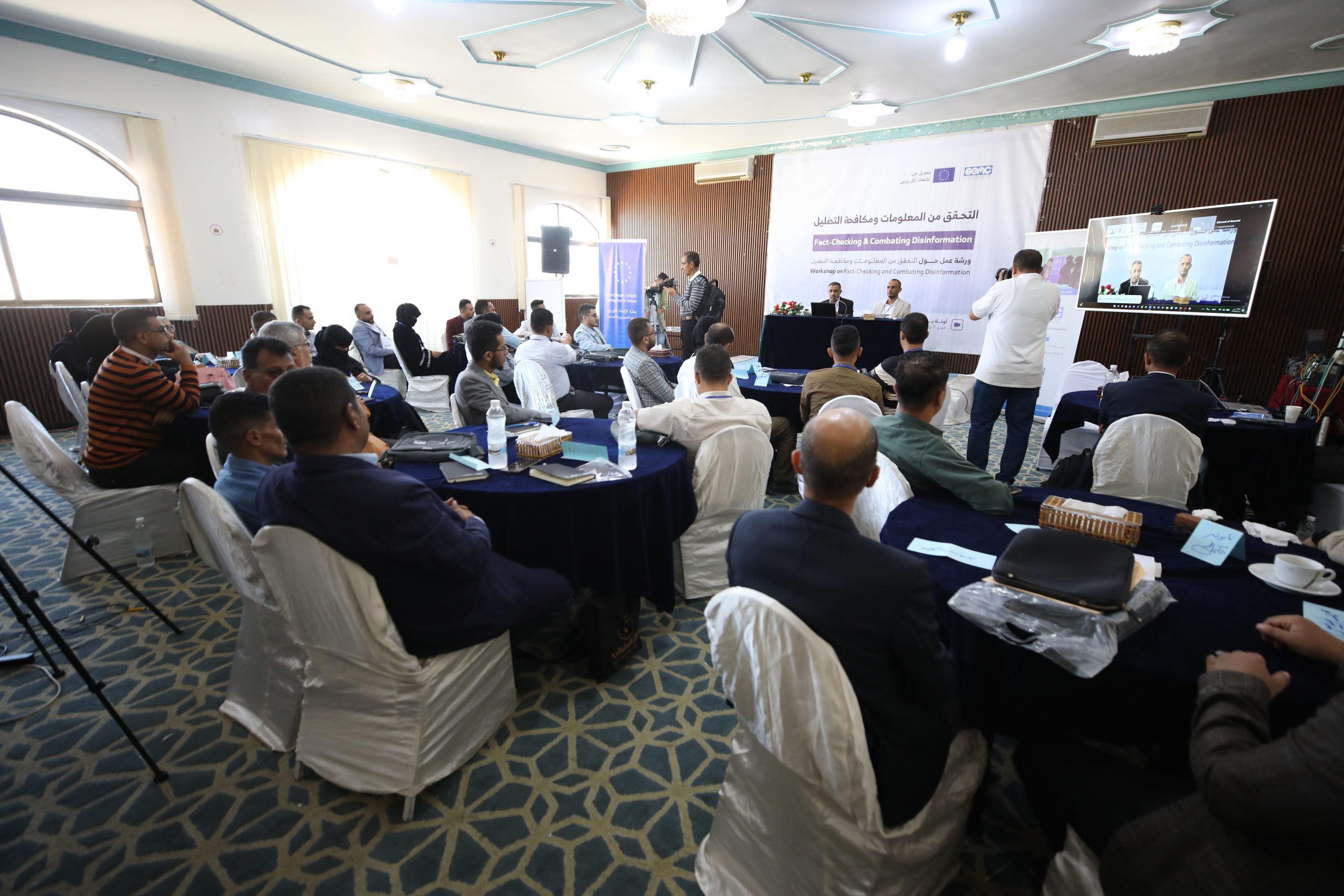
In a significant effort to combat the spread of misinformation in Yemen, the European Union and the Studies and Economic Media Centre (SEMC) recently conducted a comprehensive fact-checking workshop in Taiz. The two-day event, held on December 1-2, 2025, attracted more than 100 participants from across Yemen’s media landscape, including journalists, fact-checkers, digital media practitioners, and representatives from local news outlets.
The workshop comes at a critical time for Yemen, where years of conflict have fragmented the information ecosystem and created fertile ground for disinformation. Media professionals in the country face extraordinary challenges in verifying information amid political polarization and technological limitations.
During the intensive sessions, participants engaged with practical verification methodologies designed to strengthen their ability to authenticate information, detect false narratives, and promote responsible journalism practices. The curriculum covered essential digital analysis techniques and modern verification tools that can be implemented in the Yemeni context, where internet connectivity and access to technology often remain inconsistent.
Representatives from established Yemeni fact-checking platforms delivered specialized presentations on verification protocols and demonstrated systematic approaches to identifying disinformation. These local experts shared context-specific challenges they face in their daily work, including navigating the complex political environment that often influences information flows in the country.
“The training provided practical skills that we can immediately implement in our newsrooms,” said one participant who requested anonymity due to security concerns. “In Yemen, verifying information can sometimes be a matter of life and death for our communities.”
A significant portion of the workshop was dedicated to exploring potential collaboration frameworks between traditional media institutions and emerging fact-checking platforms. Participants discussed sustainable models for cooperation that could enhance information integrity across Yemen’s media ecosystem.
The workshop culminated in the development of preliminary elements for a national roadmap aimed at curbing disinformation. This collaborative framework identified key stakeholders, potential intervention points, and priority areas for strengthening information integrity in Yemen. Participants formulated practical recommendations that reflected the unique challenges facing Yemeni media professionals while adhering to international best practices.
Yemen’s media landscape has been severely impacted by the ongoing conflict, which began in 2014. The country now ranks among the most dangerous places for journalists globally, according to press freedom organizations. Beyond physical risks, Yemeni media workers contend with economic hardship, infrastructure limitations, and the weaponization of information by various parties to the conflict.
The European Union has maintained a consistent presence in Yemen’s media development space, viewing reliable information as essential to eventual peace-building efforts. This workshop represents part of a broader EU strategy to strengthen democratic institutions and civil society in conflict-affected regions.
“Access to factual, verified information is a fundamental right for all citizens and a cornerstone of democratic societies,” said an EU representative at the workshop’s conclusion. “By supporting media professionals in Yemen, we aim to contribute to a more informed public discourse that can ultimately support reconciliation efforts.”
The SEMC, a leading Yemeni economic think tank and media development organization, has been instrumental in implementing media support programs throughout the conflict. Their partnership with the EU reflects a shared commitment to nurturing professional journalism standards despite challenging circumstances.
Following the workshop, organizers announced plans to establish a follow-up mechanism to track implementation of the recommendations and provide ongoing support to participants as they apply new verification skills in their respective media outlets.
The initiative underscores the growing recognition that combating disinformation requires coordinated efforts across media organizations, civil society, and international partners, particularly in conflict zones where accurate information can directly impact humanitarian outcomes and peace prospects.
Fact Checker
Verify the accuracy of this article using The Disinformation Commission analysis and real-time sources.

10 Comments
While the technological challenges in Yemen are significant, this initiative demonstrates a commitment to empowering local journalists to combat disinformation. Upskilling media practitioners is vital for strengthening democracy and accountability.
You make a good point. Even with limited resources, providing Yemeni journalists with the right verification tools and techniques can make a real difference in their ability to fact-check and report accurately.
It’s encouraging to see the EU and SEMC collaborating to support Yemeni journalists. Disinformation can have devastating consequences, especially in conflict zones, so this type of capacity-building is invaluable.
Absolutely. With the fragmented information landscape in Yemen, these fact-checking skills will help journalists cut through the noise and provide their audiences with reliable, well-verified information.
This is a much-needed initiative to combat disinformation in Yemen. Fact-checking training for local journalists is crucial to strengthen the media ecosystem and promote trustworthy reporting during these challenging times.
I agree, the lack of internet access and technology in parts of Yemen makes verification work extremely difficult. This workshop aims to equip media professionals with the right tools and methodologies.
This is an important effort to strengthen the quality of journalism in Yemen. Fact-checking skills are crucial for media professionals to combat the spread of misinformation, which can have severe consequences in a conflict zone.
Absolutely. With the fragmented information landscape in Yemen, these workshops can equip journalists with the tools to cut through the noise and provide their audiences with reliable, well-verified information.
Fact-checking is a critical component of responsible journalism. This workshop is a positive step in equipping Yemeni media professionals with the necessary skills to navigate the complex information environment in their country.
Kudos to the EU and SEMC for organizing this fact-checking workshop for Yemeni journalists. Building capacity within the local media is an essential step in addressing the disinformation crisis in the country.