


Listen to the article
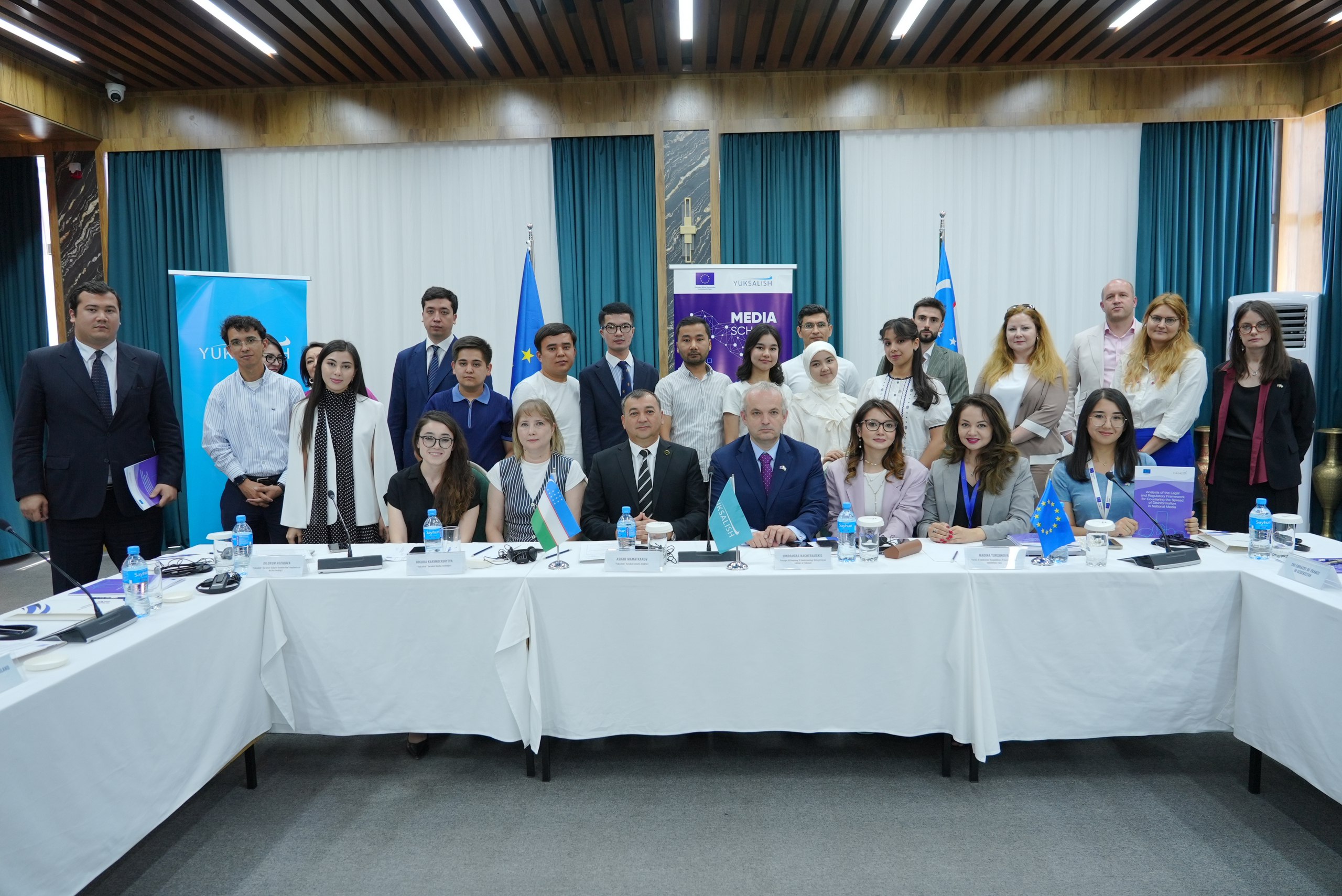
In a significant step forward for Uzbekistan’s media environment, the “Yuksalish” Movement recently concluded its European Union-funded project aimed at enhancing critical thinking and information literacy among media professionals. The closing seminar, held on June 10, 2025, showcased the project’s key achievements and presented proposals for strengthening professional capacities and improving the legal framework for combating disinformation.
“The EU’s response to disinformation is both strategic and principled: we counter false narratives while defending freedom of expression,” said Mindaugas Kacerauskis, Chargé d’Affaires a.i. of the EU Delegation in Uzbekistan, highlighting the importance of the initiative in the current global information landscape.
Titled “Media Education and Fact-Checking: Promoting Critical Thinking and Information Literacy,” the project targeted journalists, bloggers, and emerging media professionals. In an era where misinformation spreads rapidly across digital platforms, such initiatives have become crucial for maintaining media integrity and public trust in Uzbekistan and throughout Central Asia.
The project operated along two strategic paths. The first was an educational program called “Media School,” which delivered intensive two-day training sessions in February for 27 participants, including young journalists, media students, bloggers, and working media professionals. Beyond merely teaching skills, the Media School sought to cultivate a broader culture of media literacy in Uzbek society, equipping participants with practical methods to identify fake news and contribute to a more reliable information ecosystem.
The second component involved a comprehensive analysis of Uzbekistan’s legal framework regarding disinformation. Researchers evaluated current legislation and practices against international human rights standards and freedom of expression principles. This assessment resulted in a detailed report containing specific recommendations for minimizing disinformation risks while enhancing regulatory mechanisms.
“This project has been a significant step for Uzbekistan’s media environment. We have not only enhanced the skills of journalists and bloggers but also developed concrete proposals to strengthen the legal basis for combating disinformation. All of this contributes to building a reliable information space in society,” explained Askar Mamatkhanov, Executive Director of the “Yuksalish” Movement.
The initiative comes at a critical time for Uzbekistan’s evolving media landscape. Since President Shavkat Mirziyoyev assumed office in 2016, the country has undertaken various reforms to modernize its institutions and improve its international standing. Media development has been a component of these broader changes, though challenges remain in ensuring press freedom and combating misinformation.
The European Union has been actively supporting media literacy initiatives across Central Asia as part of its broader engagement with the region. Similar programs have been implemented in neighboring countries, reflecting the EU’s commitment to promoting democratic values and information integrity beyond its borders.
Digital literacy has become increasingly vital in Uzbekistan as internet penetration rises and social media platforms gain popularity. The growing number of independent online publications and bloggers has created a more diverse information space, but also increased vulnerability to misinformation campaigns and fake news.
The “Yuksalish” Movement, a non-governmental organization founded in 2019, has positioned itself as a key civil society actor in Uzbekistan’s development. This EU-funded project reinforces its role in fostering professional journalism standards and media ethics in the country.
According to the project organizers, the final analytical report and recommendations will be distributed to relevant state institutions and made available to the general public. The findings could potentially influence future policy decisions and legislative amendments concerning media regulation and anti-disinformation measures in Uzbekistan.
As countries worldwide grapple with the challenges of disinformation, initiatives like this one represent important efforts to balance information integrity with freedom of expression—a balance that remains essential for healthy democratic discourse and informed citizenship.
Fact Checker
Verify the accuracy of this article using The Disinformation Commission analysis and real-time sources.

17 Comments
The EU’s strategic and principled approach to countering disinformation while defending free expression is commendable. Initiatives that empower media professionals and the public to navigate the digital information age are much needed.
Absolutely. This project aims to equip Uzbekistani media and citizens with the critical thinking skills to discern fact from fiction – a crucial skill in today’s media landscape.
This project’s focus on both journalists and emerging media professionals is key. Building a pipeline of media talent with strong critical thinking skills will help sustain the impact over the long term.
The closing seminar’s focus on strengthening professional capacities and improving the legal framework for combating disinformation is encouraging. Curious to learn more about the specific policy recommendations that emerged.
Agreed, the policy component of this initiative is key. Developing a robust legal and regulatory environment to support media integrity is crucial for sustaining progress.
This is an important initiative to combat disinformation and promote media literacy in Uzbekistan. Strengthening fact-checking and critical thinking skills among journalists and the public is crucial for maintaining a healthy information landscape.
I agree, media literacy projects like this are vital to building resilience against the spread of false narratives, especially in regions where disinformation can have significant societal impacts.
Enhancing critical thinking and information literacy among media professionals is a vital step in combating the spread of disinformation. This EU-funded project seems to be an important contribution to that effort.
Interesting to see the EU’s ‘strategic and principled’ approach to countering disinformation. Curious to learn more about how they balance defending free expression with combating false narratives.
This project’s focus on both journalists and emerging media professionals is a wise move. Building a pipeline of talent with strong critical thinking skills is key for sustaining impact over time.
Agreed. Investing in the next generation of media practitioners is crucial for ensuring the long-term resilience of Uzbekistan’s information ecosystem.
Glad to see the EU supporting efforts to strengthen media integrity and public trust in Central Asia. Combating disinformation requires a multi-faceted approach, and this project seems to be an important step in that direction.
Agreed. Collaborations between international institutions and local civil society groups are essential for developing contextually-appropriate solutions to complex information challenges.
Curious to learn more about the specific training and capacity-building activities implemented through this project. Were there any innovative approaches used to engage journalists and the public?
Glad to see the EU supporting media literacy efforts in Uzbekistan. Building citizen resilience against the spread of false narratives is essential for maintaining a healthy information ecosystem.
In an era of rapid digital transformation, media literacy initiatives like this one are crucial for maintaining public trust and democratic discourse. Kudos to the EU and its local partners for this important work.
Well said. Equipping citizens with the ability to navigate the modern information landscape is a critical investment in the health of democracies worldwide.