


Listen to the article
European ministers convened in Brussels on Friday to address the critical issues of media freedom and disinformation as part of the European Democracy Shield initiative, a program designed to safeguard EU democracies from foreign influence and hybrid threats.
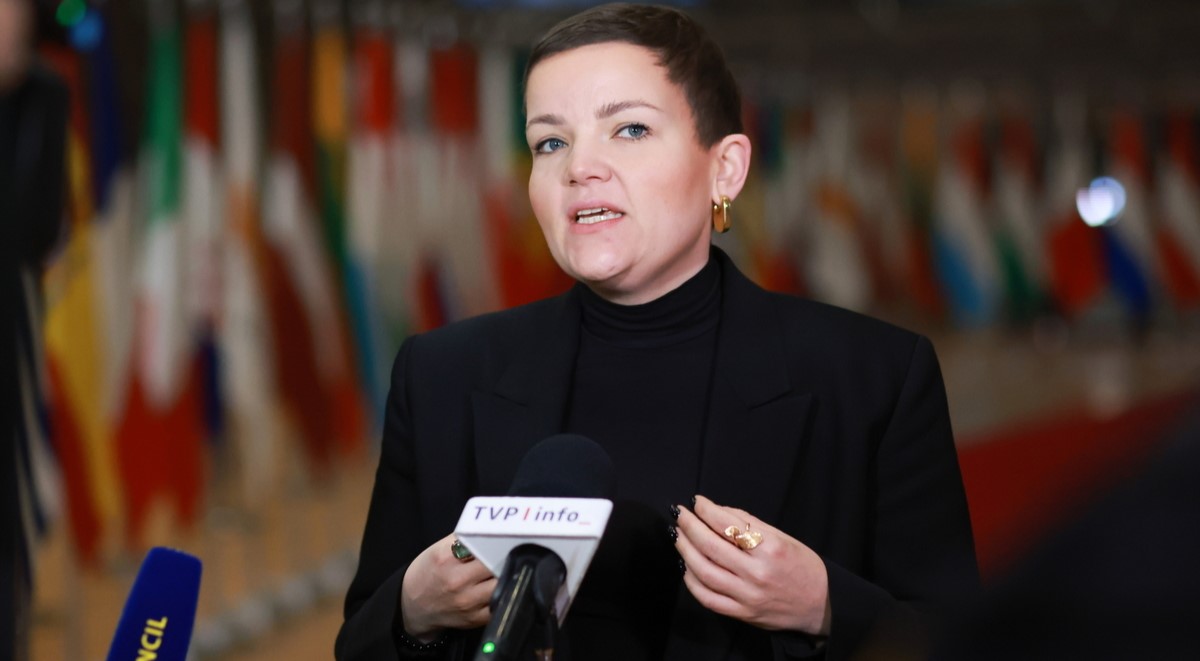
At the center of discussions was the reinforcement of public media’s role in combating disinformation across the bloc. Polish Culture Minister Marta Cienkowska emphasized that while free media remain fundamental to democratic societies, public broadcasters in several EU member states currently fall short of European standards, including those outlined in the European Media Freedom Act.
“Public media independence is not merely a national concern but a European imperative,” Cienkowska stated during the Education, Youth, Culture and Sport Council meeting. She confirmed Poland’s support for the Council’s conclusions, highlighting the necessity of fully implementing EU regulations on media pluralism and independence.
The ministerial meeting faced a notable hurdle with Hungary exercising its veto power against the proposed measures. Despite this opposition, ministers plan to advance the conclusions through the authority of the rotating Council presidency, currently held by Denmark, demonstrating the issue’s perceived urgency.
Cienkowska made a direct appeal to her ministerial colleagues to back the declaration, characterizing it as “very important for Europe” at a time when disinformation campaigns have intensified across the continent, particularly regarding the ongoing conflicts in Ukraine and the Middle East.
On the domestic front, Poland is actively reforming its own media landscape. Cienkowska revealed that work on a new Polish media law is progressing, with draft legislation expected to reach parliamentary committees by February or March 2026. This timeline will allow for public consultations to follow, potentially reshaping the country’s media environment after years of controversy surrounding government influence over public broadcasting.
The meeting also addressed funding priorities for cultural initiatives across the EU. The Union’s 2026 budget has earmarked a substantial €1.8 billion for cultural programs through the Agora fund, representing one of the most significant cultural allocations in EU budgetary history. Poland intends to pursue funding specifically aimed at supporting young artists and cross-border cultural collaborations, viewing cultural exchange as a tool for strengthening European identity.
Beyond immediate policy matters, the Council urged EU member states and international partners to protect European cultural values, artistic freedom, heritage, and diversity. The recommendations include integrating cultural institutions into crisis planning and awareness initiatives, recognizing culture’s role in building resilience against disinformation.
The European Democracy Shield initiative marks a significant evolution in the EU’s approach to information security, moving beyond reactive measures toward proactive strategies for democratic resilience. Media experts have noted that this framework represents the bloc’s most comprehensive effort yet to address the intersection of media independence, disinformation, and democratic functioning.
Recent studies from the European University Institute indicate that public trust in media varies dramatically across member states, with northern European nations typically reporting higher confidence levels than those in the south and east. This disparity has created vulnerability gaps that disinformation actors have exploited, according to security analysts.
As digital platforms continue to transform information consumption patterns, the EU’s focus on media literacy and public broadcasting quality signals a recognition that information infrastructure represents a critical component of national security and democratic functioning in the digital age.
Fact Checker
Verify the accuracy of this article using The Disinformation Commission analysis and real-time sources.

10 Comments
This is a complex issue that speaks to the broader tension between national sovereignty and EU-level coordination. While I sympathize with Hungary’s position, I believe a common European approach to media safeguards is necessary in today’s information landscape.
As a mining and commodities enthusiast, I’m less familiar with this particular policy debate. However, I recognize the importance of a free and independent media, especially when it comes to reporting on critical sectors like energy and natural resources.
Interesting development on EU efforts to strengthen media safeguards. Public media plays a vital role in informing citizens and countering foreign influence. I’m curious to see how this plays out, especially with Hungary’s opposition.
Agreed, Hungary’s veto is a notable hurdle. Hopefully the ministers can find a way forward that respects national sovereignty while upholding European democratic values and norms.
As someone interested in the mining and energy sectors, I don’t have a strong opinion on this particular policy debate. However, I recognize the importance of a free and trustworthy media for informed decision-making across all industries.
Ensuring media pluralism and independence is crucial, but the specifics of implementation can be tricky. I hope the ministers can find a way to address Hungary’s concerns while upholding core European democratic principles.
The proposed EU media safeguards seem like a reasonable step to protect democratic institutions from foreign interference and disinformation. While national sovereignty is important, a coordinated European approach may be necessary in this digital age.
Agreed. The challenges posed by cross-border disinformation campaigns require multilateral solutions. It will be interesting to see how the EU navigates this issue with member states like Hungary.
Reinforcing public media’s role in combating disinformation is a laudable goal, but implementing effective EU-wide regulations will be challenging given the diversity of national media systems. Balancing media freedom and accountability will be key.
Safeguarding media freedom is critical for democracy. While I understand Hungary’s position, EU-wide standards are needed to combat disinformation and protect public broadcasters’ independence. This is a complex issue requiring balance and compromise.