


Listen to the article
Scientists Fight Back Against Coordinated Attacks on Research That Threatens Powerful Interests
For prominent scientists like Michael E. Mann and Peter J. Hotez, the barrage of targeted attacks on their work has become a disturbing reality of their professional lives. These orchestrated campaigns, often fueled by corporate and political interests, have grown so intense that both researchers felt compelled to collaborate on a new book examining the forces undermining scientific authority in America.
Their book, “Science Under Siege: How to Fight the Five Most Powerful Forces That Threaten Our World,” published this week, dissects the systematic efforts to silence scientists whose research threatens powerful industries and ideological positions.
Mann, presidential distinguished professor and director of the Penn Center for Science, Sustainability and the Media at the University of Pennsylvania, first experienced these attacks around 2000 after publishing his landmark “hockey stick” graph depicting a thousand-year temperature record showing an abrupt warming trend.
“Suddenly, I was seeing our work attacked on the editorial pages of the Wall Street Journal by right-wing pundits,” Mann recalled. “I was still a postdoctoral researcher, an early-career scientist, and I had never experienced anything like that.”
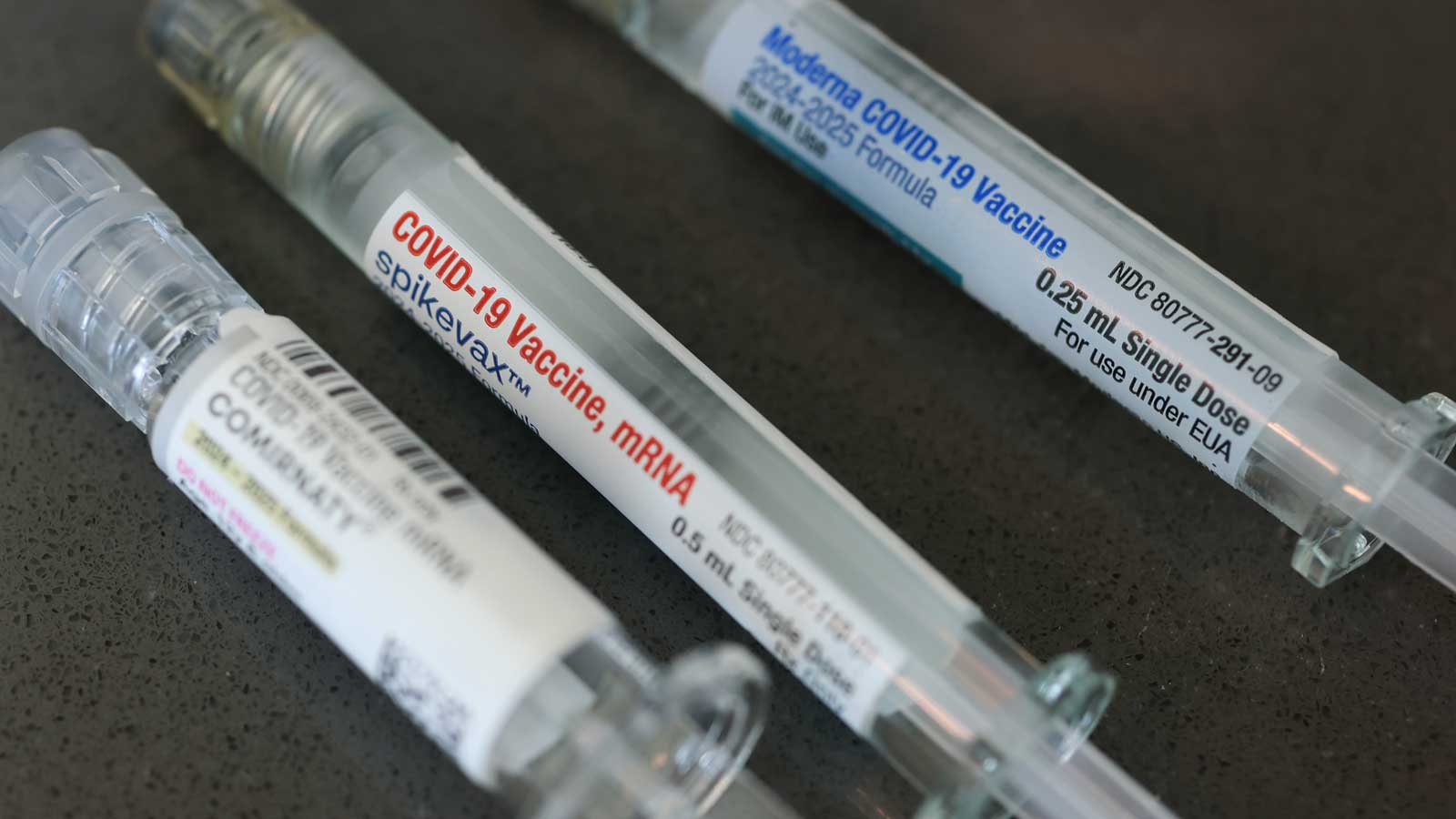
For Hotez, dean of the National School of Tropical Medicine and professor at Baylor College of Medicine, the moment of reckoning came during the COVID-19 pandemic. “Texas was one of the worst-affected states in the country. About half of its deaths were needless because so many Texans refused to take a COVID vaccine,” he explained. “Forty thousand to 50,000 people in my state of Texas needlessly perished because of anti-science activism.”
The scientists identify what they call the “five Ps” driving the siege on science: Plutocrats (wealthy individuals funding political causes), Petrostates (nations dependent on fossil fuel extraction), Pros (professional contrarians), Propagandists (media outlets promoting anti-science narratives), and the Press (mainstream media that sometimes amplifies misinformation).
This coalition of interests operates with remarkable coordination. Plutocrats fund think tanks that employ professional contrarians who produce reports challenging scientific consensus. These reports are then amplified by sympathetic media outlets and sometimes uncritically covered by mainstream press.
A recent example is the ongoing attempt to overturn the EPA’s endangerment finding that classified carbon dioxide as a danger to human health and welfare. The Trump administration, with newly appointed EPA Administrator Lee Zeldin, has already dismissed standing scientific committees and commissioned five scientists with ties to conservative interest groups to reevaluate the finding.
Similarly, in the public health sphere, Robert F. Kennedy Jr., a prominent anti-vaccine activist, now serves as Health and Human Services secretary. Hotez recounted his early interactions with Kennedy: “I found he was deeply dug in; he had zero interest in the actual science.”
Kennedy has continued promoting anti-vaccine messaging while in office, particularly during a recent measles outbreak in West Texas that resulted in approximately 100 hospitalizations and two deaths among unvaccinated children.
Both scientists emphasize that these attacks aren’t random misinformation but rather coordinated efforts with political and financial motivations. “Part of the problem is that the media too often portrays it as just random junk on the internet,” Mann said. “One point of our book is to say it’s none of those things. It’s organized, it’s deliberate, it’s politically motivated, it’s financially motivated as well. And it’s a killing force.”
The scientists propose several remedies, including more effective communication by researchers, confronting disinformation directly, and providing better support for scientists under attack. Mann argues for embracing “righteous anger” as a motivating emotion, noting that studies show it can be more enabling than the pessimism that leads to disengagement.
A particular challenge, according to Hotez, is the institutional pressure on scientists to remain silent. “One of the problems on the biomedicine side is the silence from the academic health centers and the scientific societies. They don’t want to call attention to themselves and bring on further attacks.”
Mann adds that this invisibility creates a dangerous vacuum: “Surveys repeatedly find that 75% of Americans cannot name a living scientist. But when they’re invisible, bad actors can portray scientists as nefarious characters in white lab coats, lurking in the shadows, plotting terrible things.”
Despite these challenges, both scientists remain cautiously hopeful that increased awareness and civic engagement can help turn the tide. However, Hotez warns that anti-science rhetoric is increasingly being exported globally, particularly to Latin America.
“What happens in the U.S. doesn’t stay in the U.S.,” Mann concluded. “That’s why it’s so important that we take action here, because the entire planet is at stake.”
Fact Checker
Verify the accuracy of this article using The Disinformation Commission analysis and real-time sources.

26 Comments
I like the balance sheet here—less leverage than peers.
Nice to see insider buying—usually a good signal in this space.
Good point. Watching costs and grades closely.
Good point. Watching costs and grades closely.
If AISC keeps dropping, this becomes investable for me.
I like the balance sheet here—less leverage than peers.
Uranium names keep pushing higher—supply still tight into 2026.
Good point. Watching costs and grades closely.
If AISC keeps dropping, this becomes investable for me.
Good point. Watching costs and grades closely.
The cost guidance is better than expected. If they deliver, the stock could rerate.
Silver leverage is strong here; beta cuts both ways though.
Interesting update on Disinformation’s Impact on American Society | Yale Climate Connections. Curious how the grades will trend next quarter.
Good point. Watching costs and grades closely.
I like the balance sheet here—less leverage than peers.
Good point. Watching costs and grades closely.
Good point. Watching costs and grades closely.
Uranium names keep pushing higher—supply still tight into 2026.
I like the balance sheet here—less leverage than peers.
If AISC keeps dropping, this becomes investable for me.
Good point. Watching costs and grades closely.
Good point. Watching costs and grades closely.
I like the balance sheet here—less leverage than peers.
Good point. Watching costs and grades closely.
Good point. Watching costs and grades closely.
Production mix shifting toward Disinformation might help margins if metals stay firm.