


Listen to the article
Digital Manipulation Reshaping Political Dynamics Across MENA Region
The growing influence of digital platforms across the Middle East and North Africa (MENA) has created a double-edged sword for civic discourse, with increasingly sophisticated manipulation techniques threatening to undermine democratic processes and social cohesion.
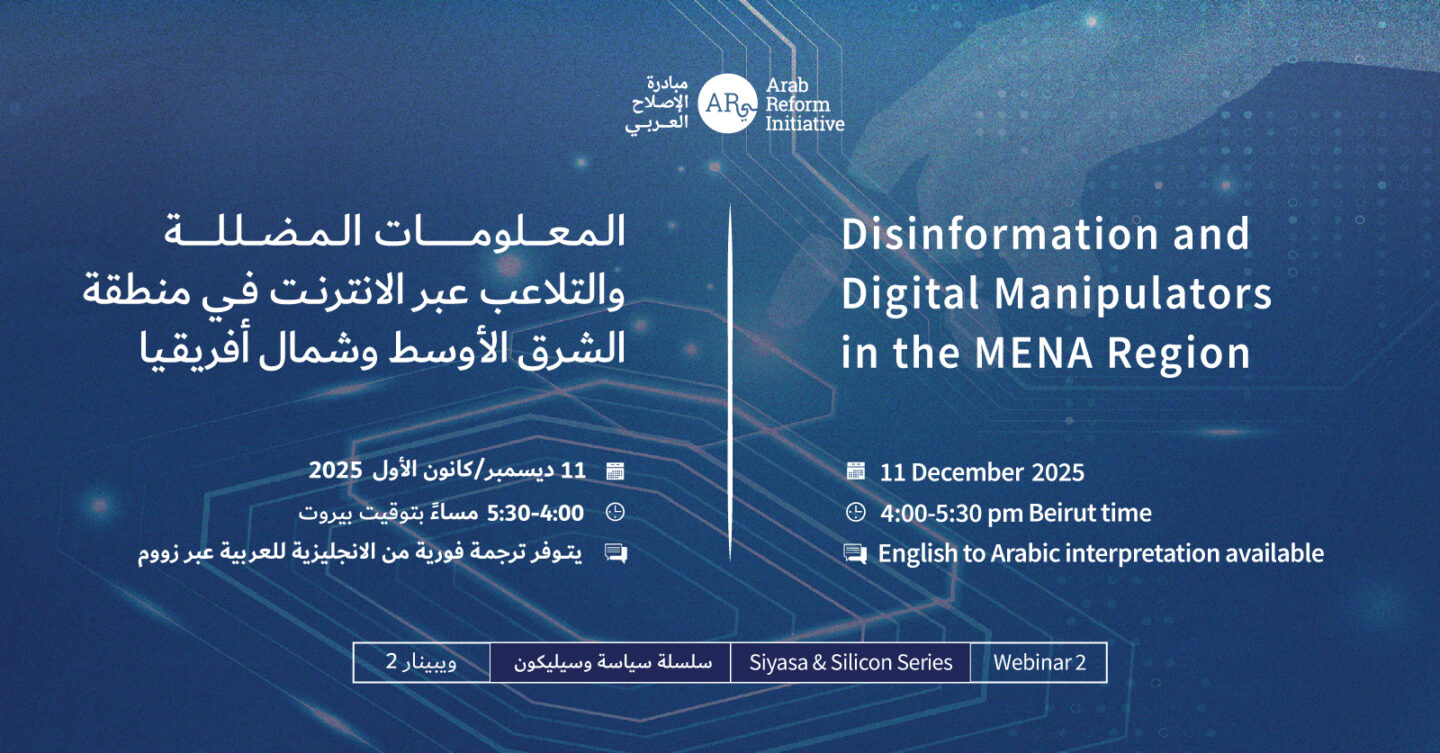
As part of its ongoing “Siyasa & Silicon” series, the Arab Reform Initiative (ARI) is hosting a critical webinar exploring how disinformation networks are leveraging advanced technologies, including artificial intelligence, to shape political narratives and inflame regional tensions.
The webinar comes at a pivotal moment for the region, where social media platforms have evolved from tools of democratic mobilization during the Arab Spring to weaponized battlegrounds for information warfare. According to regional media analysts, coordinated disinformation campaigns have intensified across countries experiencing political instability, particularly Libya, Yemen, and Syria.
“What we’re witnessing is not simply organic political debate, but orchestrated manipulation campaigns that exploit existing sectarian and political divisions,” noted a regional disinformation researcher who has documented these trends. Recent studies have identified state actors, military establishments, commercial entities, and foreign governments among those deploying sophisticated influence operations.
The ARI webinar will delve into the complex ecosystem of digital manipulation, examining both the perpetrators and their methodologies. Participants will analyze the evolution from basic bot networks to more sophisticated techniques, including deepfakes and AI-generated content that can be nearly indistinguishable from authentic media.
The consequences of these digital manipulation campaigns extend far beyond the virtual realm. Evidence suggests they have contributed to violent confrontations in several MENA countries by amplifying extremist rhetoric and undermining trust in institutions. During recent protests in Lebanon and Iraq, for instance, researchers identified coordinated disinformation campaigns designed to escalate tensions between protesters and security forces.
“There’s a direct line between digital manipulation and real-world harm,” explained a cybersecurity expert specializing in the region. “When fabricated content portrays rival political or sectarian groups as existential threats, it creates justification for violence that might not otherwise occur.”
The timing of this discussion is particularly relevant as artificial intelligence tools become more accessible across the region. The proliferation of user-friendly AI content generation platforms has democratized the ability to create convincing fake videos, audio, and text, making detection increasingly difficult even for experienced observers.
Tech companies operating in the region have struggled to adapt their content moderation practices to the specific linguistic and cultural contexts of MENA countries. Critics point to the disproportionate resources allocated to English-language content moderation compared to Arabic, Kurdish, and other regional languages, creating blind spots that disinformation networks readily exploit.
The webinar will also address potential countermeasures, bringing together journalists, researchers, technology experts, and civil society representatives to develop practical strategies for combating manipulation. Proposed approaches include developing region-specific detection tools, building media literacy programs, and creating rapid response networks to debunk harmful content before it goes viral.
This session represents the second installment in ARI’s “Siyasa & Silicon” series, which aims to bridge the gap between social science and technological innovation across West Asia and North Africa. The initiative responds to growing concerns about how digital transformation is reshaping governance structures and civic participation throughout the region.
As technologies continue to evolve, experts emphasize that addressing digital manipulation will require collaboration across sectors and borders. “This isn’t a problem any single entity can solve alone,” said a digital rights advocate. “We need coordinated efforts between technology companies, government regulators, researchers, and civil society to protect information integrity.”
The outcomes of this discussion will contribute to a growing body of research on technology’s impact across MENA, providing essential insights for policymakers and civic leaders navigating the complex intersection of technology, politics, and society in an increasingly digitized region.
Fact Checker
Verify the accuracy of this article using The Disinformation Commission analysis and real-time sources.

10 Comments
Coordinated disinformation campaigns that exploit regional divisions are deeply concerning. Building resilient, inclusive democratic institutions should be a top priority for MENA countries.
I agree. Strengthening digital literacy and empowering independent media will be crucial to combat the spread of malicious narratives.
The weaponization of social media platforms is a complex issue with far-reaching consequences. Constructive dialogue and collaborative solutions are needed to uphold democratic values in the MENA region.
This is a worrying trend. Disinformation and digital manipulation can undermine public trust and erode democratic institutions. Fact-checking and media literacy are crucial to combat these threats in the MENA region.
I agree. Governments and civil society need to work together to strengthen digital security and promote responsible use of technology.
The use of AI and advanced technologies to spread disinformation is particularly concerning. Policymakers must stay vigilant and develop robust legal frameworks to address these emerging challenges.
Absolutely. Effective regulation and international cooperation will be key to curbing the spread of malicious digital manipulation campaigns.
The growing threat of disinformation and digital manipulation is a global challenge. Developing effective strategies to counter these trends will require a multifaceted, multilateral approach.
This is a critical moment for the MENA region. While digital tools can empower civic engagement, the potential for abuse must be taken seriously. Strengthening media independence and digital literacy will be crucial.
Agreed. Policymakers and technology companies have a shared responsibility to address the spread of disinformation and protect democratic processes.