


Listen to the article
Climate Summit Begins with Modest Progress on Emission Reduction Pledges
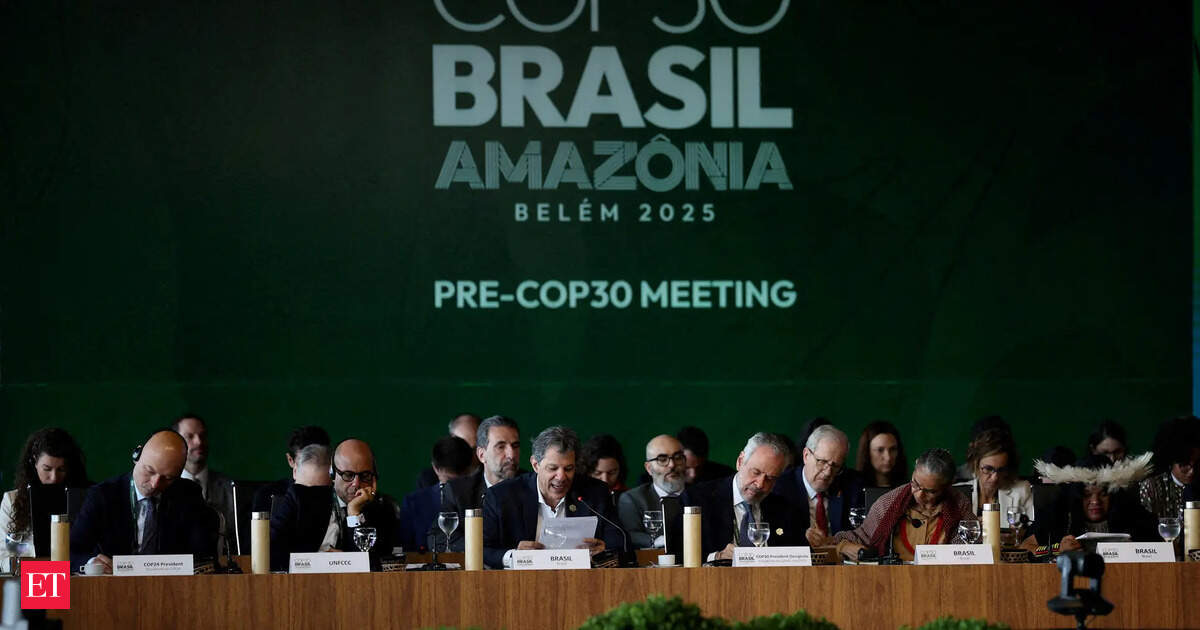
The United Nations climate conference COP30 opened Monday in Belem, Brazil with cautiously optimistic news amid growing urgency for climate action. The latest assessment of country pledges indicates a potential 12% reduction in greenhouse gas emissions if fully implemented, a slight improvement from the 10% cut projected in late October.
“The progress is real, but not nearly enough,” said Simon Stiell, executive secretary of the UN Framework Convention on Climate Change (UNFCCC), underscoring the significant gap between current commitments and what’s needed to address the escalating climate crisis.
Brazil’s President Luiz Inacio Lula da Silva delivered a sobering message during the opening plenary, emphasizing the immediacy of the problem. “Climate change is no longer a threat, it is the tragedy of the present,” he stated, calling for decisive action from the international community.
The conference began with a rare moment of consensus as participants adopted the work plan for the two-week negotiations without contention, reflecting a shared recognition of the challenge’s magnitude and the collective desire to make substantive progress.
In advance of COP30, seven new proposals were submitted by various countries and negotiating blocs, including the European Union, small island states, least developing countries, and like-minded developing nations. These proposals broadly focused on two critical areas: accelerating emission reductions and securing financial commitments from developed countries to support climate initiatives in vulnerable regions.
Despite extensive consultations prior to the conference, negotiators had not reached compromise on these issues. However, in a late-night agreement on Sunday, they decided to proceed with substantive discussions while continuing to work toward resolution, rather than delaying the conference’s substantive work.
The Amazon location of this year’s conference holds particular significance, as Brazil houses approximately 60% of the Amazon rainforest, often referred to as the “lungs of the Earth” for its crucial role in carbon sequestration and biodiversity. Hosting COP30 in Belem represents Brazil’s renewed commitment to environmental leadership after years of deforestation concerns under previous administrations.
President Lula also took aim at climate disinformation in his address, highlighting another obstacle to meaningful action. “In the age of disinformation, obscurantists reject not only the evidence of science but also the progress of multilateralism. They control algorithms, sow hatred and spread fear. They attack institutions, science and universities. It is time to deliver another defeat to denialism,” he declared.
Demonstrating that multilateralism can effectively address climate challenges remains a central priority for the Belem conference, particularly as geopolitical tensions and economic pressures have complicated international cooperation on environmental issues in recent years.
“We are moving in the right direction, but at the wrong speed,” Lula warned. “At the current pace, we are still on track for more than 1.5°C of warming. Crossing that threshold is a risk we cannot take.”
The 1.5°C threshold referenced by Lula comes from the 2015 Paris Agreement, which established the goal of limiting global warming to well below 2°C above pre-industrial levels while pursuing efforts to limit the increase to 1.5°C. Scientific consensus indicates that exceeding this threshold would trigger more severe and potentially irreversible climate impacts, including devastating consequences for vulnerable ecosystems and communities worldwide.
As negotiations continue in Belem, participants face mounting pressure to bridge the substantial gap between current commitments and the drastic emissions cuts needed to meet climate goals. The slight improvement in projected emissions reductions offers a glimmer of hope, but as both Stiell and Lula emphasized, much more ambitious action will be required to address the escalating climate emergency.
Fact Checker
Verify the accuracy of this article using The Disinformation Commission analysis and real-time sources.

17 Comments
Glad to see Lula calling for urgent climate action at COP30. The modest emission reduction pledges so far are a good start, but we need much bolder commitments to address this global crisis effectively.
Agreed. The 12% projected emissions cut is a step in the right direction, but falls far short of what’s needed. World leaders must work together to enact transformative policies.
It’s good to see some progress on emission reduction pledges ahead of COP30, but the climate crisis requires transformative action, not just modest steps. Hopeful the talks in Brazil can drive the deep emissions cuts and policy changes needed to address this global emergency.
Glad to see some progress on emission reduction pledges ahead of COP30, but the overall goal of limiting warming to 1.5°C remains elusive. Hope the talks in Brazil can catalyze more ambitious commitments from countries.
The opening of COP30 in Brazil is an important milestone, but the real test will be whether countries follow through on their pledges and implement meaningful climate policies. The stakes are too high for incremental change.
Lula’s sobering message at the COP30 opening underscores the gravity of the climate crisis. The 12% emissions reduction projection is a start, but clearly insufficient to address this global emergency. Curious to see the concrete outcomes and commitments from these crucial negotiations.
I agree, the stakes are too high for incremental change. World leaders must take bold, decisive action to rapidly transition to clean energy, protect vulnerable communities, and limit global warming to 1.5°C.
While the modest emissions reduction pledges ahead of COP30 are a positive step, the climate crisis demands much more ambitious commitments and coordinated global action. Hopeful the talks in Brazil can drive the transformative change that’s needed.
It’s encouraging to see some progress on emission reduction pledges, but the climate crisis requires a much more ambitious and coordinated global response. Curious to see what other concrete actions emerge from the COP30 talks.
Absolutely. Lula is right that climate change is an urgent present-day issue, not just a future threat. Effective solutions are needed now to protect people and the planet.
The opening of COP30 in Brazil is a crucial moment for global climate action. Lula’s call for decisive steps is well-founded, as the 12% emissions cut projection still falls short of what’s needed. Curious to see the concrete outcomes from these negotiations.
Absolutely. The climate crisis requires urgent, transformative action from world leaders. Incremental progress is no longer sufficient – bolder policies and deeper emissions cuts are essential to protect the planet.
Lula’s somber assessment that climate change is already a tragedy is a wake-up call. Curious to see what concrete actions and targets emerge from these COP30 negotiations to drive the urgent emissions cuts required.
Agreed. The modest 12% emissions reduction projection is a start, but far from enough. World leaders must take bold, coordinated action to rapidly transition to clean energy and protect vulnerable communities.
Lula’s call for urgent climate action at COP30 is well-founded. While the 12% emissions reduction projection is a positive sign, the overall scale of the challenge demands much bolder commitments from world leaders. Curious to see the specific outcomes and commitments that emerge from these crucial negotiations.
Agreed. The climate crisis is an immediate tragedy that requires a rapid, coordinated global response. Incremental progress is no longer enough – transformative policies and deep emissions cuts are essential to protect people and the planet.
The opening of COP30 in Brazil is a critical moment for global climate action. Lula’s sobering message underscores the urgency of the situation, and the modest emissions reduction pledges so far, while a start, fall far short of what’s needed. Hopeful the talks can catalyze the bold, transformative commitments required to address this crisis.