


Listen to the article
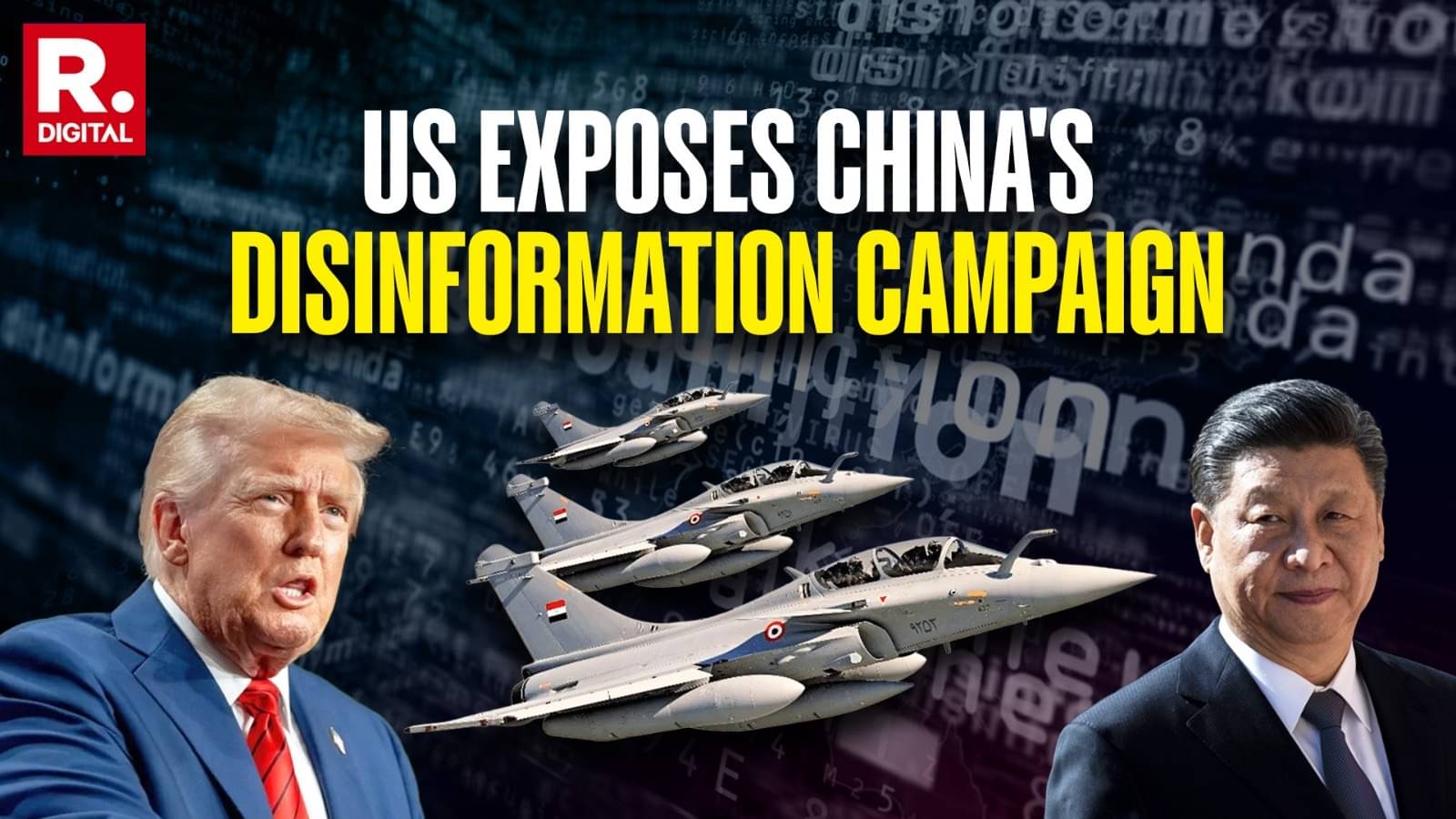
In a significant development, the US-China Economic and Security Review Commission has accused China of conducting a sophisticated propaganda campaign related to Operation Sindoor, according to a report released Tuesday. The advisory body, established by the US Congress, claims Beijing orchestrated a disinformation effort using artificial intelligence to undermine sales of French Rafale fighter jets to India.
The commission’s annual report details how China allegedly deployed fake social media profiles to distribute AI-generated images purporting to show debris from Rafale aircraft destroyed by Chinese weaponry. According to the report, this campaign was strategically designed to promote China’s own J-35 fighter jets as a superior alternative.
“China launched a disinformation campaign to prevent sales of French Rafale aircraft in favour of its own J-35s,” the report states, describing a coordinated effort to manipulate public perception through fabricated evidence.
The report further alleges that Beijing “opportunistically” exploited tensions between India and Pakistan following their May border clash to “advertise the advanced technology of its weapons.” This effort appears to serve dual purposes: complicating India’s military procurement decisions amid ongoing border disputes with China and advancing Beijing’s growing defense industry ambitions in the global market.
The timing of these allegations has sparked controversy in India’s political landscape, as the country’s main opposition party, the Congress party, had made similar claims about the Rafale jets during this period. The convergence between China’s alleged disinformation narrative and statements from Congress leaders has raised questions about potential foreign influence in domestic political discourse.
While the US report does not directly accuse the Congress party of coordinating with Chinese efforts, the parallel narratives have drawn scrutiny from political analysts. The situation highlights growing concerns about how sophisticated disinformation campaigns can inadvertently be amplified through domestic political channels.
This incident comes amid broader concerns about China’s increasing use of artificial intelligence in information operations. The commission’s report notes that Beijing has previously deployed AI-generated news anchors and fake profile images to shape conversations on sensitive topics in multiple countries, representing an evolution in propaganda techniques.
Defense analysts note that the targeting of the Rafale deal has particular strategic significance. India finalized a €7.8 billion agreement with France in 2016 for 36 Rafale jets, with deliveries completed in 2022. The aircraft have been positioned as a critical component of India’s air defense strategy, particularly along contested border regions.
The alleged disinformation campaign represents what security experts call “grey zone” tactics – activities that fall below the threshold of conventional warfare but aim to achieve strategic objectives through manipulation and deception. These approaches are increasingly common in international competition, particularly in regions where major powers have competing interests.
For India, situated in a complex geopolitical neighborhood with ongoing tensions with both Pakistan and China, vulnerability to such information operations presents a significant national security challenge. The country has been working to strengthen its capabilities to detect and counter disinformation, though such efforts remain challenging given the sophisticated nature of modern influence operations.
The US commission’s findings come at a time of heightened tensions between Washington and Beijing across multiple fronts, including trade, technology, and regional influence in the Indo-Pacific. The report serves as another point of contention in this increasingly competitive relationship.
As countries worldwide grapple with the implications of AI-enabled disinformation, this incident underscores the evolving nature of international competition and the blurring lines between military, economic, and information domains in modern geopolitics.
Fact Checker
Verify the accuracy of this article using The Disinformation Commission analysis and real-time sources.

18 Comments
This report highlights the complex geopolitical dynamics at play, with China apparently trying to undermine a major defense deal between India and France. It’s a stark reminder of the global competition for influence.
Absolutely. These types of cross-border disinformation campaigns can have far-reaching consequences, both in terms of defense and diplomatic relations.
The report’s allegations of China exploiting regional tensions to advertise its own military tech is particularly troubling. It speaks to the broader strategic implications of this disinformation campaign.
Absolutely. China’s willingness to leverage geopolitical flashpoints for its own gain is a concerning pattern we’ve seen play out in other contexts as well.
This report highlights the complex geopolitical dynamics at play, with China apparently trying to undermine a major defense deal between India and France. It’s a stark reminder of the global competition for influence.
Absolutely. These types of cross-border disinformation campaigns can have far-reaching consequences, both in terms of defense and diplomatic relations.
While I’m skeptical of some of the claims made in the report, the use of AI-generated propaganda is a worrying development that deserves further investigation and scrutiny.
Agreed. It’s important to approach these allegations with a critical eye, while still acknowledging the broader threat of sophisticated disinformation campaigns.
The allegations of China using AI-generated content to spread false claims about the Rafale jets is quite troubling. It speaks to the evolving nature of information warfare and the need for robust countermeasures.
Agreed. As AI technology becomes more advanced, the potential for its misuse in disinformation campaigns is a growing concern that policymakers will need to address.
While I’m generally skeptical of claims of Chinese disinformation, the details provided in this report do seem concerning. It’s an issue that warrants further investigation and transparency.
I share your cautious approach. Allegations of state-sponsored disinformation campaigns require rigorous evidence and analysis to substantiate.
This seems like a classic case of China trying to undermine a competitor’s military sales through misinformation. It’s concerning to see such coordinated efforts to manipulate public opinion.
I agree, this is a worrying trend that goes beyond just the Rafale deal. Disinformation campaigns can have serious geopolitical consequences.
Interesting report on China’s alleged disinformation campaign targeting the Rafale fighter jet deal. I’d be curious to see more details on the extent and impact of this propaganda effort.
Yes, the use of AI-generated images to spread false claims is concerning. It highlights the growing challenge of combating sophisticated disinformation tactics.
This news underscores the importance of robust verification and fact-checking, especially when it comes to sensitive defense and security matters. Relying on credible sources is crucial.
Yes, it’s a good reminder that we need to be vigilant about potential disinformation, particularly from state actors with geopolitical interests at stake.