


Listen to the article
Turkey Battled Wave of Disinformation Following Devastating 2023 Earthquakes
In the aftermath of the catastrophic earthquakes that struck Turkey on February 6, 2023, government officials have revealed an unprecedented surge in disinformation that threatened to undermine relief efforts and public trust. The Presidency’s Directorate of Communications documented nearly 450 instances of false information within just five months of the disaster.
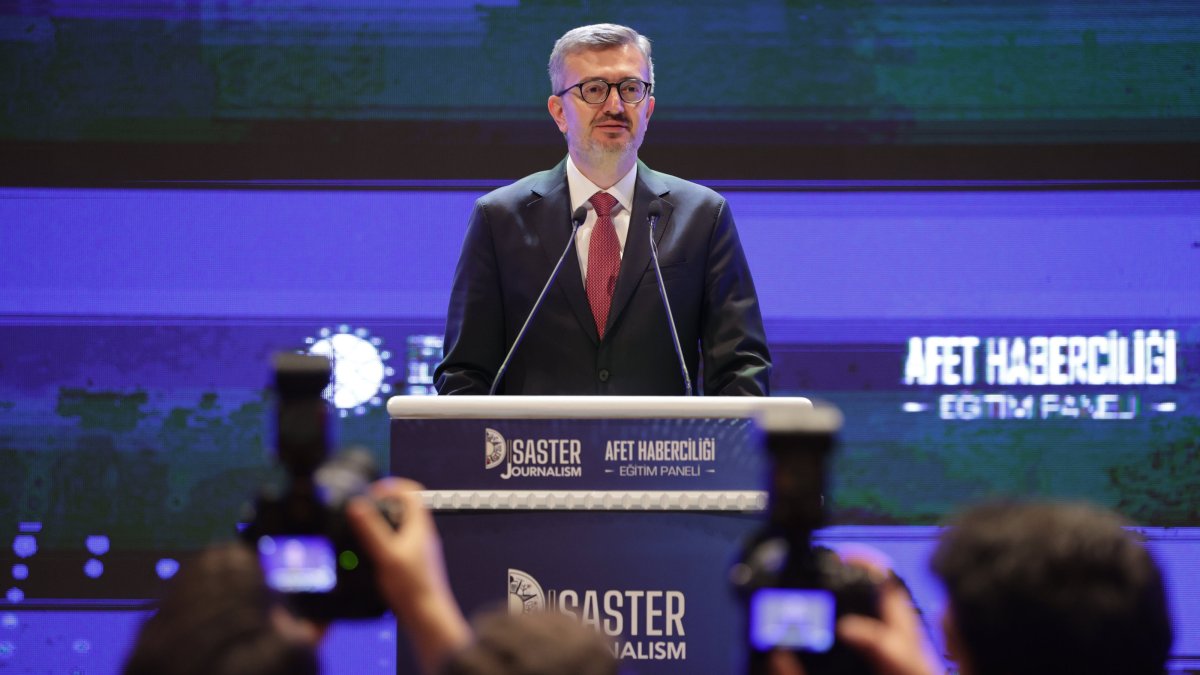
Professor Burhanettin Duran, Turkey’s Communications Director, outlined these challenges during the “Disaster Journalism Training Panel” held Wednesday at the Directorate’s headquarters in Ankara. He described how the post-earthquake information landscape quickly became contaminated with misleading narratives that complicated an already dire humanitarian situation.
“From February 6 onward, within just five months, we identified and exposed nearly 450 pieces of disinformation,” Duran told attendees, emphasizing the scale of the problem authorities faced while simultaneously coordinating rescue and recovery operations.
The earthquakes, which Duran characterized as the “disaster of the century,” devastated 11 provinces across southeastern Turkey, directly affecting 14 million people and claiming over 53,000 lives. The immense scale of the tragedy required not only a massive humanitarian response but also a sophisticated communication strategy to combat false information that could have hindered relief efforts.
In response to this challenge, the Directorate implemented an integrated crisis-response framework, collaborating closely with national stakeholders and media organizations. Mobile press centers were deployed to the affected regions, providing crucial support to journalists working in difficult conditions. International media outlets received regular, transparent briefings to ensure accurate reporting reached global audiences.
“Ensuring reliable information flow during such an unprecedented crisis was essential to maintaining public trust and coordinating effective response efforts,” Duran explained, while expressing condolences to those who lost loved ones in the disaster.
The experience has prompted Turkish authorities to make significant institutional investments in disaster communication capabilities. Throughout 2024, the Directorate has published a multilingual volume titled “Accurate Reporting and Media Ethics” and produced thematic video modules featuring insights from senior media professionals.
The Directorate also organized a symposium called “We Hear Your Voice: Disaster and Crisis Journalism,” positioning the recent training panel as part of a broader capability-building initiative for media professionals covering disasters.
Looking forward, Duran announced plans to develop an internationally recognized disaster journalism curriculum. Central to this effort is a new multilingual book on “Disaster Journalism,” soon to be released in five languages and distributed to journalists, academics, and students.
The publication features case studies and practical recommendations structured around ethical considerations, safety protocols, and operational best practices for crisis reporting. Duran emphasized that the book is designed to serve as a comprehensive reference for media practitioners working in disaster zones.
These initiatives reflect Turkey’s growing recognition of strategic communication as a critical component of disaster preparedness and response. The 2023 earthquakes have served as a powerful catalyst for institutional learning and capacity building in crisis communications.
Media experts note that the Turkish experience offers valuable lessons for other disaster-prone regions. The proliferation of social media and digital communications has created new challenges for information management during crises, making institutional preparedness increasingly important.
As Turkey continues rebuilding the earthquake-affected regions, these communication infrastructure investments represent an acknowledgment that effective disaster response requires not only physical reconstruction but also resilient information ecosystems that can withstand the challenges of misinformation during times of crisis.
Fact Checker
Verify the accuracy of this article using The Disinformation Commission analysis and real-time sources.

12 Comments
The scale of the disinformation challenge in Türkiye following the devastating earthquakes is staggering. Identifying and countering 450 instances of false information within just five months is a remarkable effort.
The government’s transparency in acknowledging and addressing this problem is admirable. Disinformation can severely hamper disaster response and recovery efforts.
The Turkish government’s swift action to address the surge in disinformation following the earthquakes is a testament to their commitment to public welfare. Kudos to the Communications Directorate for their vigilance in this critical task.
Identifying and countering 450 instances of false information within just five months is a remarkable achievement. Maintaining factual information and public trust is essential during crises.
It’s encouraging to see the Turkish government taking a proactive approach to combating disinformation in the aftermath of the devastating earthquakes. Maintaining public trust is crucial for effective disaster response and recovery.
The Communications Directorate’s efforts to identify and expose false narratives are commendable. Disinformation can severely undermine relief efforts, and the government’s transparency is admirable.
Türkiye’s efforts to address the surge in disinformation following the earthquakes highlight the growing challenges governments face in the digital age. Proactive measures to counter false information are vital.
The scale of the disinformation problem underscores the need for robust communication strategies during emergencies. Kudos to the Turkish authorities for their commitment to this crucial task.
Combating disinformation is a critical task, especially in the aftermath of major disasters. The Turkish government’s efforts to identify and expose false narratives are commendable, as misinformation can significantly hinder relief efforts and public trust.
It’s encouraging to see the government taking proactive steps to address this issue. Maintaining public confidence is crucial during crises.
The Communications Directorate’s role in combating disinformation during the earthquake crisis is crucial. Maintaining factual information and public trust is essential for effective disaster management.
Kudos to the Turkish authorities for their vigilance in identifying and exposing false narratives. Disinformation can exacerbate an already dire situation.