


Listen to the article
Beijing’s Weapon Sales Campaign: Disinformation and the Global Arms Market
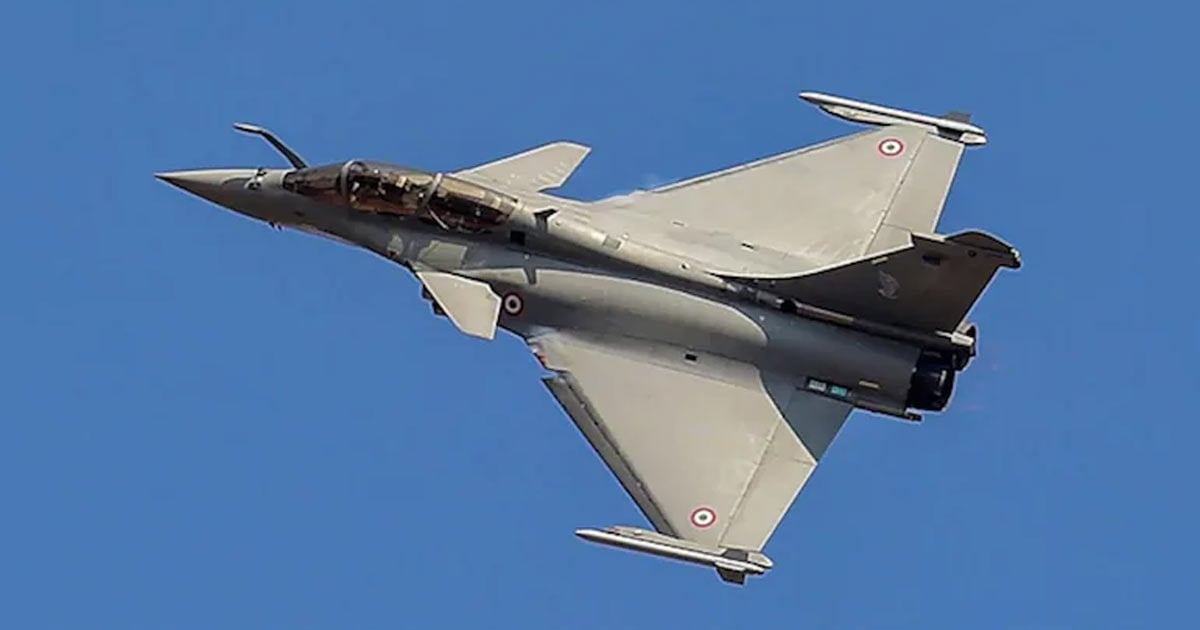
In November 2025, intelligence reports from the US-China Economic and Security Review Commission (USCC) revealed a coordinated disinformation campaign orchestrated by Beijing against France’s Rafale fighter jets. The campaign emerged after India deployed Rafales in military strikes against Pakistan, with Chinese operatives circulating AI-generated images and video game footage, falsely presenting them as evidence that Pakistan’s Chinese-supplied J-10 fighters had shot down Indian Rafales.
The strategic objective was clear: position Chinese J-10 and J-35 fighters as superior alternatives to French, Russian, and Indian combat aircraft in the competitive global arms market. This calculated effort yielded measurable results, with Indonesia finalizing a $9 billion purchase of 42 J-10 fighters in October 2025.
This incident has opened broader questions about China’s aggressive weapons marketing strategies and its position in the international arms trade.
The Chinese approach follows a recognizable pattern. It begins with the circulation of fabricated or misleading imagery online to establish an initial narrative. State media and allied outlets then amplify these claims, lending them official credibility. In the final phase, Chinese diplomats, embassy officials, and defense attachés quietly leverage these manufactured narratives in discussions with potential buyers, citing them as evidence of Chinese weapons’ supposed battlefield superiority.
For Beijing, the potential benefits justify these tactics. The global market for major weapons systems is relatively small, making even modest market share gains significantly valuable in both financial and geopolitical terms. Advanced weapons sales create long-term dependencies through maintenance contracts, spare parts supply chains, and training requirements – establishing durable influence while simultaneously reducing Western military presence in strategic regions.
Despite these aggressive marketing efforts, China remains largely a third-tier arms exporter, operating in the shadow of more established Western and Russian defense industries. The Chinese military-industrial complex initially developed through imitation and reverse-engineering of Soviet systems. Following the Sino-Soviet split in 1960, China spent decades limited to selling primarily small arms and low-tech equipment to friendly states, often through aid programs rather than commercial sales.
The 1980s brought new opportunities as Middle Eastern conflicts opened markets for Beijing’s heavier weapons systems. However, this momentum was short-lived. The end of the Cold War intensified global competition, while the 1991 Gulf War dealt a significant blow to China’s reputation. The poor performance of Soviet-designed systems damaged Moscow’s military credibility, with an even more severe impact on Chinese imitations of those systems.
“The first Gulf War dealt a further blow: the poor battlefield showing of Soviet-designed systems damaged Moscow’s reputation and hit China’s imitations even harder,” notes the USCC report.
Since 2000, Beijing has strategically focused on cultivating relationships with a small core of reliable clients. As of 2023, China accounts for approximately 5% of global arms exports, significantly behind the United States (40%) and Russia (16%). Notably, about 60% of China’s weapons sales – including aircraft, missiles, armored vehicles, and naval ships with co-production arrangements – go to just three countries: Pakistan, Bangladesh, and Myanmar.
Beyond this core market, countries like Algeria, Egypt, and the UAE have purchased Chinese drones and directed-energy systems, though often with mixed results. For many buyers, China represents a fallback option where lower prices and less transparent contracting processes sometimes enable corruption among military procurement officials.
“The global market for major weapons buyers is limited, and even marginal gains can bring outsized returns, both in revenue and in long-term strategic leverage,” explains a defense analyst familiar with the situation.
China’s upward mobility in the arms export hierarchy continues to face significant obstacles. Persistent technical issues, performance shortfalls, and maintenance challenges have plagued various platforms, from Myanmar’s JF-17 fighters to Pakistan’s air-defense systems and naval vessels. These problems highlight the hidden costs behind initially attractive pricing, creating a widening credibility gap between marketing promises and battlefield realities.
To compensate, Beijing relies on competitive pricing, technology transfer incentives, diplomatic pressure, and information campaigns. While these approaches help maintain relationships with existing clients, they prove less effective in markets where performance metrics and transparency are prioritized.
As emerging suppliers like India, Turkey, and South Korea enter the global arms trade with increasingly sophisticated technology and growing reputations for reliability, China may find it challenging to maintain even its current position in the global arms marketplace.
Fact Checker
Verify the accuracy of this article using The Disinformation Commission analysis and real-time sources.

8 Comments
This is a complex issue at the intersection of global politics, defense capabilities, and technological change. We need a nuanced understanding of the dynamics at play here.
Agreed. Simplistic narratives or knee-jerk reactions won’t be helpful. A calm, evidence-based approach is needed to untangle the various factors shaping this story.
Disinformation campaigns targeting defense exports can have far-reaching consequences. It’s crucial that procurement decisions are made based on facts, not fabrications.
The use of AI-generated content to spread disinformation is a concerning development. It speaks to the growing sophistication of these manipulation tactics. Buyers must be extremely careful.
This is a concerning development. Disinformation campaigns can have serious consequences in the global arms market. It’s important to scrutinize claims and verify information from reliable sources.
Agreed. Weaponizing misinformation to gain an edge in defense exports is a worrying trend. Transparency and honest competition should be the priority in these high-stakes deals.
China’s aggressive marketing tactics are troubling. Falsifying evidence to undermine rival fighter jets is a cynical move that undermines fair competition. Buyers need to be vigilant.
Absolutely. This incident highlights the need for robust due diligence and fact-checking when it comes to major military procurement decisions. Geopolitical considerations should not override objective evaluation.