


Listen to the article
South Korea’s Political Crisis Fuels Anti-China Disinformation Wave
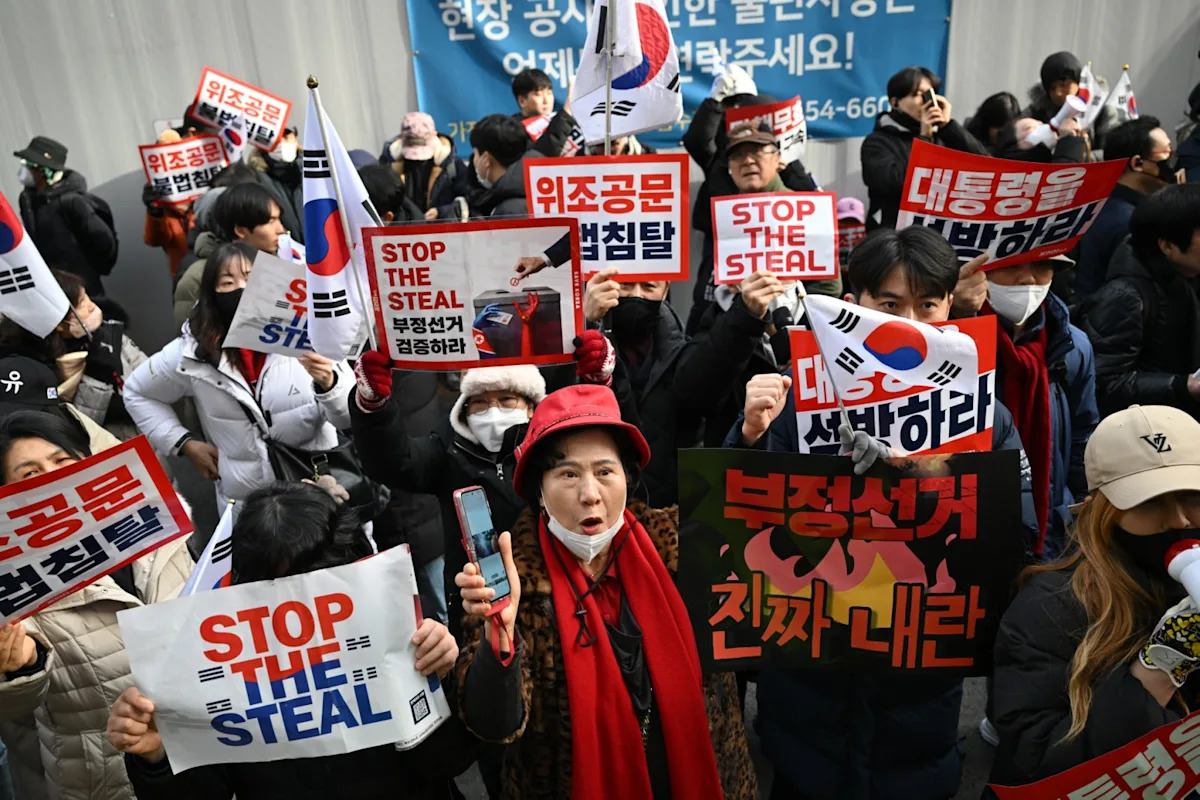
South Korea’s descent into political turmoil began in December 2024 when then-president Yoon Suk Yeol attempted to impose martial law, a move that failed and triggered the nation’s worst political crisis in decades. Yoon’s subsequent impeachment created fertile ground for conspiracy theories, with a particular narrative taking hold among his supporters: China was behind it all.
This claim spread rapidly through right-wing forums, popular YouTube channels, and eventually into mainstream political discourse. Supporters alleged Beijing had infiltrated protests, funded the impeachment campaign, and manipulated online opinion ahead of the June snap election that brought opposition leader Lee Jae Myung to power.
Yoon himself reinforced these suspicions during televised remarks defending his failed martial law decree. “Forces linked to North Korea and China are threatening our democracy from within,” he warned in December 2024.
However, an extensive review of the most widespread claims about Beijing’s influence found no substantive evidence supporting them. Instead, experts suggest the narrative reflected domestic political rivalries and South Korea’s growing anti-China sentiment.
“There used to be goodwill toward China, a sense of economic partnership,” explained Ha Nam-suk, a professor at the University of Seoul. “But as competition deepened and cultural disputes intensified, frustration turned into resentment. Politicians understood that, and some used it as a convenient rallying tool.”
The anti-China narrative manifested in small but vocal demonstrations throughout August and September, with right-wing groups waving flags and protesting against alleged “Chinese infiltration” in Seoul. Recent surveys confirm Koreans’ increasingly negative perceptions of China, while Chinese nationals residing in Seoul report facing growing discrimination and harassment.
Fabricated ‘Spy’ Arrests
The first major wave of disinformation emerged in January, shortly after Yoon’s impeachment. Right-wing YouTubers, including Shin In-kyun, claimed that “99 Chinese spies” had been arrested at the National Election Commission (NEC) and subsequently flown to Okinawa by the U.S. military.
This fabricated story quickly spread from fringe forums like Ilbe and DC Inside to conservative media outlet Sky eDaily and across Facebook. Fact-checkers determined the photos used actually showed Chinese fishermen detained for illegal fishing in 2016. Both the NEC and U.S. Forces Korea officially declared the reports “entirely false.”
Despite these denials, the claim spread rapidly through pro-Yoon networks online, with Yoon’s lawyer even referencing it during Constitutional Court proceedings.
“Younger Koreans already had strong resentment toward China over cultural and historical issues,” Ha noted. “After Yoon’s impeachment, online influencers weaponized that resentment, turning frustration into political identity.”
Another viral deception involved a video showing multiple social media dashboards running simultaneously, which circulated with the caption: “Chinese AI bot farm manipulating Korean opinion.” Investigation revealed it was actually a developer demonstrating an AI agent named Manus, not evidence of a state influence campaign.
Targeting the Judiciary
By February, conspiracy theorists targeted the Constitutional Court as it considered Yoon’s removal. Justice Moon Hyung-bae, who presided over the verdict, became the subject of a doctored image showing him supposedly “swearing allegiance before a Chinese flag.” The original Yonhap news agency photograph clearly showed South Korea’s flag.
Justice Moon faced continued threats and disinformation. When the Court unanimously voted to remove Yoon in April, the rumor gained traction among supporters who believed the judiciary had been “compromised” by foreign influence. Surveys conducted earlier this year indicated public distrust in the court had risen beyond 40 percent.
This mistrust fueled violence when pro-Yoon protesters stormed the Seoul Western District Court in January after it extended Yoon’s detention. Their anger was stoked by the growing conviction that the justice system was part of a political conspiracy.
Anti-Yoon demonstrations also became targets of false claims. A Chinese-language poster in central Seoul, intended to inform tourists about ongoing protests, was mischaracterized as “proof” that China had orchestrated Yoon’s downfall. Fact-checkers confirmed it was simply a translated notice with awkward phrasing that also appeared in English, Thai, and Japanese versions.
Election Disinformation
When opposition leader Lee won the June 3 presidential election, the anti-China narrative intensified. Social media posts falsely claimed The Guardian reported that China helped Lee win. In reality, the article merely cited a White House official’s broad concern about Chinese influence in democracies worldwide, without specific reference to South Korea’s election.
This distortion resonated across right-wing spaces, merging resentment over Yoon’s removal with suspicion of Lee’s perceived openness to dialogue with Beijing. People Power Party lawmaker Yoo Sang-bum claimed Chinese nationals “heavily participated in pro-impeachment rallies,” while YouTuber Shin declared the election “proved how deeply Chinese influence runs in our politics.”
Both assertions lacked evidence but garnered tens of thousands of interactions across social media platforms.
“Once those stories took hold, they became symbols of something larger,” explained Kim Hee-gyo, a professor at Kwangwoon University. “You see banners from far-right groups and even some opposition People Power Party figures using identical language — that kind of coordination doesn’t happen by chance.”
Immigration Policy Distortions
In the latter half of 2025, disinformation shifted to immigration policy. When the Justice Ministry introduced a visa-free program for Chinese tour groups ahead of the Asia-Pacific Economic Cooperation summit, former prime minister Hwang Kyo-ahn claimed it was a plot to enable election fraud.
“The local elections next year are on June 3,” Hwang wrote on Facebook. “I can already smell (the ruling party’s) plan to commit election fraud by mobilizing Chinese people en masse.”
The National Election Commission quickly clarified that only foreigners with at least three years of permanent residency can vote in local elections, making such fraud impossible. Nevertheless, a rumor spread that Chinese nationals could enter South Korea without passports or health checks, which the Justice Ministry firmly denied.
Kim suggests that with Yoon no longer a viable political focal point, hard-liners needed a new rallying cry. “They filled the vacuum by constructing an external enemy, turning general anti-China feeling into ideological sinophobia,” he said.
Ha drew parallels to similar patterns in other countries: “When you see protesters in Seoul shouting at Chinese residents, it feels chillingly familiar. This isn’t just a Korean problem. Across democracies, we’re watching crusade-style politics take root — where one side must die for the other to survive.”
Fact Checker
Verify the accuracy of this article using The Disinformation Commission analysis and real-time sources.

12 Comments
This is a concerning case of disinformation fueling political instability. It’s troubling to see unfounded claims of foreign interference being used to score domestic political points. Verifying information sources and facts is crucial to maintain a healthy democracy.
The political crisis in South Korea is a complex issue, and it’s important to approach it with objectivity and nuance. Unfounded claims of foreign interference, even from high-level officials, should be viewed with skepticism until properly substantiated.
The proliferation of conspiracy theories and unsubstantiated claims during political crises is a concerning trend. This case underscores the need for robust fact-checking and media literacy initiatives to combat the spread of disinformation.
While it’s understandable that people seek explanations for complex political events, resorting to unproven theories of foreign interference is counterproductive. A careful, evidence-based approach is necessary to address the root causes of this crisis.
This article serves as a cautionary tale about the dangers of unchecked disinformation campaigns. Robust media scrutiny and public awareness are essential to maintaining the integrity of the democratic process.
Well said. Disinformation poses a real threat to democratic stability, and this case highlights the importance of critical thinking and reliable information sources.
Conspiracy theories often spread quickly in times of political turmoil, but it’s important to scrutinize the evidence behind such claims. This article highlights the need for media literacy and fact-checking to combat the spread of disinformation.
Absolutely. Maintaining an informed and impartial public discourse is key to resolving political crises constructively.
This is a timely and important article that sheds light on the perils of disinformation in the digital age. Maintaining a well-informed and engaged citizenry is crucial for the health of any democracy.
This article highlights the importance of critical thinking and skepticism when evaluating claims about foreign influence in domestic politics. Maintaining a healthy, fact-based public discourse is essential for preserving democratic institutions.
It’s concerning to see how disinformation can exacerbate political tensions, even between neighboring countries like China and South Korea. Fact-based reporting and responsible leadership are needed to de-escalate such situations.
Allegations of foreign interference in domestic affairs are serious and should be investigated thoroughly. However, this case seems to show how such claims can be weaponized for political gain without solid proof. Careful analysis of the facts is crucial.