


Listen to the article
Chinese officials have strongly refuted recent allegations from a U.S. congressional commission that claimed Beijing orchestrated a disinformation campaign against France’s Rafale fighter jets following tensions between India and Pakistan earlier this year.
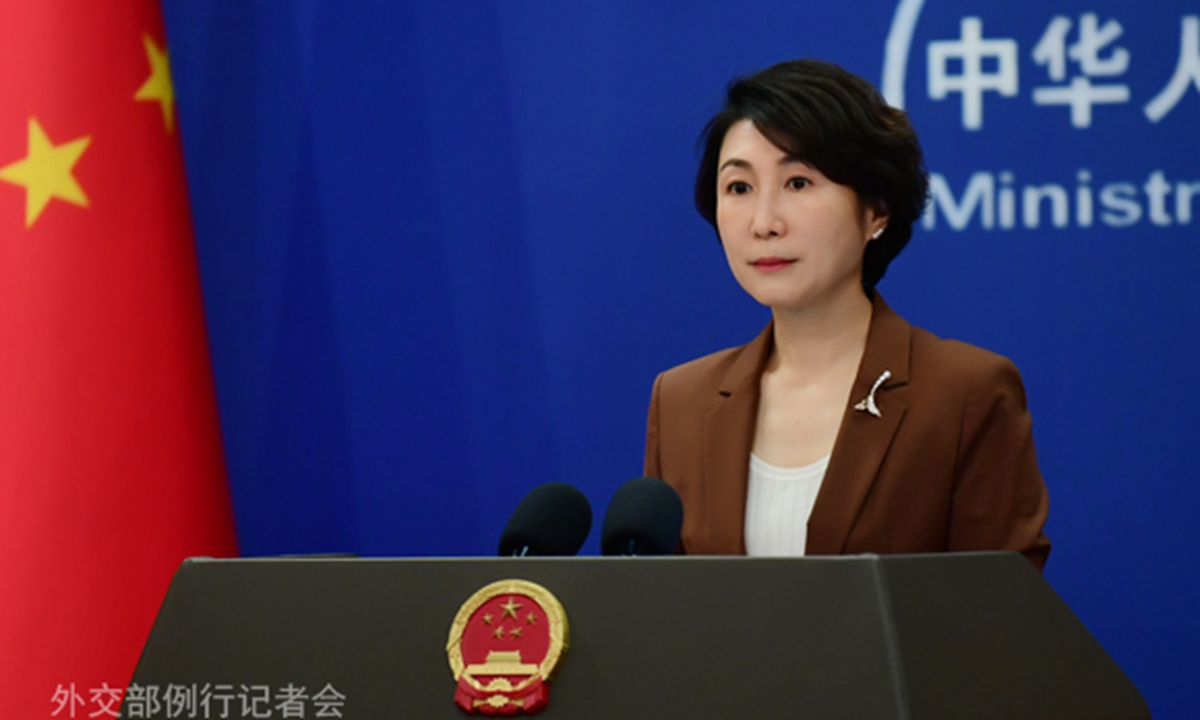
During a regular press briefing, Chinese Foreign Ministry spokesperson Mao Ning dismissed the accusations, stating that the U.S.-China Economic and Security Review Commission (USCC) “has consistently harbored ideological biases against China and is entirely lacking in credibility.” Mao went further, characterizing the commission’s report itself as “disinformation.”
The controversy stems from a USCC report alleging that China launched a coordinated campaign using manipulated images and other tactics to undermine the reputation of France’s Rafale fighter jets. According to the commission, this effort was timed to coincide with heightened military tensions between India and Pakistan in May, with the purported goal of promoting China’s domestically produced J-35 fighter jets as an alternative in regional defense markets.
The USCC, established by the U.S. Congress in October 2000, has a mandate to monitor and investigate national security and trade issues between the United States and China. Over the years, it has published numerous reports critical of Chinese military development, technological advancement, and regional influence strategies.
This latest dispute highlights the increasingly complex dynamics in the global defense market, where competition for lucrative fighter jet contracts has intensified among major arms-exporting nations. The Indo-Pacific region represents a particularly valuable market for military aircraft manufacturers, with countries across South and Southeast Asia modernizing their air forces amid regional security concerns.
France’s Rafale, manufactured by Dassault Aviation, has seen significant export success in recent years. India finalized a deal for 36 Rafale jets in 2016, with the final deliveries completed in 2022. The Indian Air Force has expressed satisfaction with the aircraft’s performance, and there have been discussions about potential follow-up orders.
Meanwhile, China has been working to establish itself as a credible alternative in the international arms market with aircraft like the J-35 (also known as the FC-31), a fifth-generation stealth fighter developed by the Shenyang Aircraft Corporation. While the aircraft has yet to secure its first foreign customer, China has been actively promoting its aerospace capabilities to nations seeking alternatives to Western military hardware.
The accusation of disinformation campaigns targeting competitor products represents a new dimension in the global arms competition. If true, such tactics would reflect the high stakes involved in securing multibillion-dollar defense contracts that can sustain domestic aerospace industries for decades.
For its part, China has consistently denied engaging in such practices and frequently characterizes U.S. commissions and reports as biased efforts to contain China’s rise as a global power. Beijing has particularly objected to what it perceives as American interference in its relations with countries in Asia and other regions.
The dispute also unfolds against a backdrop of broader U.S.-China tensions spanning trade, technology, security, and geopolitical influence. Both nations have accused each other of spreading misinformation on various issues, from COVID-19’s origins to human rights and territorial disputes.
As military modernization continues across the Indo-Pacific, competition among fighter jet manufacturers from the United States, Russia, Europe, and increasingly China, will likely intensify further, with marketing, diplomacy, and information campaigns playing crucial roles alongside traditional considerations of aircraft capability, cost, and technology transfer arrangements.
Fact Checker
Verify the accuracy of this article using The Disinformation Commission analysis and real-time sources.

7 Comments
The rivalry between Chinese and French fighter jets in the global arms market is an intriguing geopolitical dynamic. I wonder what the real motivations and tactics are behind these allegations of information warfare. This bears close watching as it could impact defense procurement decisions in the region.
Absolutely, the stakes are high when it comes to lucrative defense contracts. Both sides likely have strong incentives to try and sway public and military opinion through information campaigns.
The Chinese dismissal of the USCC report seems somewhat defensive. Are they trying to hide something, or is this just typical rhetorical posturing? I’d like to see more substantive evidence and analysis from multiple credible sources before drawing any firm conclusions about disinformation tactics.
I agree, getting to the bottom of this will require impartial investigation. Both sides have incentives to shape the narrative, so independent verification is crucial.
As someone interested in the commodities and energy sectors, I’m curious to see how this dispute over fighter jet technology could spill over into areas like rare earth minerals or other critical materials needed for defense applications. The geopolitical ripples could be far-reaching.
Interesting claims about a disinformation campaign by China against the Rafale jets. However, the Chinese dismissal of the USCC report as ‘lacking in credibility’ and ‘disinformation’ itself raises questions. More transparency and independent verification would be needed to get to the bottom of this.
This clash over fighter jet reputations underscores the high-stakes competition in the global arms market. Allegations of information warfare are troubling, but I’ll reserve judgment until more facts emerge. The geopolitical implications for industries like mining and energy are worth tracking closely.