


Listen to the article
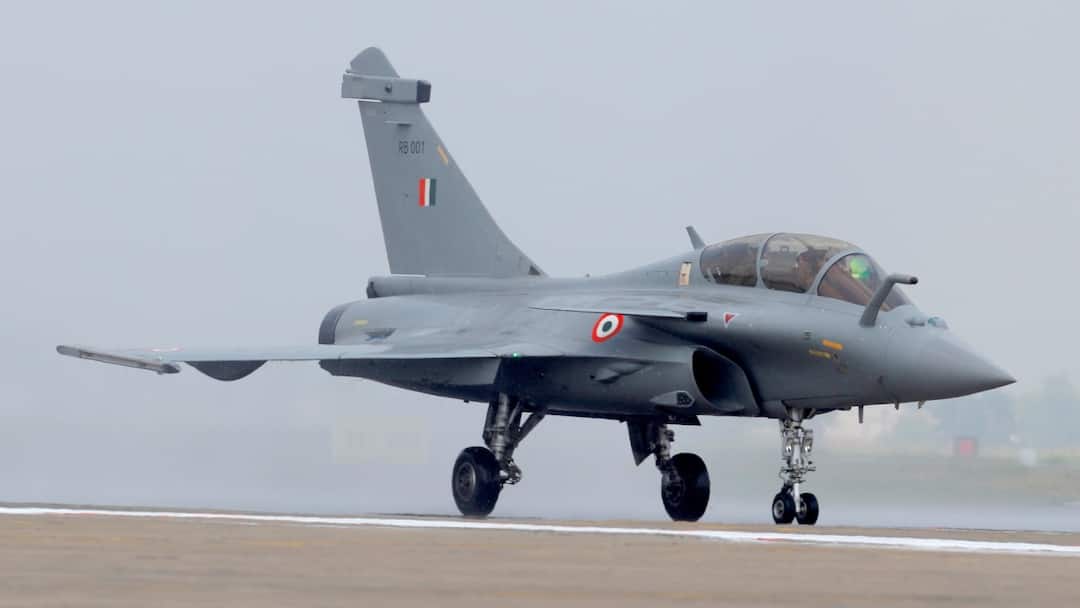
After a flare-up on the India-Pakistan border in May, China allegedly orchestrated a targeted disinformation campaign to undermine sales of French Rafale fighter jets while promoting its own J-35 aircraft, according to a new U.S. congressional report.
The U.S.-China Economic and Security Review Commission report, submitted to Congress on Wednesday, details how China used fake social media accounts to circulate AI-generated images showing fabricated debris of Rafale aircraft supposedly shot down by Chinese weapons. These images were deliberately spread through Pakistan-based social media accounts to damage the Indian Air Force’s reputation and impact Rafale sales.
This bipartisan assessment of China’s global strategy offers 28 recommendations spanning technology, economics, and national security, while examining how Beijing’s industrial policy has positioned it as a leader in emerging technologies.
In the report’s opening statement, Commission Chair Reva Price highlights President Xi Jinping’s aim to increase global dependence on China, indicating continued heavy state support for strategic industries. The brief but intense India-Pakistan confrontation in May “drew global attention” largely because Pakistan relied on Chinese weaponry and reportedly used Chinese intelligence during the crisis.
The document cites India’s claims that China provided Pakistan with “live inputs” on Indian military positions—allegations that Pakistan denied and China neither confirmed nor rejected.
The review notes that China expanded its military partnership with Pakistan in 2025, further straining already tense relations with India. While the commission stops short of labeling the clash a “proxy war,” it observes that Beijing “opportunistically leveraged the conflict” to test and showcase its advanced military systems in real-world combat conditions.
The confrontation marked the first combat deployment of several modern Chinese weapons systems, including the HQ-9 air defense system, PL-15 air-to-air missiles, and J-10 fighter aircraft. This real-world demonstration served as a powerful marketing tool for Chinese military exports.
In June 2025, shortly after the border clash, China reportedly offered Pakistan a major defense package that included 40 J-35 fifth-generation fighter jets, KJ-500 aircraft, and ballistic missile defense systems—a move that analysts view as further cementing the strategic partnership between Beijing and Islamabad while challenging India’s regional security position.
The report reveals that Chinese embassies actively promoted the performance of these weapons systems in the weeks following the confrontation, aiming to boost Beijing’s global arms sales. French intelligence assessments cited in the document claim that China deliberately undermined Rafale exports by circulating AI-generated images and video game-derived visuals of supposedly “destroyed” aircraft.
This sophisticated disinformation campaign reportedly achieved enough credibility that Chinese Embassy officials successfully persuaded Indonesia to pause an ongoing Rafale purchase, demonstrating the real-world economic impact of China’s information operations.
Beyond military concerns, the commission warns that the Dalai Lama’s succession represents another potential flashpoint in the region. The report predicts the emergence of two competing successors—one recognized by the Tibetan Buddhist Gaden Phodrang Trust and another approved by the Chinese government.
Beijing has already lodged formal complaints after Indian Prime Minister Narendra Modi wished the 14th Dalai Lama on his birthday, and a senior Indian minister reaffirmed that only the Dalai Lama’s trust has the authority to identify his successor. China urged India to refrain from supporting what it characterized as “anti-China separatist activities under the guise of religion.”
The report concludes that the eventual selection of the 15th Dalai Lama will have significant diplomatic implications, potentially reshaping international alignments and further straining Sino-Indian relations in the years ahead.
This latest assessment underscores growing concerns about China’s expanding influence in South Asia and its increasingly sophisticated approach to combining military sales, information operations, and diplomatic leverage to advance its strategic interests in the region.
Fact Checker
Verify the accuracy of this article using The Disinformation Commission analysis and real-time sources.

9 Comments
This report highlights the importance of fact-checking and source verification, especially when it comes to sensitive defense and security matters. Disinformation can have real-world consequences that extend beyond just the parties involved.
China’s purported disinformation campaign against the Rafale jets is worrying. I wonder if India will address this issue through diplomatic channels or explore other options to mitigate the impact on their procurement decisions.
The report’s recommendations on technology, economics, and national security seem timely given the India-Pakistan tensions and China’s alleged information warfare tactics. This is a complex geopolitical landscape that requires vigilance and multilateral cooperation.
I appreciate the bipartisan assessment in the US report on China’s global strategy. Understanding Beijing’s industrial policies and dependence-building efforts is crucial, especially when it comes to emerging technologies with national security implications.
The allegations against China’s actions are serious. I hope the recommendations in the US report lead to meaningful steps to counter such malign influence operations and protect the integrity of critical defense procurement processes.
The use of AI-generated images to spread false narratives is a concerning trend. Governments and tech platforms need to stay ahead of these evolving tactics to maintain public trust and informed decision-making.
While the details are still emerging, this report underscores the need for greater international cooperation and information-sharing to combat cross-border disinformation campaigns that can destabilize regional security.
Interesting report on China’s alleged disinformation campaign targeting the Rafale jet sales. It highlights the complex geopolitical dynamics and the use of emerging tech like AI-generated images to sway public opinion. Curious to see if India takes any steps to counter this.
Concerning if true that China used fake social media accounts to undermine the Rafale jets. This speaks to the growing challenge of disinformation and the need for robust measures to identify and address it, especially in sensitive defense procurement decisions.