


Listen to the article
China has condemned the recent U.S. seizure of foreign vessels in international waters as a serious violation of international law, according to a statement from the Chinese foreign ministry on Thursday.
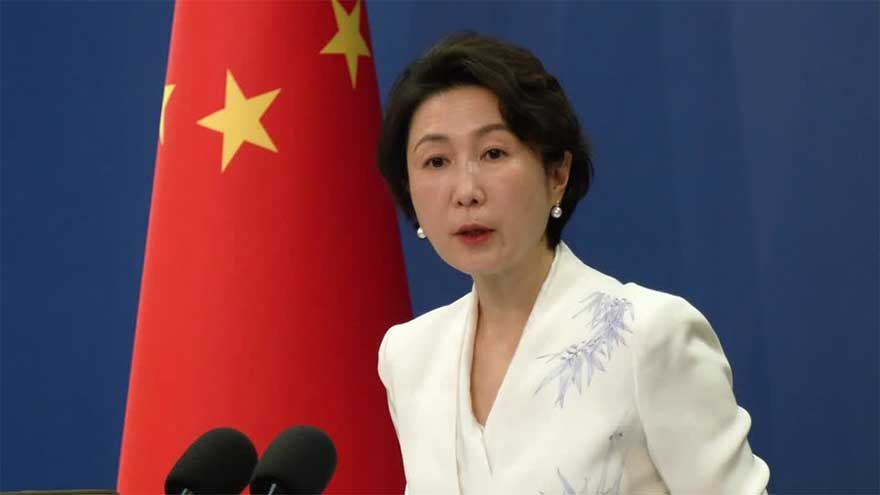
“China has always opposed illegal unilateral sanctions without the basis of international law and without the authorization of the United Nations Security Council,” ministry spokesperson Mao Ning told reporters during a regular press briefing in Beijing.
The statement comes in response to Wednesday’s U.S. operation in the Atlantic Ocean, where American forces seized two Venezuela-linked oil tankers, including one sailing under the Russian flag. This aggressive maritime enforcement action represents a significant escalation in the Biden administration’s efforts to control oil flows in the Americas and apply pressure on Venezuela’s government.
The seizures followed a dramatic U.S. military raid on Caracas last Saturday that reportedly resulted in the capture of Venezuelan President Nicolas Maduro. These actions mark an intensification of the U.S. blockade targeting vessels under sanctions that operate routes to and from Venezuela, a key member of the Organization of Petroleum Exporting Countries (OPEC).
The incident threatens to further strain already tense relations between Washington and Beijing, as China has increasingly positioned itself as a defender of national sovereignty against what it characterizes as American overreach in international affairs.
Energy analysts suggest these maritime interdictions could disrupt global oil supply chains and potentially drive up prices if they signal a broader campaign against sanctioned petroleum shipments. Venezuela, despite sitting on the world’s largest proven oil reserves, has seen its production capacity severely limited by years of sanctions and underinvestment.
In a separate matter addressed during the same press conference, Mao Ning also rejected reports of Chinese hackers targeting U.S. congressional committees in an email breach. The Financial Times reported Wednesday that a Chinese hacking group had compromised emails used by staff members of several powerful committees in the U.S. House of Representatives.
“We have always opposed and combated hacking activities in accordance with the law, and we also oppose the dissemination of false information about China for political purposes,” Mao stated, describing the allegations as “politically motivated disinformation.”
The reported cyberattack allegedly targeted four influential congressional committees, though Reuters noted it could not immediately verify the claims. Liu Pengyu, a spokesperson for the Chinese Embassy in Washington, similarly condemned what he called “unfounded speculation and accusations.”
U.S. authorities, including the Federal Bureau of Investigation, declined to comment on the allegations, while the White House and offices of the reportedly targeted committees did not immediately respond to requests for comment.
Cybersecurity experts note that these types of allegations have become increasingly common in U.S.-China relations, with both nations accusing each other of state-sponsored digital espionage. The timing of these claims is particularly sensitive given ongoing tensions over trade, technology, and geopolitical influence.
The dual controversies underscore the multifaceted nature of the increasingly complex relationship between the world’s two largest economies, with disagreements spanning maritime law, sanctions policy, cybersecurity, and human rights.
As the situation develops, international observers will be watching closely to see whether these disputes escalate further or whether diplomatic channels might be engaged to address the growing list of contentious issues between Washington and Beijing.
Fact Checker
Verify the accuracy of this article using The Disinformation Commission analysis and real-time sources.

9 Comments
This is a concerning situation. While I understand the US wanting to enforce sanctions, seizing foreign vessels in international waters seems like a violation of sovereignty. China has a point about the need for UN authorization for such actions.
The US-China tensions over this issue highlight the complexities of enforcing sanctions and navigating international maritime law. Both sides have valid points, and a diplomatic resolution will be crucial to avoid further escalation.
The US is certainly ramping up its enforcement of sanctions against Venezuela. However, unilaterally seizing foreign ships in international waters is a risky escalation that could lead to further tensions. Diplomacy and working through international institutions would be a wiser approach.
The US-China dispute over these maritime interdictions speaks to the broader geopolitical tensions at play. While the US may have security justifications, China’s objections about respecting international law also carry weight. Careful diplomacy will be key to finding a balanced solution.
I’m curious to hear more details on the legal justification for these seizures. Enforcing sanctions is one thing, but violating international law in the process seems problematic. China’s objections highlight the broader geopolitical tensions at play here.
The US crackdown on oil flows to and from Venezuela is understandable given the political situation there. But these latest maritime interdictions appear to push the boundaries of international law. Careful diplomacy will be needed to resolve this dispute constructively.
Wow, the US is really taking an aggressive stance against Venezuela’s oil industry. While sanctions may be justified, seizing foreign ships in international waters seems like a major escalation. I hope cooler heads can prevail and this dispute can be resolved through proper legal channels.
I’m curious to learn more about the legal basis the US is using to justify these seizures. Enforcing sanctions is one thing, but violating international maritime law raises serious concerns. Hopefully the two sides can find a constructive way to resolve this dispute.
This is a delicate situation that requires a nuanced approach. While the US may have legitimate security concerns, unilaterally seizing foreign vessels could set a dangerous precedent. China’s objections point to the need for a more multilateral framework to address these challenges.