


Listen to the article
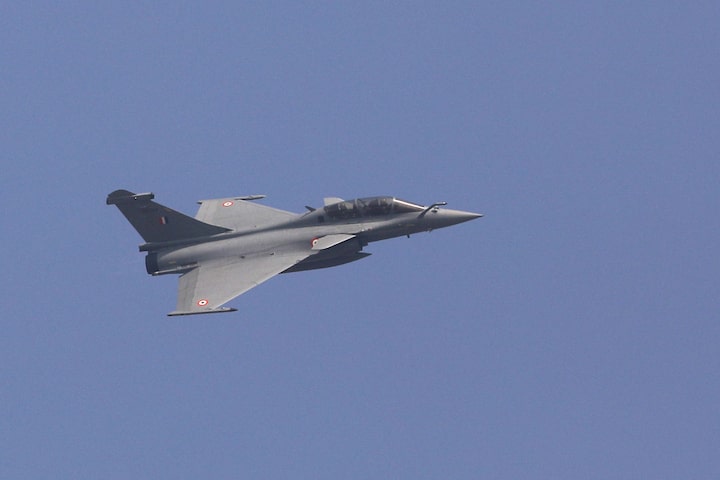
China has been accused of launching a coordinated disinformation campaign targeting the French-made Rafale fighter jet following a military clash between India and Pakistan in May, according to a new report from the bipartisan U.S.-China Economic and Security Review Commission. The findings come as Ukraine moves forward with plans to acquire up to 100 Rafale jets from manufacturer Dassault Aviation.
The commission’s report, released Tuesday, alleges that Beijing deployed a network of fake social media accounts to spread fabricated content, including AI-generated images and video game footage. This content falsely portrayed debris from Rafale jets supposedly destroyed by Chinese weaponry during the May conflict, in which India deployed the aircraft against Chinese weapons systems used by Pakistan.
“The report issued by the committee itself is false,” Chinese foreign ministry spokesperson Mao Ning said in response to the allegations. “The committee has always held an ideological bias against China and has no credibility at all.”
While the report stops short of characterizing the May skirmish between India and Pakistan as a “proxy war” orchestrated by China, it suggests Beijing seized on the opportunity to promote its own military hardware. According to the commission, Pakistani forces reportedly downed at least one Rafale jet using Chinese-manufactured J-10 fighter aircraft during the four-day conflict.
The commission’s findings extend beyond social media manipulation. It claims that Chinese embassy officials actively worked to dissuade Indonesia from proceeding with a planned purchase of Rafale jets, instead promoting China’s J-10 fighter as a comparable and competitive alternative. Indonesia’s defense ministry has not yet responded to these allegations.
The timing of these accusations is particularly significant as Ukraine recently signed a letter of intent to acquire up to 100 Rafale jets from Dassault Aviation over the next decade. This potential deal represents one of the largest military procurement initiatives for Ukraine since Russia’s full-scale invasion in February 2022.
The Rafale, a twin-engine multirole fighter aircraft, has been a cornerstone of France’s defense exports, with more than half a dozen countries already operating the platform. The jet has gained international prominence for its advanced avionics, versatile weapons capabilities, and relatively lower operational costs compared to some American alternatives.
Defense industry analysts suggest China’s alleged disinformation campaign reflects growing competition in the global arms market, where Beijing has been working to position its aerospace industry as a credible alternative to Western manufacturers. The J-10 fighter, produced by Chengdu Aircraft Industry Group, represents China’s efforts to develop indigenous combat aircraft capable of competing with Western designs.
The May conflict that triggered this alleged disinformation campaign has placed increased scrutiny on the Rafale’s combat performance. While details of the engagement remain contested, the incident has created uncertainty in the international fighter jet market at a time when several nations are evaluating options for fleet modernization.
For Dassault Aviation, the allegations come during a period of significant export success for the Rafale program, with recent orders from countries including Greece, Croatia, and the United Arab Emirates. The French government has not yet issued a formal response to the claims in the U.S. commission’s report.
Military technology experts note that information warfare surrounding weapons systems performance has become increasingly sophisticated, with social media providing an effective channel for rapidly spreading both genuine and fabricated combat assessments. This development presents new challenges for defense contractors and governments alike in managing perceptions of military hardware effectiveness.
As Ukraine moves forward with its potential Rafale acquisition, the allegations highlight the complex geopolitical dimensions that now routinely accompany major international arms deals.
Fact Checker
Verify the accuracy of this article using The Disinformation Commission analysis and real-time sources.

11 Comments
Exploration results look promising, but permitting will be the key risk.
Good point. Watching costs and grades closely.
Good point. Watching costs and grades closely.
Uranium names keep pushing higher—supply still tight into 2026.
I like the balance sheet here—less leverage than peers.
Good point. Watching costs and grades closely.
Exploration results look promising, but permitting will be the key risk.
I like the balance sheet here—less leverage than peers.
Production mix shifting toward Disinformation might help margins if metals stay firm.
Good point. Watching costs and grades closely.
Good point. Watching costs and grades closely.