


Listen to the article
China Accused of Running Disinformation Campaign Following India-Pakistan Border Crisis
A recent report to the U.S. Congress has revealed that China allegedly orchestrated a sophisticated disinformation campaign after the India-Pakistan border conflict of May 2025, using artificial intelligence to undermine French defense exports while promoting its own military hardware.
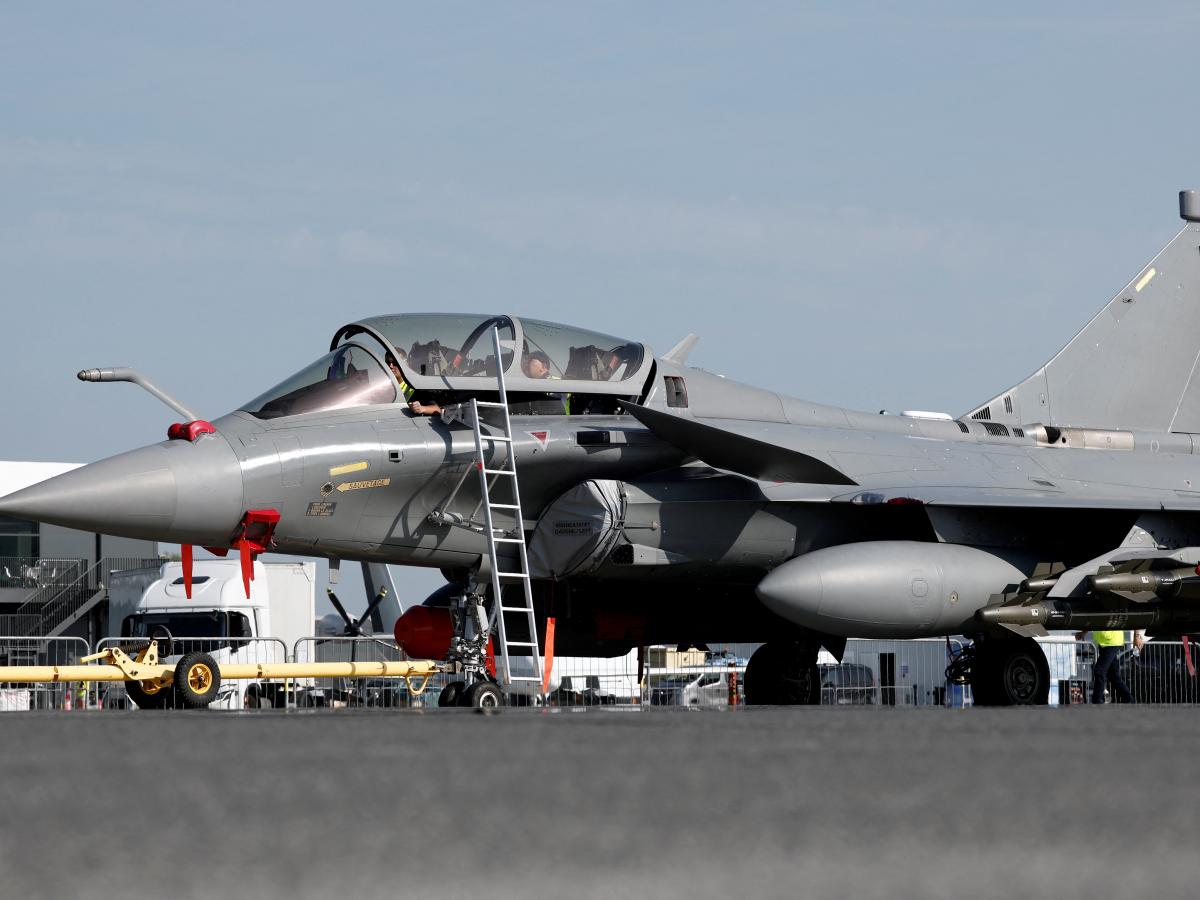
According to the U.S.-China Economic and Security Review Commission’s comprehensive report, China deployed fake social media accounts to distribute AI-generated images purporting to show debris from French Rafale aircraft supposedly destroyed by Chinese weaponry during what India called “Operation Sindoor.”
“Following the May 2025 India-Pakistan border crisis, China initiated a disinformation campaign to hinder sales of French Rafale aircraft in favor of its own J-35s,” the report states, detailing how the campaign used sophisticated digital manipulation to create false evidence of Rafale failures in combat conditions.
French intelligence sources cited in the report claim the disinformation operation had tangible results, with Chinese embassy officials successfully convincing Indonesia to halt a planned purchase of Rafale jets. This maneuver appears to be part of a broader strategy to expand China’s influence in regional military procurement markets.
The commission’s 700-page report categorizes these activities as “gray zone” operations — coercive military, economic, and influence operations that fall short of conventional warfare but serve to advance China’s strategic interests. Such tactics represent Beijing’s efforts to reshape international security norms while avoiding direct military confrontation.
The May 2025 clash between India and Pakistan erupted after Pakistan allegedly sponsored a terrorist attack in Jammu and Kashmir that killed 26 civilians in Pahalgam on April 22. India’s military response, dubbed Operation Sindoor, brought to light China’s deep involvement with Pakistan’s defense infrastructure.
Indian Army officials claimed during the conflict that China provided Pakistan with “live inputs” on Indian military positions throughout the confrontation. The U.S. report supports this assertion, noting that China “effectively used the conflict as a testing ground for its own military capabilities,” though Pakistan denied these allegations, and China has neither confirmed nor denied its involvement.
The report highlights China’s significant role as Pakistan’s primary defense partner, providing approximately 82 percent of Pakistan’s arms imports from 2019 to 2023. This military relationship expanded notably in late 2024 and early 2025, with joint exercises including the three-week Warrior-VIII counterterrorism drills and China’s naval participation in Pakistan’s multinational AMAN exercises.
“India’s commentators viewed the drills as losses in their relationship with China and as direct security threats to its territorial positions,” the report notes, underscoring the regional tensions exacerbated by these military partnerships.
In the aftermath of the border crisis, Chinese embassies reportedly celebrated the performance of Chinese weapon systems in the conflict, using these claims to bolster international sales of their defense equipment. The report suggests Beijing “opportunistically leveraged the conflict to test and advertise the sophistication of its weapons,” advancing both its strategic position against India and its commercial ambitions in the global defense market.
Media reports during the conflict claimed that Indian Rafale jets were downed in combat, allegations that India strongly refuted as “fake and baseless.” Indian Air Force Air Marshal AK Bharti acknowledged the combat situation but maintained that “all our pilots are back home,” implicitly denying any aircraft losses.
The U.S. commission’s findings raise significant concerns about the evolving nature of information warfare in regional conflicts and highlight China’s increasingly sophisticated approach to projecting power and influence across South Asia’s complex geopolitical landscape.
Fact Checker
Verify the accuracy of this article using The Disinformation Commission analysis and real-time sources.

8 Comments
This is a complex geopolitical issue with important implications for the global defense industry. I’ll be curious to see how this plays out and if it leads to any changes in how countries approach military acquisitions going forward.
Absolutely, the fallout from this alleged disinformation campaign could have far-reaching consequences. Maintaining trust in defense procurement processes is vital.
Interesting allegations about a Chinese disinformation campaign targeting the Rafale jets. I wonder what the motivations were behind this and if there’s solid evidence to back up the claims. Do you think this will impact France’s defense exports going forward?
The report seems to suggest the campaign was intended to undermine French military exports in favor of Chinese equipment. It will be important to see if the allegations can be substantiated.
If the claims in this report are accurate, it highlights the growing challenge of combating state-sponsored disinformation campaigns. Protecting the integrity of defense procurement decisions is critical, so I hope rigorous measures are taken to counter these tactics.
The report’s findings are quite alarming, if true. The use of AI and social media to spread disinformation is a concerning tactic that needs to be robustly addressed. Transparency and independent verification will be key in this case.
Sophisticated use of AI and social media to spread disinformation – this is a concerning trend we’ve seen more of lately. I hope the details in this report are thoroughly investigated to understand the full scope and impact of China’s alleged actions.
Indeed, the use of AI-generated content to create false narratives is a worrying development. Transparency and accountability are crucial when it comes to these kinds of influence operations.