


Listen to the article
European Parliament Initiative Calls for Stricter Measures Against Disinformation
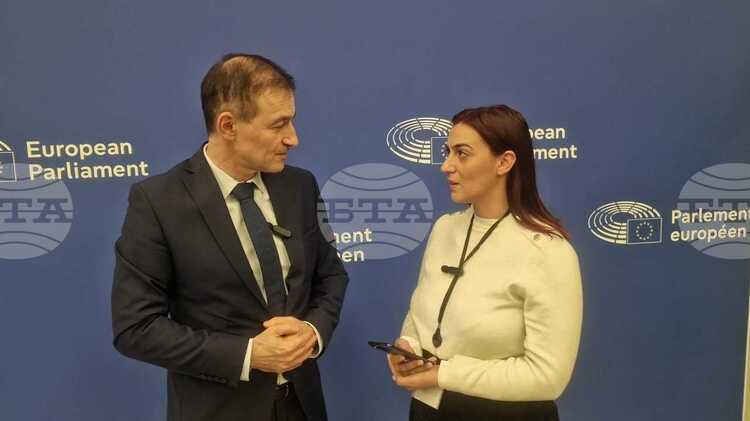
A new initiative calling for stricter legislative measures to combat disinformation was unveiled Wednesday at the European Parliament by Bulgarian MEP Andrey Kovatchev of the GERB party, aligned with the European People’s Party. The cross-party effort brings together four major political groups, including Socialists and Democrats, Greens/European Free Alliance, and Renew Europe.
Speaking at a press conference in Brussels, Kovatchev highlighted the growing concern over how digital algorithms shape information consumption and public opinion across the European Union. The initiative aims to address the opacity of algorithms used by major technology companies that determine which content becomes visible to larger audiences.
“This is an issue that affects millions of people, not only in Bulgaria but worldwide,” Kovatchev told BTA in an interview following the announcement. “The business algorithms deployed by major companies often target negative emotions and can be weaponized by foreign actors, particularly the Russian Federation, to influence public attitudes.”
The proposal comes amid increasing anxiety within EU institutions about the role of digital platforms in spreading false information. Recent years have seen numerous instances where disinformation campaigns have allegedly influenced electoral processes, public health measures, and geopolitical perceptions across member states.
At the heart of the initiative is a demand for greater transparency in how these algorithms function. The coalition wants to ensure that algorithms don’t prioritize false or divisive content that can mislead citizens and undermine democratic processes. This push builds upon existing EU legislation, including the Digital Services Act and the Code of Practice on Disinformation, which already impose certain obligations on online platforms.
Kovatchev provided several examples of disinformation currently circulating in Bulgaria. These include claims that adopting the euro would harm the Bulgarian economy, that Ukraine somehow deserved the Russian invasion, or that Ukrainian authorities have mistreated ethnic Bulgarians in Ukraine—narratives he categorically dismissed as “entirely false and not reflecting reality.”
The timing of this initiative is particularly significant as Bulgaria prepares for its eventual eurozone entry and continues to navigate its position regarding the Russia-Ukraine conflict. The country has historically maintained close cultural ties with Russia while simultaneously pursuing European integration, creating fertile ground for competing narratives.
Digital disinformation has become an increasingly pressing issue for the European Union. A 2023 Eurobarometer survey indicated that 83% of Europeans consider disinformation a threat to democracy, with 73% reporting regular encounters with news they believe misrepresent reality or are outright false.
The coalition’s proposal will likely face scrutiny from digital rights advocates who have previously expressed concerns about potential overreach in content regulation. Technology companies may also resist further regulatory obligations, arguing that excessive transparency requirements could compromise their intellectual property or enable malicious actors to game their systems.
The initiative reflects a broader trend of European policymakers taking a more assertive stance on digital governance. The EU has positioned itself as a global leader in tech regulation with landmark legislation such as GDPR, the Digital Services Act, and the Digital Markets Act.
As the proposal moves through the European legislative process, it will require significant support to become binding regulation. However, the cross-party nature of the initiative suggests there may be sufficient political will to advance meaningful reforms in how digital information is prioritized and presented to European citizens.
The European Commission is expected to evaluate the proposal in the coming weeks, potentially incorporating elements into its ongoing digital policy framework.
Fact Checker
Verify the accuracy of this article using The Disinformation Commission analysis and real-time sources.

10 Comments
While I’m sympathetic to the goals, I have some concerns about the potential for overreach with stronger EU measures against disinformation. Freedom of expression needs to be carefully balanced against the need to limit harmful misinformation.
Addressing the role of algorithms in the spread of disinformation is a complex challenge, but an important one. I’m curious to see the specific policy proposals that emerge from this EU initiative and how they aim to tackle this issue effectively.
Disinformation is a growing problem, especially when it’s amplified by powerful algorithms. I hope this EU effort can find effective ways to combat it while respecting free speech. Striking the right balance will be critical.
Disinformation is a real threat, but so is over-censorship. I hope this EU effort can find a sensible middle ground that upholds democratic principles while effectively countering the worst abuses. It’s a delicate balance to strike.
Agreed, it’s a fine line to walk. Transparency and accountability for tech platforms are crucial, but without compromising free speech protections. This will require nuanced policymaking.
Combating disinformation requires a multi-pronged approach. This EU initiative seems like a step in the right direction, but the details will be key. I’m curious to see how they plan to address the complex challenges around algorithms and foreign influence.
Agreed, the devil will be in the details. Crafting effective policies in this space is no easy task, but the stakes are high so it’s important they get it right.
This is an important issue that deserves attention. Disinformation can have serious consequences for public discourse and democratic processes. Stricter EU measures seem warranted to address the opacity of algorithms and their potential for manipulation.
I’m glad to see this cross-party initiative taking on the challenge of disinformation. Algorithms that amplify negative content and foreign influence operations pose real threats to informed decision-making. Robust and transparent solutions are needed.
You’re right, the opacity of these algorithms is a major concern. Increased transparency and accountability for tech companies is crucial.