


Listen to the article
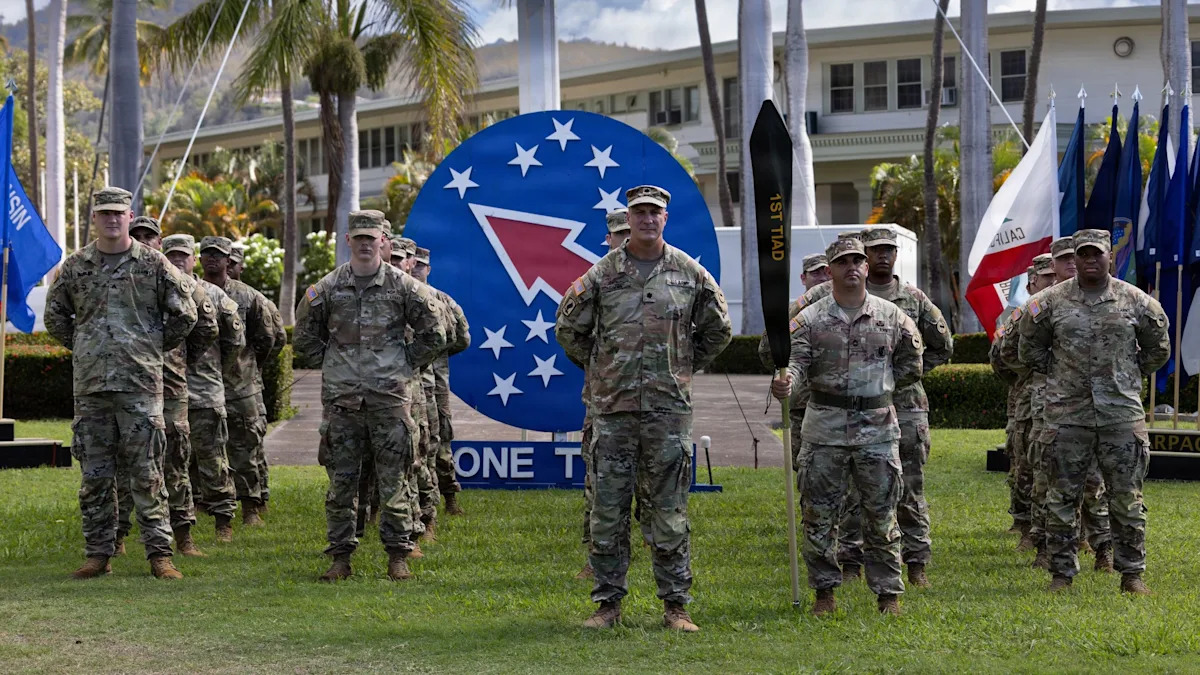
The U.S. Army has launched a specialized unit dedicated to combating disinformation in the Indo-Pacific region, marking a significant evolution in how the military approaches information warfare. The newly activated 1st Theater Information Advantage Detachment (1st TIAD), based at Fort Shafter, Hawaii, will serve as the frontline defense against enemy influence campaigns in an increasingly contested information environment.
Officially activated earlier this month, the 1st TIAD consists of 65 soldiers organized into five teams with expertise spanning multiple disciplines including cyber operations, intelligence, psychological operations, public affairs, electronic warfare, civil affairs, and information operations. This multidisciplinary approach reflects the complex nature of modern information warfare.
U.S. Indo-Pacific Command described the unit’s mission as countering “malign influence,” protecting friendly information assets, strengthening cooperation with regional partners, and promoting stability throughout the region. In an era where information campaigns can be as strategically significant as military positioning, the unit is tasked with winning what amounts to a public affairs and perception war.
Col. Sean Heidgerken, who commands the new unit, emphasized the strategic importance of information dominance. “Our mission is clear: to enable USARPAC to sense, understand, decide, and act faster than any adversary while strengthening cooperation with our allies and partners throughout the region,” Heidgerken said. He described the unit as being “designed to maneuver within the information environment and maintain positions of advantage.”
The creation of the 1st TIAD comes as part of a broader strategic pivot by the U.S. military toward preparing for potential peer-to-peer conflict in the Pacific region. After decades focused primarily on counterinsurgency operations in the Middle East, the military has been revitalizing old bases, conducting large-scale exercises with regional partners, and repositioning significant air power to the western Pacific to address potential threats from nations like North Korea and China.
China, in particular, appears to be a primary concern. Lt. Gen. Joel Vowell, Deputy Commanding General of U.S. Army Pacific, specifically cited Beijing’s information tactics during the unit’s activation ceremony. “When Beijing spreads disinformation claiming the U.S. is an unreliable partner, the 1st TIAD helps craft truthful counter-narratives that expose these contradictions and reinforce our credibility,” Vowell said.
The strategic importance of the Indo-Pacific region cannot be overstated, according to military leadership. Vowell described it as “the epicenter of 21st-century geopolitics,” noting that it is “home to 60 percent of the world’s population.”
This new unit represents just one component of a broader military-wide effort to adapt to the evolving landscape of electromagnetic and intelligence warfare. After years of struggling to keep pace with rapidly changing technologies, various branches of the U.S. military are establishing specialized units to address these emerging threats.
The Space Force has been rapidly deploying intelligence-gathering satellites and ground-based jamming systems. Earlier this year, the National Guard established the 111th Electromagnetic Warfare Company as part of Georgia National Guard’s 221st Intelligence and Electronic Warfare Battalion—the first of several planned Army units dedicated to direct electronic warfare operations.
The Army’s approach appears to involve both creation and reorganization. While the 1st TIAD is being established, the Army also deactivated its 1st Information Operations Command this year, suggesting a strategic realignment of information warfare capabilities.
Looking ahead, the Army plans to activate two additional Theater Information Advantage Detachments in 2024. The 2nd TIAD will fall under Army Cyber Command, while the 3rd TIAD will operate as part of U.S. Army Europe and Africa, extending the information warfare capability across multiple theaters of operation.
This expansion indicates the Pentagon’s recognition that future conflicts will be fought not just on physical battlefields but also in the information domain, where perception, narrative control, and rapid response to disinformation could prove decisive in determining outcomes.
Fact Checker
Verify the accuracy of this article using The Disinformation Commission analysis and real-time sources.

31 Comments
Production mix shifting toward Disinformation might help margins if metals stay firm.
Good point. Watching costs and grades closely.
Good point. Watching costs and grades closely.
The cost guidance is better than expected. If they deliver, the stock could rerate.
Interesting update on Army Establishes Counter-Disinformation Unit in the Pacific. Curious how the grades will trend next quarter.
Good point. Watching costs and grades closely.
I like the balance sheet here—less leverage than peers.
Good point. Watching costs and grades closely.
Good point. Watching costs and grades closely.
Uranium names keep pushing higher—supply still tight into 2026.
Good point. Watching costs and grades closely.
Good point. Watching costs and grades closely.
I like the balance sheet here—less leverage than peers.
Nice to see insider buying—usually a good signal in this space.
Good point. Watching costs and grades closely.
Interesting update on Army Establishes Counter-Disinformation Unit in the Pacific. Curious how the grades will trend next quarter.
If AISC keeps dropping, this becomes investable for me.
Good point. Watching costs and grades closely.
Good point. Watching costs and grades closely.
Nice to see insider buying—usually a good signal in this space.
Good point. Watching costs and grades closely.
Good point. Watching costs and grades closely.
Interesting update on Army Establishes Counter-Disinformation Unit in the Pacific. Curious how the grades will trend next quarter.
Nice to see insider buying—usually a good signal in this space.
Good point. Watching costs and grades closely.
Good point. Watching costs and grades closely.
Production mix shifting toward Disinformation might help margins if metals stay firm.
Good point. Watching costs and grades closely.
Good point. Watching costs and grades closely.
Exploration results look promising, but permitting will be the key risk.
Production mix shifting toward Disinformation might help margins if metals stay firm.