


Listen to the article
Disinformation Trends Show Shift in Focus as AI-Generated Content Hits Record High
European fact-checkers observed a notable shift in disinformation trends during October 2025, with immigration, the Gaza crisis, and Ukraine emerging as the primary targets for false information campaigns across the continent.
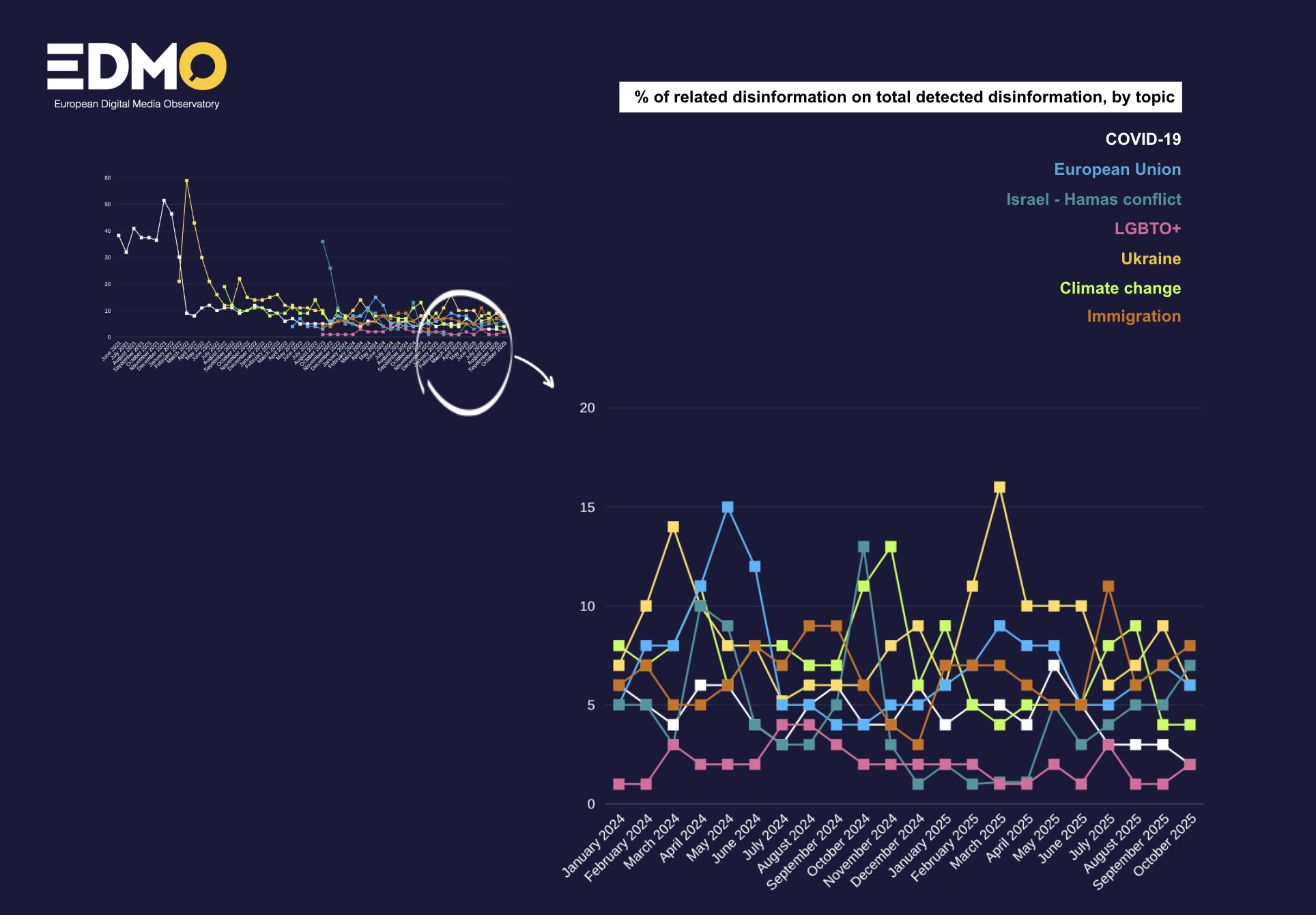
According to the latest report from the European Digital Media Observatory (EDMO) fact-checking network, 32 participating organizations published a total of 1,722 fact-checking articles last month. Of these, 8% focused on immigration-related falsehoods, representing a one percentage point increase from September.
False narratives surrounding the ongoing crisis in Gaza accounted for 7% of fact-checks, up two percentage points from the previous month. Meanwhile, Ukraine-related disinformation showed a notable decline, dropping three percentage points to 6% of total fact-checks.
The European Union itself remained a significant target, with EU-related disinformation comprising 6% of the network’s fact-checking efforts. Climate change misinformation (4%), COVID-19 falsehoods (2%), and disinformation about LGBTQ+ and gender issues (2%) rounded out the major categories identified in the report.
Perhaps most concerning among the findings was the unprecedented rise in AI-generated disinformation. The EDMO report revealed that 210 fact-checking articles addressed synthetic content created using artificial intelligence tools, representing a record 12% of all fact-checks produced in October.
Media analysts attribute this surge to the proliferation of generative AI software throughout the year, with bad actors increasingly leveraging these technologies to create convincing but false content. Based on the trends observed in previous months, experts expect this share to continue growing.
“We’re seeing AI being weaponized across multiple fronts,” said one disinformation researcher who studies the phenomenon. “From creating emotional clickbait to manufacturing evidence for existing conspiracy theories, generative AI has lowered the barrier to entry for sophisticated disinformation campaigns.”
The report highlights several motivations behind AI-generated falsehoods. Many creators focus on producing what experts call “AI slop” – emotionally manipulative or sensationalist content designed to maximize engagement and monetization across social media platforms. These often feature fabricated scenarios of people or animals rescuing babies from dangerous situations, exploiting human empathy for profit.
Another common use involves creating visual “evidence” for real-world events, such as generating fake footage of the recent theft at the Louvre Museum in Paris or fabricating images of hurricane damage. In some cases, AI-generated content is deployed specifically to enhance the credibility of fraudulent schemes.
The report also details how AI tools are being weaponized to support established disinformation narratives. Examples include synthetic videos targeting Ukrainian President Volodymyr Zelensky and falsified footage of Polish soldiers claiming Ukrainian responsibility for drone incursions into Polish airspace in September.
Anti-immigration and Islamophobic narratives have similarly been amplified through AI technology. The report cites examples including fabricated videos of young people criticizing German migration policies and a synthetic clip purporting to show a French police officer performing Islamic prayers inside the Paris metro.
The EDMO network’s findings underscore the evolving challenges facing fact-checkers, journalists, and media literacy advocates as disinformation tactics continue to advance. While traditional text-based falsehoods remain prevalent, the rapid growth of AI-generated content presents new verification challenges that require specialized detection tools and heightened public awareness.
As generative AI technology becomes more sophisticated and accessible, European authorities and digital platforms face mounting pressure to develop effective countermeasures while balancing concerns about censorship and free expression.
The full EDMO monthly brief, containing additional details and examples, is available through the organization’s official website.
Fact Checker
Verify the accuracy of this article using The Disinformation Commission analysis and real-time sources.

10 Comments
The prevalence of AI-generated disinformation is a worrying development that undermines public trust and the ability to make informed decisions. Strengthening our defenses against misinformation should be a priority for all stakeholders, including in the mining and energy sectors.
The rise in AI-generated disinformation is a concerning trend that highlights the need for robust fact-checking and media literacy efforts. As consumers of information, we all have a role to play in identifying and combating the spread of false narratives.
Concerning news about the rise in AI-generated disinformation. We need to stay vigilant and rely on trustworthy sources to get accurate information, especially on important topics like energy and natural resources.
Agreed. Fact-checking and media literacy are crucial to combating the spread of misinformation online.
This report highlights the ongoing battle against the spread of false information, which is particularly concerning when it comes to critical industries like mining and energy. We must continue to champion media literacy and fact-checking to combat this challenge.
Absolutely. Maintaining the integrity of information is crucial for making informed choices that affect our communities and the planet.
This report underscores the challenges we face in maintaining information integrity in the digital age. As the mining and energy sectors are critical to modern society, we must be vigilant about the accuracy of news and data in these areas.
Well said. Reliable information is essential for making informed decisions, especially in industries that have such a significant impact on our lives.
The shift in disinformation trends is troubling, with immigration, the Gaza crisis, and Ukraine emerging as key targets. We must be cautious about the information we consume and share, especially on sensitive geopolitical issues.
Absolutely. Staying informed from reliable sources is essential to cut through the noise of disinformation.