


Listen to the article
In the shadow of the approaching COP30 climate conference in Belém, a critical battle is unfolding—not just over environmental policies, but over who controls the narrative about the Amazon and climate change in Brazil.
As global temperatures continue to break records, Brazil positions itself as an emerging green power on the world stage. COP30, being billed as the “COP of implementation,” aims to secure concrete commitments on emissions reductions and forest protection. The event carries echoes of Brazil’s influential role during the 1992 Earth Summit, when the country helped advance significant climate initiatives.
Yet a troubling disconnect exists between international climate diplomacy and everyday Brazilians’ understanding of these issues. Research conducted in 2024 by Instituto Ideia and LaClima revealed that 71% of Brazilians are unfamiliar with what COP represents, while 34% don’t recognize the concept of climate change. This knowledge gap creates fertile ground for misinformation, particularly in today’s social media landscape.
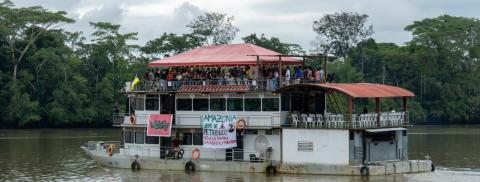
The spread of climate and Amazon-related falsehoods isn’t random but systematically orchestrated, according to projects like “Amazônia Livre de Fake” (Amazon Free of Fakes), coordinated by Intervozes-Coletivo Brasil de Comunicação Social. The organization has identified that disinformation frequently stems from political and economic interests tied to deforestation, predatory agribusiness, and illegal mining operations.
These actors propagate content that denies climate science, minimizes deforestation impacts, undermines scientific credibility, and portrays environmental organizations as obstacles to economic progress. They also manipulate the concept of national sovereignty, framing forest protection as capitulation to foreign interests. These messages circulate through community networks, regional influencers, and politicians aligned with anti-environmental positions.
Meanwhile, terms like “clean energy” and “energy transition” have become standard in official and corporate communications, though they often lack substance. While the climate agenda promotes large-scale solar and wind projects as pathways to a sustainable future, these ventures frequently replicate existing power dynamics—concentrating profits while marginalizing local communities and creating new socio-environmental conflicts.
For forest communities, indigenous peoples, Ribeirinho (river-dwelling) populations, and Quilombola communities, “clean energy” carries different meanings. It represents potential autonomy and dignity, where community-based solar energy, sustainable biogas, and small generation facilities could provide communities control over their energy needs. This semantic struggle reveals how energy transition policies can either empower or further marginalize communities depending on who shapes the narrative.
Intervozes plays a crucial role in this context by researching narratives that silence communities most affected by climate change yet excluded from solution-focused discussions. The organization combines digital monitoring of disinformation networks with community workshops and media literacy programs in Amazonian territories. Their approach equips local leaders and youth to identify reliable sources and counter misleading narratives.
This work builds upon Intervozes’ “Vozes Silenciadas” (Silenced Voices) series. Their 2024 research on renewable energy coverage in Brazil exposed how corporate and government perspectives dominate media narratives, with over 70% of analyzed stories featuring industry or government sources while rarely including voices from communities affected by energy projects.
Similar patterns emerged in their 2020 study of media coverage during Brazil’s devastating coastal oil spill crisis. The report found that mainstream outlets covered the disaster—which impacted over 1,000 beaches and destroyed livelihoods across northeastern fishing communities—in fragmented, decontextualized ways that prioritized official perspectives while erasing affected communities as political agents.
By connecting these studies with their anti-disinformation initiatives, Intervozes maps the power dynamics shaping climate communication in Brazil. On one side lies deliberate misinformation creating confusion and fear; on the other, structural silencing of Amazonian and grassroots voices reinforces inequalities and perpetuates exclusive models of energy transition.
As COP30 approaches, deeper questions emerge about the structure of climate narratives in the Amazon and their impact on public perception and policy. The answers require recognizing that sustainable futures depend on democratizing communication channels. The climate conference must transcend diplomatic agreements to become a genuine space for listening—to communities, movements, communicators, and scientists.
What’s ultimately at stake extends beyond environmental stability to fundamental rights: the right to participate meaningfully in adaptation and mitigation processes that acknowledge diverse realities across Brazil, and the right for communities to narrate their own stories. After centuries of being portrayed as a resource for exploitation, the Amazon and its peoples now demand recognition as legitimate sources of knowledge and perspective in the climate conversation.
The fight against climate disinformation is revealed as a form of environmental justice—a struggle for accurate information amid powerful interests that benefit from controlling both natural resources and the narratives surrounding them.
Fact Checker
Verify the accuracy of this article using The Disinformation Commission analysis and real-time sources.

22 Comments
The disconnect between international climate diplomacy and public understanding is concerning. Grassroots efforts to educate and engage citizens could help close this gap.
Absolutely. Amplifying local voices and investing in digital literacy initiatives may be an effective way to counter the spread of climate misinformation.
The systematic spread of climate misinformation is deeply concerning. Strengthening digital literacy and fact-checking efforts could help counter these disinformation campaigns.
Agreed. Investing in local communication networks and equipping citizens with the ability to discern truth from falsehood is crucial for climate justice.
This article highlights the critical role of access to information in the fight against climate change and disinformation. Empowering local communities must be a priority.
Well said. Strengthening digital literacy and fact-checking efforts could help counter the systematic spread of climate misinformation and advance climate justice.
An important issue with global implications. Ensuring access to reliable climate information is crucial, especially in regions like the Amazon where misinformation can undermine environmental progress.
Agreed. Bridging the knowledge gap and empowering local communities will be key to combating disinformation and driving meaningful climate action.
The systematic spread of climate misinformation is deeply concerning, especially in regions like the Amazon where the stakes are so high. Strengthening digital literacy is crucial.
Agreed. Empowering local communities with the tools to discern truth from falsehood will be key to combating disinformation and achieving climate justice.
Securing concrete commitments on emissions reductions and forest protection at COP30 will be critical. But the battle for the narrative must also be won to drive real, lasting change.
Well said. Addressing the knowledge gap and empowering communities with accurate information is just as important as the policy outcomes at COP30.
Controlling the narrative around the Amazon and climate change in Brazil is a high-stakes battle. Transparency and inclusive communication will be essential for achieving real progress.
Well said. Ensuring diverse perspectives and community-led solutions are represented will be crucial for COP30 to deliver meaningful outcomes.
Ensuring access to reliable climate information is a matter of justice and fundamental to driving meaningful change. This article highlights an important challenge that must be addressed.
Well said. Bridging the knowledge gap and amplifying local voices could help create a more informed and engaged citizenry, which is critical for climate action.
This article highlights the complex interplay between climate change, disinformation, and access to communication. Tackling these challenges holistically will be essential for progress.
Absolutely. Integrating local voices and grassroots solutions into the global climate discourse could help bridge the gap and drive more equitable outcomes.
This article highlights the critical role of access to information in the fight against climate change. Empowering local communities with the right tools and knowledge is key.
Absolutely. Bridging the gap between global climate diplomacy and grassroots understanding is a complex challenge, but one that must be addressed.
The disconnect between international climate diplomacy and public understanding is a complex challenge. Innovative approaches to communication and education will be essential for progress.
Absolutely. Integrating community-led solutions and leveraging digital tools to reach diverse audiences could help bridge this gap and drive more equitable climate policies.