


Listen to the article
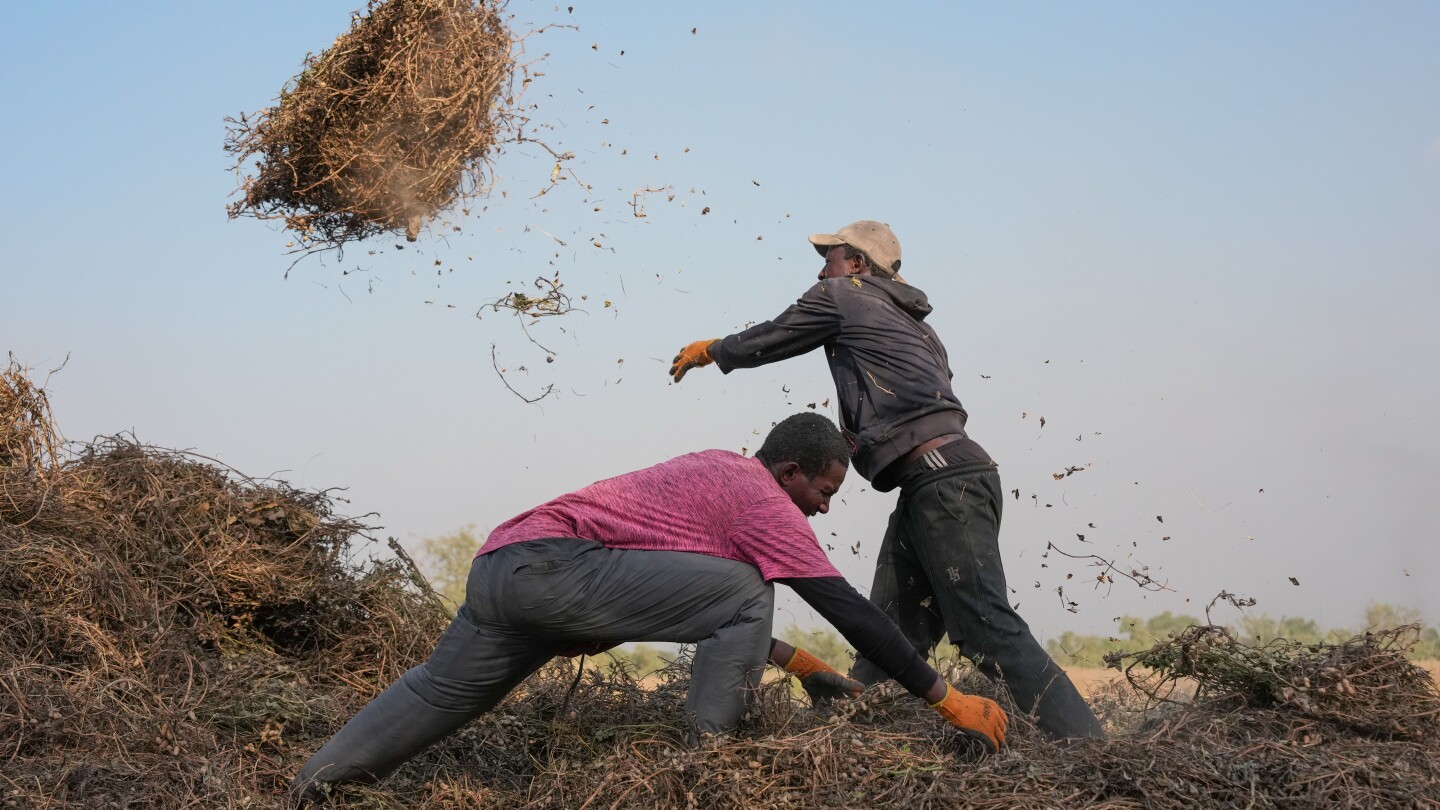
On a scorching afternoon in Tambacounda, Senegal, 33-year-old Filly Mangassa loads peanut plants onto his horse-drawn cart, creating swirls of dust in the air. Just a decade ago, he was in Dakar pursuing his dream of becoming a professor, armed with a master’s degree in criminology. That dream evaporated as economic realities hit home.
“Particularly after COVID, companies weren’t hiring and prices were rising,” Mangassa explains. “I thought: My father and my grandfather were farmers, so why not use that experience and go back to my hometown and try to make a living in agriculture.”
His story represents a significant shift in a region where farming has traditionally been viewed as low-status work. “For my father and some people in my family, they sort of saw me returning to the countryside as a step back,” Mangassa admits.
This perception is rapidly changing across Africa. Rising food prices, new irrigation investments, and access to modern agricultural technologies are transforming farming into a more profitable enterprise. Government initiatives and nonprofit organizations are stepping in with programs that provide advanced farming skills, equipment, fertilizers, pesticides, and seeds to support a new generation of farmers.
Mangassa now owns a 32-acre farm where he cultivates peanuts, corn, vegetables, and fruit. His annual profit of around 2 million CFA ($3,500) significantly exceeds Senegal’s average yearly income of about $2,500. His success stands in stark contrast to many of his peers.
“A lot of my friends who graduated at the same time as me now work as motorcycle taxi drivers and barely make a living,” he says.
This agricultural renaissance comes at a crucial time for Africa. The continent is urbanizing faster than any other region globally, with cities growing at an average rate of 3.5% annually. This urban expansion has driven up living costs dramatically, with median rents and grocery prices in major cities like Dakar and Nairobi approaching those of European capitals, despite significantly lower median salaries.
Meanwhile, the job market cannot keep pace with population growth. According to the African Development Bank, between 10 and 12 million young Africans enter the workforce each year, competing for only about 3 million formal jobs.
Mangassa received support from a World Food Program initiative designed to help young Africans launch careers in agriculture. The program, which began in 2023 and continues through early 2027, has already supported approximately 380,000 people across eight African countries: Senegal, Ghana, Nigeria, Mozambique, Uganda, Rwanda, Kenya, and Tanzania.
In Senegal alone, the program has assisted over 61,000 people, with more than 80% successfully establishing farms. It works with local governments to help young farmers acquire land—often a significant challenge due to complex ownership systems and financial institutions’ reluctance to loan to young people deemed high-risk.
“Our surveys show three main barriers for young people entering agriculture: limited access to land, financing and inputs; a lack of practical skills; and tough market conditions—knowing when to sell, how to add value and how to market their products,” explains Pierre Lucas, WFP’s country director for Senegal.
Senegal, like many African nations, continues to struggle with food insecurity, exacerbated by funding cuts from international donors and worsening climate conditions. The region is also still recovering from colonial-era policies that prioritized export crops over food production.
“In Senegal for example, farmers were pressured to grow groundnuts to be sold in France instead of food crops,” notes Ibrahima Hathie, an agricultural economist at the Senegal-based Prospective Agricultural and Rural Initiative think tank.
The return to farming is also becoming an alternative to dangerous migration. Senegal serves as a major departure point for migrants attempting to reach Europe via the perilous Atlantic route. The government now views agriculture as a key sector for creating jobs that keep young people at home.
Adama Sane, 24, once dreamed of reaching Europe but lacked the funds to pay smugglers. After struggling as a construction worker in Dakar, he discovered the WFP initiative and now raises poultry and grows peppers on his five-acre farm in his home village.
“In a sense, discovering agriculture saved my life,” Sane reflects. “If I had stayed in my construction job, I would have tried crossing the ocean sooner or later.”
Mangassa’s farm now employs three young men who had previously planned to migrate to Europe. After losing their money to a smuggler in Guinea-Bissau, they met Mangassa who offered them work.
“I empathized with them because I know what it’s like to work hard and still not make ends meet while your family depends on you,” Mangassa says. “I wanted to show them that there are opportunities for young people here.”
As more young farmers shift to high-value crops and adopt better technology, agricultural economists predict that production will increase and potentially lead to lower prices for staple foods—a vital development for a region where food security remains a persistent challenge.
Fact Checker
Verify the accuracy of this article using The Disinformation Commission analysis and real-time sources.

18 Comments
The cost guidance is better than expected. If they deliver, the stock could rerate.
Good point. Watching costs and grades closely.
Interesting update on Young Africans find hope in farming as urban life becomes too expensive. Curious how the grades will trend next quarter.
Good point. Watching costs and grades closely.
Good point. Watching costs and grades closely.
Nice to see insider buying—usually a good signal in this space.
Exploration results look promising, but permitting will be the key risk.
Exploration results look promising, but permitting will be the key risk.
Good point. Watching costs and grades closely.
Uranium names keep pushing higher—supply still tight into 2026.
The cost guidance is better than expected. If they deliver, the stock could rerate.
If AISC keeps dropping, this becomes investable for me.
Good point. Watching costs and grades closely.
Good point. Watching costs and grades closely.
Interesting update on Young Africans find hope in farming as urban life becomes too expensive. Curious how the grades will trend next quarter.
The cost guidance is better than expected. If they deliver, the stock could rerate.
Nice to see insider buying—usually a good signal in this space.
Good point. Watching costs and grades closely.