


Listen to the article
Rocky Mountain Power Abandons Plans for Future Wind and Solar Projects in Wyoming
A major pivot in renewable energy strategy has emerged as PacifiCorp, the parent company of Wyoming’s largest electric utility, Rocky Mountain Power, announced it would halt plans for new wind and solar installations across much of its service territory through 2045.
The utility’s revised long-range planning document, updated in March, reverses its previously projected growth trajectory for renewable energy development. The company now states it has no intentions to add wind or solar facilities in Wyoming, Utah, Idaho, and California for nearly two decades.
According to PacifiCorp, this dramatic shift is primarily attributed to the scheduled July 4, 2025 repeal of significant portions of the Inflation Reduction Act through legislation known as the “One Big, Beautiful Bill Act.” The repeal phases out or eliminates tax benefits that had made renewable energy projects financially viable.
“The update does not look good at all for renewable energy,” said Emma Jones, Sierra Club Wyoming Chapter Organizer, though she noted that these integrated resource plans are subject to frequent revisions. Utilities like PacifiCorp must file updated plans every two years, and often make adjustments between filings.
PacifiCorp, part of Warren Buffett’s Berkshire Hathaway energy conglomerate, has previously defended its renewable investments during recent rate increase hearings. Wyoming customers have seen approximately 20% higher bills since 2020, but former Rocky Mountain Power CEO Gary Hoogeveen testified last year that renewable resources had actually mitigated even steeper potential increases.
“Without the company’s investment in these resources, the increase in net-power costs would have risen an additional $85.4 million or 65% in Wyoming,” Hoogeveen stated during 2023 testimony.
The economic calculus has changed substantially, according to the utility. Federal tax credits had reduced wind and solar project costs by approximately 30%. Under the new phase-out schedule, projects would need to begin construction within the next year to remain eligible for these incentives. Combined with Trump administration rollbacks of fossil fuel regulations, the company believes “coal may become a more competitive fuel source.”
This policy shift has already influenced PacifiCorp’s operations, as the utility has delayed retirement dates for several coal power plants, including facilities in Wyoming. The company now projects that its greenhouse gas emissions, which had been on a downward trend, will increase in coming years.
Despite the grim outlook for renewables in the planning document, PacifiCorp spokesperson David Eskelsen confirmed some projects remain in the pipeline. “The preferred portfolio includes about 1,200 megawatts of new solar located in Utah, over 400 megawatts of new wind located in Idaho and 26 megawatts of new wind located in Wyoming,” he told WyoFile. Some of these facilities will generate power specifically for PacifiCorp customers in Oregon and Washington.
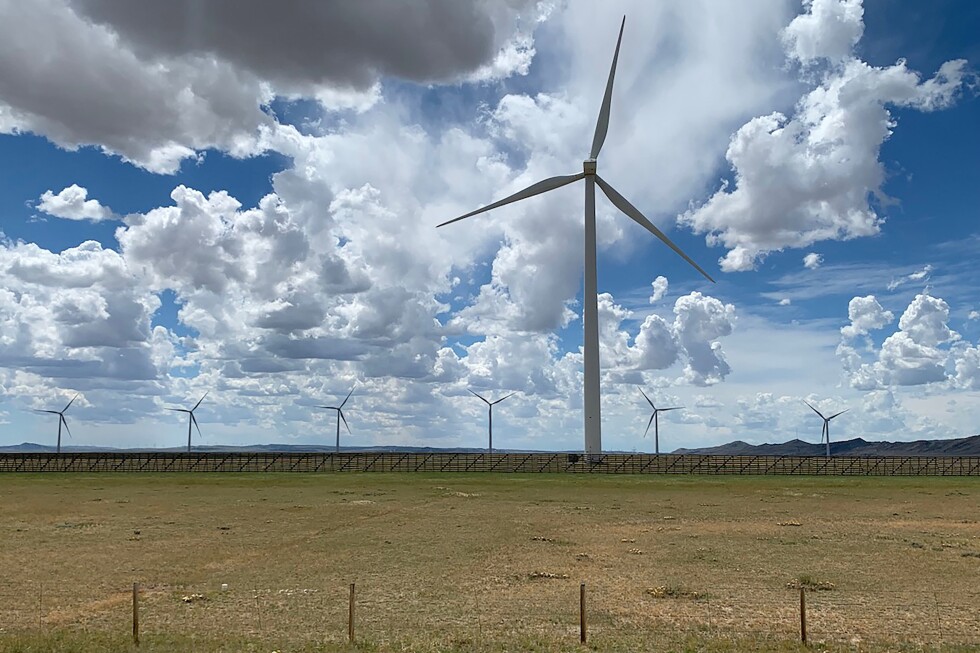
PacifiCorp currently accounts for approximately 35% of Wyoming’s 3,700 megawatts of installed wind generation capacity, according to the U.S. Energy Information Administration. One megawatt typically provides enough electricity to power about 750 homes.
The utility’s retreat creates significant uncertainty for Wyoming’s renewable energy sector. PacifiCorp has historically been a major driver of wind development in the state, both through direct construction and by issuing requests for proposals that encourage independent developers to build projects with guaranteed power purchase agreements.
Without PacifiCorp’s market leadership, industry observers speculate that Wyoming electric cooperatives might increase their renewable energy investments, and that growing data center operations could drive demand for new wind projects.
Some experts, including Jones, believe that improving efficiencies in renewable technology will eventually overcome the loss of federal tax credits, making wind and solar economically competitive regardless of policy changes. Other utilities focused on providing low-cost electricity to customers will likely continue adding renewables to their portfolios.
Jones speculates that PacifiCorp will eventually return to renewable energy development but warns that the current delay could prove costly. “The delay that they’re creating is ultimately going to cost customers money that would have been saved by putting cheaper renewable energy online sooner,” she said, noting the industry consensus that infrastructure costs typically increase over time.
This story was originally published by WyoFile and distributed through a partnership with The Associated Press.
Fact Checker
Verify the accuracy of this article using The Disinformation Commission analysis and real-time sources.

12 Comments
This is a surprising move, given the growing evidence that renewable energy is becoming increasingly cost-competitive with traditional fossil fuel sources. I wonder if there are other economic or political factors at play that are influencing PacifiCorp’s decision.
You raise a good point. It’s important to understand the full context and rationale behind this decision, rather than jumping to conclusions. I hope PacifiCorp will be transparent in their analysis and engage with stakeholders to find the best path forward.
Interesting development. I wonder what the rationale is behind this shift away from renewables. Is it solely due to the repeal of tax incentives, or are there other factors at play? This could have significant implications for the energy landscape in Wyoming and beyond.
It’s concerning to see a major utility scale back on renewable energy plans, especially given the climate challenges we face. I hope they carefully consider the long-term impacts of this decision.
While the potential loss of tax credits is understandable, I’m concerned that this decision could undermine progress on renewable energy and emissions reduction goals in the region. It’s important to weigh all the costs and benefits carefully.
I agree, this is a complex issue with far-reaching implications. I hope PacifiCorp will continue to engage with stakeholders and explore alternative solutions to support a sustainable energy future.
This is a disappointing development, especially given the urgency of transitioning to cleaner energy sources. I wonder if there are other policy or market factors that could be leveraged to make renewable projects viable in Wyoming, even without the tax incentives.
You raise a good point. There may be opportunities for creative financing or partnerships that could help offset the impact of the tax credit repeal. I hope PacifiCorp will explore all available options.
This is a surprising pivot, given the growing momentum for renewable energy across the country. I’d be curious to hear more details on PacifiCorp’s analysis and the factors driving this change in strategy.
The repeal of renewable energy incentives is certainly a setback, but I would hope utilities would still explore ways to responsibly incorporate clean energy sources. This seems like a missed opportunity.
The timing of this decision is concerning, as renewable energy has been gaining ground in many parts of the country. I hope PacifiCorp will carefully re-evaluate their plans and seek ways to maintain a commitment to sustainable energy sources.
Agreed. Utilities play a critical role in shaping the energy landscape, and their choices can have far-reaching consequences. I hope this decision doesn’t set back progress on renewable energy in the region.