


Listen to the article
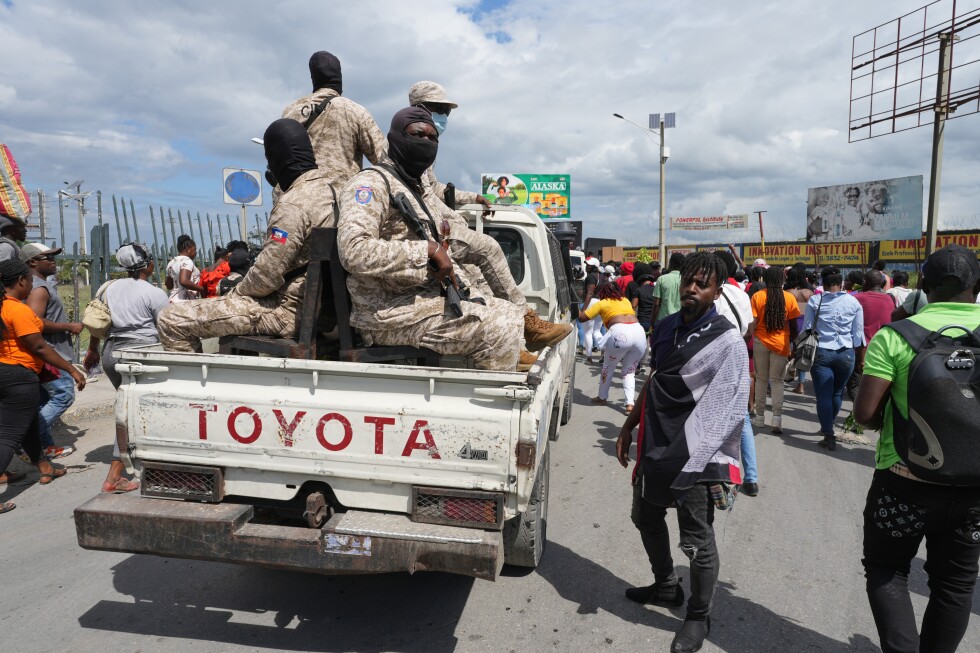
More than 1,000 workers took to the streets of Port-au-Prince on Monday, demanding higher minimum wages as Haiti grapples with rising fuel costs linked to the ongoing conflict in Iran.
Protesters gathered outside the gates of the Metropolitan Industrial Park (Sonapi), a state-owned industrial complex in Haiti’s capital, chanting “When we are hungry, we don’t mess around!” The demonstration highlighted the growing economic crisis in a country already plagued by gang violence and political instability.
Workers emphasized that their wages have remained stagnant since 2023, while the Haitian government recently imposed steep increases in fuel prices – a 37% hike for diesel and a 29% increase for gasoline. These price increases have had a cascading effect on transportation costs and the overall cost of living.
Marc Jean Jean-Pierre, a 47-year-old father of two who works making jeans at the industrial park, earns 685 Haitian gourdes ($5.23) per day. He pointed out the stark reality that a gallon of gasoline now costs 850 gourdes ($6.49), exceeding his daily wage.
“You can see what we’re going through,” Jean-Pierre said. The economic pressure has forced him to abandon public transportation and walk an hour to work each day to save on the round-trip fare that has increased by 100 gourdes (76 cents).
The situation reflects Haiti’s vulnerability to global oil market fluctuations, which have been exacerbated by the conflict in Iran. As one of the poorest countries in the Western Hemisphere, Haiti lacks the economic buffers to shield its citizens from these external shocks.
Maxime Excellence, a 49-year-old factory janitor who joined the protest, expressed concerns about affording basic necessities. “On top of it, I have to eat. I can’t spend the whole day not eating,” he said. “God knows what I’m going to have to eat when I get home.”
Excellence defended the workers’ demands as reasonable, stating, “We can barely make ends meet with what we’re living on.” He indicated his readiness to continue protesting until their demands are met, even suggesting a willingness to resort to violence if necessary.
The industrial park, a key employment hub in Port-au-Prince, has become a focal point for economic grievances. James Cardichon, a 37-year-old T-shirt factory worker, echoed the sentiment for radical change: “We need a revolution for them to understand.” He also highlighted poor factory conditions, saying, “We are leaving our sweat behind.”
Workers emphasized that their struggle is not just for themselves but for future generations. “We are seeking a better salary so our children don’t have to experience the same problems,” Cardichon explained.
Haiti’s economic challenges are compounded by widespread gang violence, which has created a form of informal taxation on transportation. “Our country is infested by gangs. The bus charges more because they have to pay the gangs to get through, and we end up paying for everything,” Cardichon added.
The protest attracted participants beyond factory workers. Garry Jean Paul, a 35-year-old street vendor who sells mobile phones, joined to express frustration with the country’s deteriorating conditions. “Some days I make a couple hundred of gourdes, some days I have to go home with nothing,” he said. “Families are doing things they are not supposed to be doing. They are begging.”
Haiti has experienced prolonged political instability following the 2021 assassination of President Jovenel Moïse. A transitional presidential council was installed in April 2024, but security and economic conditions continue to deteriorate. The United Nations estimates that gangs control approximately 80% of Port-au-Prince, further complicating economic recovery efforts.
Workers at the protest voiced fatigue with unfulfilled promises from government officials. “We are tired of promises,” Cardichon said. “We want them to take action, and quickly.”
As global oil prices remain volatile and local security challenges persist, Haiti’s workforce faces mounting pressure to make ends meet, with Monday’s protest potentially marking the beginning of broader labor unrest in the troubled Caribbean nation.
Fact Checker
Verify the accuracy of this article using The Disinformation Commission analysis and real-time sources.

9 Comments
This protest highlights the compounding challenges Haiti is facing – rising inflation, political instability, and now surging energy prices. The government will need to take decisive action to support its citizens and prevent the situation from deteriorating further.
Absolutely, the economic pressures are taking a heavy toll on Haitian workers and families. The government should explore options like targeted subsidies or income support to help ease the burden, while also addressing the underlying structural issues.
Understandable that Haitian workers are protesting the surging fuel prices and stagnant wages. With the high cost of living, their daily earnings are simply not enough to make ends meet. The government needs to address this economic crisis swiftly to prevent further unrest.
Agreed, the workers’ demands for higher minimum wages seem justified given the sharp rise in fuel and transport costs. The government will have to carefully balance economic policies to provide relief while avoiding further strain on the already fragile economy.
It’s concerning to see Haitian workers struggling to make ends meet despite their long hours. The government must prioritize finding solutions to this crisis, whether through wage increases, fuel subsidies, or other interventions to support the people.
The protesters’ demands for higher wages seem justified given the skyrocketing costs they face. The government will need to carefully balance measures to provide relief without further destabilizing the economy. Addressing this crisis is crucial for Haiti’s long-term stability.
This protest highlights the severe economic hardship facing Haitian workers and families. The government must find ways to support citizens through this crisis, whether by increasing minimum wages, providing fuel subsidies, or other interventions to ease the burden of rising costs.
Haitian workers are understandably frustrated by the rising fuel prices and stagnant wages. The government faces a difficult balancing act, needing to provide support without exacerbating the economic challenges. Collaborative solutions that protect both workers and the broader economy will be key.
You’re right, the government must act quickly to address the workers’ concerns and the broader economic pressures. Targeted interventions, whether through wage adjustments or fuel subsidies, could help provide some relief while maintaining fiscal stability.