


Listen to the article
Prince Harry and Meghan returned to Australia on Tuesday for their first visit since their official royal tour in 2018, arriving in Melbourne on a commercial Qantas Airways flight from Los Angeles. The couple, now based in California, is embarking on a four-day tour across Melbourne, Canberra, and Sydney.
This visit marks a significant shift from their previous Australian appearance when they toured as working members of the British royal family. In 2020, the Duke and Duchess of Sussex announced their intention to step back from senior royal duties and become financially independent, changing the nature of their public engagements.
Unlike their 16-day royal tour in 2018 that drew thousands of spectators across Australia, New Zealand, Fiji, and Tonga, this visit is described as “privately funded” and considerably more subdued. The couple’s children, Prince Archie, 6, and Princess Lilibet, 4, did not accompany them on this trip.
Security concerns have influenced the tour’s lower profile. Australian authorities have faced public scrutiny regarding the costs associated with protecting the high-profile couple during their visit. These security considerations have reportedly limited opportunities for large public gatherings that characterized their previous tour.
The visit has not been without controversy in the Australian media. Melbourne’s Herald Sun newspaper characterized it as a “faux royal tour to shore up Brand Sussex,” while critics have questioned the couple’s attendance at ticketed events during their stay.
In response to such criticisms, the Sussexes’ office released a statement emphasizing that their program “is rooted in long-standing areas of work for the Duke and the Duchess, with a clear focus on amplifying organizations delivering measurable impact.” They stressed that the visit “prioritizes listening, learning and supporting communities rather than promotion.”
Their itinerary includes “a small number of private engagements” aimed at supporting “broader commercial, charitable and commercial objectives,” according to the statement from their office.
Media commentator on the British royal family, Afua Hagan, defended the couple against criticism, noting that as a privately funded trip, some commercial interests are necessary. “If they didn’t have commercial interest, the problem would be: ‘Oh my goodness, these people are leeching off the Royal Family and the taxpayers whether or not they’re making their own money,'” Hagan told the Australian Broadcasting Corporation.
However, Giselle Bastin, a Flinders University expert on the British royal family, suggested that the Sussexes’ use of their royal titles for private interests creates a perception of conflict. “It’s well known that the Sussexes are in need of income and so a staging of a quasi-royal tour to Australia is being regarded as a rather desperate attempt to monetize their status as royalty,” she said.
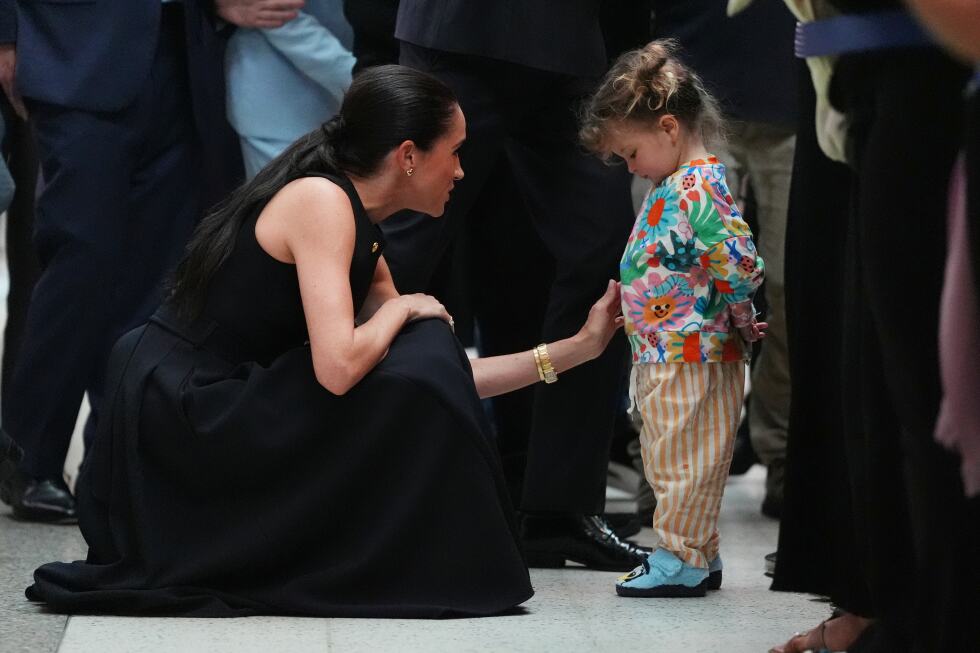
The couple’s first public engagement took place at Melbourne’s Royal Children’s Hospital, a facility previously visited by Harry’s parents, Princess Diana and then-Prince Charles, in 1985. The Sussexes were warmly received, shaking hands with well-wishers as hundreds of onlookers captured the moment on their phones.
When asked by a reporter what he was most looking forward to during his Australian visit, Prince Harry simply replied, “Everything,” adding, “It’s good to be back.”
Their Melbourne itinerary includes Meghan visiting a women’s shelter and Harry touring a veterans’ art museum. The couple will later travel to Canberra, where Harry will visit the Australian War Memorial, and to Sydney for an Invictus Australia sailing event on Sydney Harbor.
The Sydney stop carries special significance as the couple hosted the opening of the Invictus Games there in 2018. The international sporting event, founded by Harry in 2014, provides a platform for injured military personnel and veterans to compete. Sydney was also where Meghan announced her first pregnancy during their previous Australian tour.
Fact Checker
Verify the accuracy of this article using The Disinformation Commission analysis and real-time sources.

16 Comments
Interesting to see the Duke and Duchess of Sussex back in Australia, though in a more private capacity this time. Security and costs will surely be a topic of discussion, but it’s good they’re reconnecting with the country.
Agreed, their visit will likely be more low-key compared to the 2018 royal tour. It will be telling to see how they engage with the public and media this time around.
It will be interesting to see how the Australians receive the Duke and Duchess, given the shift in their royal status. Their ‘privately funded’ visit could raise questions about the costs to taxpayers.
Absolutely, the public perception and scrutiny around costs will be a key aspect to monitor during this trip. The couple’s desire for a more private engagement will likely be contrasted with the public interest.
A shift in the nature of their public engagements since stepping back from senior royal duties. Curious to see how the Australian public and authorities respond to their visit, especially around security and costs.
Indeed, this visit marks a transition in their public role. The security considerations will be closely watched, as the costs of protecting high-profile individuals can be contentious.
It will be interesting to see how the Duke and Duchess engage with the Australian public and media this time around. Their more subdued approach could be seen as a shift towards a more private life.
Agreed, their public interactions will be closely watched. The couple’s desire for a lower profile may be met with some curiosity or even disappointment from Australians who enjoyed their previous high-profile tour.
The absence of their children on this trip is noteworthy. Likely a strategic decision to maintain privacy and keep the focus on their own activities during the visit.
Yes, keeping the children out of the spotlight this time around is probably intentional. It allows the Duke and Duchess to engage more freely without concerns over their family’s security and privacy.
A notable change from their previous 16-day royal tour. This more subdued visit reflects the couple’s new, financially independent status and desire for a lower public profile.
Yes, it’s a clear shift from their earlier high-profile tour. Their ability to self-fund this trip is an interesting development, though the security costs will still be a point of discussion.
The security concerns are understandable, given the couple’s high-profile status. However, the costs associated with protecting them during the visit could spark debate in Australia.
Yes, the security costs will likely be a point of contention. Taxpayers may question why public funds should be used to protect a privately funded visit by the couple.
Curious to see how the Duke and Duchess navigate this visit, balancing their desire for privacy with the public’s interest in their activities. It will be a litmus test for their new, more independent role.
Absolutely, it will be a delicate balance. Their handling of the media and public engagement will be closely watched, as they try to maintain a lower profile compared to their previous royal tour.