


Listen to the article
US Naval Blockade of Iranian Ports Threatens Global Oil Supply, Raises Legal Questions
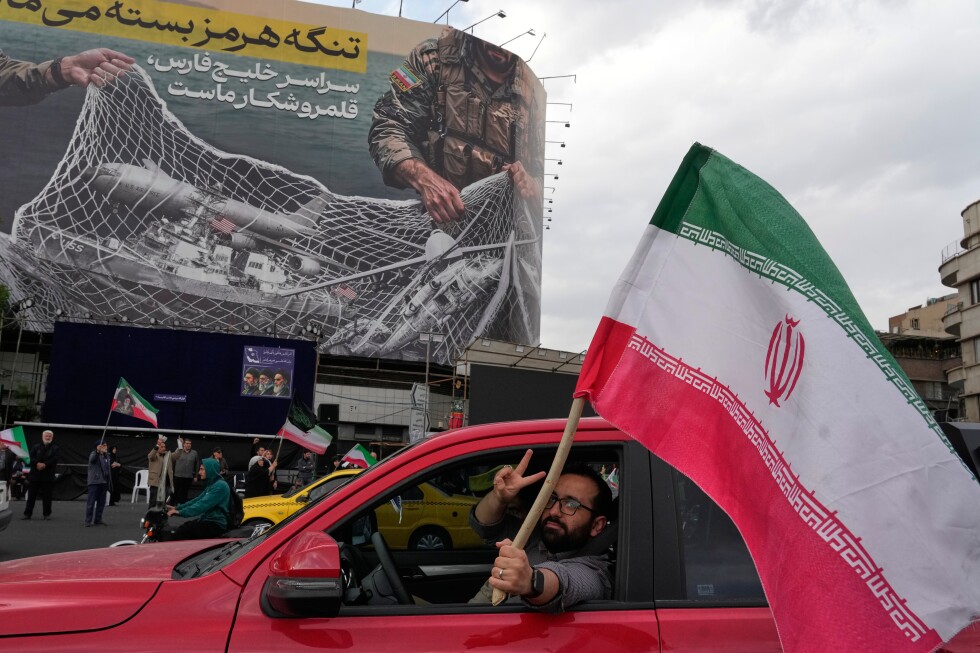
President Donald Trump’s announcement of a blockade against Iranian ports that began Monday has sent ripples through global markets and raised significant concerns about international law, energy prices, and supply chain stability. The move comes after failed ceasefire negotiations last weekend and aims to counter Iran’s earlier restrictions on tanker traffic through the Strait of Hormuz.
Iran had previously allowed only “friendly” vessels to pass through this critical waterway—responsible for nearly 20% of the world’s traded oil—while imposing substantial fees on transit. Trump’s blockade represents a major escalation in the ongoing conflict, with potential far-reaching economic consequences.
Military experts note that successfully enforcing a blockade will require significant U.S. naval resources. Currently, the U.S. maintains 16 warships in the Middle East region, though defense officials speaking on condition of anonymity confirmed none are currently stationed in the Persian Gulf, which forms most of Iran’s coastline.
The U.S. military has released minimal details about implementation, issuing only a notice to mariners stating that access to Iranian ports is being restricted, with specific measures “in development.” This vagueness has created uncertainty in shipping circles and commodities markets.
“The biggest challenge will be the enormous volume of shipping traffic that usually transits the Strait of Hormuz,” said Sidharth Kaushal, naval power expert at the Royal United Services Institute in London. “A considerable number of ships may be needed to enforce the restrictions.”
Kaushal expressed skepticism about full enforcement capability: “In all likelihood, I’d say it will prove difficult for the U.S. to enforce.”
The blockade raises significant questions under international law. Todd Huntley, director of Georgetown University Law Center’s National Security Law Program and retired Navy captain, noted that decisions about humanitarian aid will be crucial to determining legality.
“How it is carried out will determine whether it is lawful or not,” Huntley explained. “You can’t enact a blockade with the goal of starving the civilian population. Even the DOD law of war manual states that neutral vessels carrying relief supplies should be allowed to pass.”
Despite these complexities, Raul Pedrozo, professor of international law at the Naval War College, believes most merchant vessels will comply rather than challenge U.S. warships. “They see a warship, and they’re going to heave to,” he said.
Historical analysis suggests blockades alone rarely achieve decisive outcomes but can exert significant economic pressure. Iran maintains economic ties with partners like China and Russia and retains access to the Caspian Sea and Central Asia, limiting the blockade’s effectiveness as a standalone measure.
The situation carries significant escalation risks. Farzin Nadimi, an Iran specialist at the Washington Institute for Near East Policy, warned that Iran could deploy naval mines, fast-attack boats, and missiles against shipping in response. Trump has already threatened “quick and brutal” strikes against any Iranian vessels approaching the blockade, while Iran has issued counter-threats against ports in the Persian Gulf and Gulf of Oman.
Global oil markets have reacted sharply, with crude prices exceeding $100 per barrel—up from approximately $70 before the conflict began. American drivers now face average gas prices above $4.12 per gallon, a dramatic increase from the pre-war $2.98. Asian economies, which depend heavily on Middle Eastern oil imports, are particularly vulnerable to these price shocks.
Beyond energy markets, the blockade threatens broader supply chain stability. Patrick Penfield, professor of supply chain practice at Syracuse University, highlighted concerns about food security and fertilizer availability. Approximately 30% of the world’s fertilizer transits through the strait, potentially affecting global agricultural production.
“Now you’re talking about impacting the global harvest,” Penfield warned. “Between these disruptions and oil shocks, such chaos and uncertainty bleeds out throughout the whole world.”
Chemical supplies for manufacturing basic goods and metals like aluminum also face disruption. Cornell University’s Vidya Mani noted that these challenges compound existing supply chain problems stemming from the pandemic and other geopolitical tensions.
“We just have to be prepared for constant higher prices, irrespective of how this blockade turns out,” she concluded. “Each crisis has a lingering effect on the next one.”
Fact Checker
Verify the accuracy of this article using The Disinformation Commission analysis and real-time sources.

12 Comments
Controlling access to the Strait of Hormuz is a strategic priority, but a unilateral blockade could backfire and drive up energy prices worldwide. I’m curious to see how the international community responds to this escalation.
The legal implications of this move are concerning. Blocking Iran’s access to international shipping lanes could be seen as an act of war and draw condemnation from the global community.
This blockade represents a major escalation in the ongoing conflict between the US and Iran. I’m curious to see how the international community responds, as this move could have far-reaching economic and geopolitical implications.
The legal status of the Strait of Hormuz is a complex issue, and a unilateral US blockade could be seen as a violation of international law. This could further isolate the US on the global stage.
Disrupting Iran’s access to international shipping lanes is a risky strategy that could backfire and drive up energy prices worldwide. I hope the US has thoroughly considered the potential consequences before taking this action.
Enforcing a blockade near the Strait of Hormuz would require significant naval resources that the US may not have readily available in the region. This could stretch their military capabilities.
A US blockade near the Strait of Hormuz could have far-reaching impacts on global energy markets and trade. I’m curious to see how Iran and other nations in the region respond to this escalation of tensions.
Blocking access to this critical shipping chokepoint is a high-stakes gamble. The US will need to carefully manage the diplomatic and economic fallout from this move.
This is a bold and risky move by the Trump administration. Disrupting oil supply from the Middle East could have severe economic consequences, especially for energy-dependent industries. I hope diplomacy can resolve this conflict before it spirals out of control.
Enforcing a blockade near the Strait of Hormuz would be a major logistical challenge for the US military. They would need to dedicate significant naval resources to monitor and intercept ships, which may stretch their capabilities.
This seems like a risky move that could have far-reaching economic consequences. A blockade of Iranian ports would disrupt global oil supply and raise legal questions about territorial waters. I hope the US has carefully considered the potential fallout.
Enforcing such a blockade would require substantial naval resources, which the US may not have readily available in the region. This could escalate tensions further.