


Listen to the article
The promise of artificial intelligence dominated this year’s Consumer Electronics Show (CES), but not all AI integrations impressed the critics. In fact, some earned the dubious distinction of being named among the “Worst in Show,” an annual contest highlighting questionable tech innovations.
Samsung’s “Bespoke AI Family Hub” refrigerator claimed the overall “Worst in Show” title, as judged by a panel of consumer and privacy advocates. The smart fridge, which responds to voice commands to open or close doors, demonstrated reliability issues during the Las Vegas expo, struggling to detect commands amid ambient noise.
“Everything is an order of magnitude more difficult,” said Gay Gordon-Byrne of the Digital Right to Repair Coalition during the ceremony announcing the anti-awards. Critics pointed out that the refrigerator, which also tracks food inventory and suggests replacements, complicates what should be a simple appliance function: keeping food cold.
Samsung defended its product, noting that “a trade show floor is naturally very different from a consumer’s home environment” and that the AI features are designed to “simplify decisions around the home.” The company also emphasized that “security and privacy are foundational” to the refrigerator’s AI capabilities.
Amazon’s Ring doorbell camera system received the “Worst in Show” for privacy concerns. The system’s new features, including “AI Unusual Event Alert” meant to detect unexpected activities like a “pack of coyotes,” alarmed privacy advocates.
“That includes facial recognition,” said Cindy Cohn, executive director of the Electronic Frontier Foundation. “It includes mobile surveillance towers that can be deployed at parking lots and other places, and it includes an app store that’s going to let people develop even sketchier apps for the doorbell than the ones that Amazon already provides.”
The “People’s Choice” award went to Ami, an AI companion made by Chinese lighting company Lepro. Marketed as an “always-on 3D soulmate,” the device displays a female avatar on a curved screen, tracking eye movements and emotional signals to provide “empathetic” interactions for remote workers. Critics condemned the company “for having the audacity to suggest that an AI video surveillance device on a desk could be anyone’s soulmate.”
Environmental concerns earned the Lollipop Star a place on the list. The novelty product uses bone induction technology to play music while users eat the candy. However, once the candy is gone, the sticks cannot be recharged or reused.
“We need to stop making so many disposable electronics, which are full of toxic chemicals, require critical minerals to produce and can burn down waste facilities,” said Nathan Proctor of the Public Interest Research Group’s right-to-repair campaign.
Merach’s internet-connected treadmill with an AI coach powered by a large language model was flagged for security issues. The device collects biometric data and makes behavioral inferences, while its privacy policy includes the concerning statement: “We cannot guarantee the security of your personal information.”
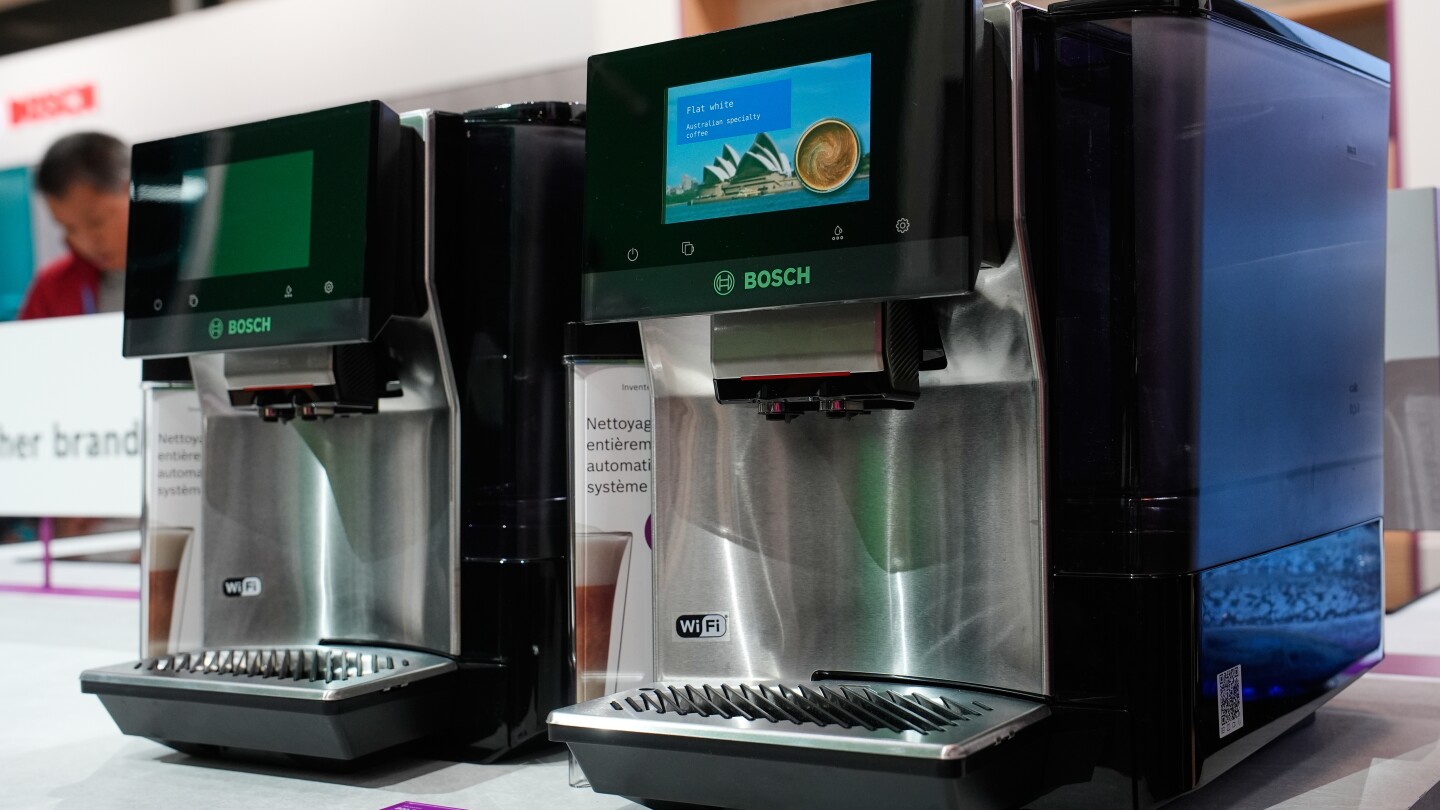
German technology company Bosch received two “Worst in Show” awards. One for its “Personal AI Barista” coffee machine that adds voice assistants and subscriptions to coffee-making, and another for an e-bike anti-theft feature. Author and judge Cory Doctorow criticized Bosch’s “parts pairing” system that digitally connects e-bikes with components like motors and batteries, potentially complicating routine repairs.
Bosch responded that “earning and keeping trust with our consumers, especially in the areas of privacy and cybersecurity, is at the core of our company’s values.”
The “Worst in Show” judges represent organizations including Consumer Reports, the Electronic Frontier Foundation, and right-to-repair advocates iFixit. They have no affiliation with CES or its organizing trade group.
“We definitely intend some shame,” said Elizabeth Chamberlain, iFixit’s director of sustainability. “We do hope that manufacturers see this as a poke, as an impetus to do better next time.” Chamberlain emphasized that while they select individual products, they’re often highlighting industry-wide trends that cause concern.
As AI continues to proliferate across consumer electronics, these criticisms highlight growing tensions between technological innovation and concerns about privacy, security, environmental impact, and right-to-repair issues in the rapidly evolving tech landscape.
Fact Checker
Verify the accuracy of this article using The Disinformation Commission analysis and real-time sources.

7 Comments
Interesting to see these “Worst in Show” AI products at CES. I’m always skeptical of AI solutions that complicate simple appliance functions – the fridge example sounds like a classic case of tech overreach. Curious to see if any of these AI-enabled gadgets actually gain traction with consumers.
The AI fridge seems like a solution in search of a problem. While the inventory tracking and replacement suggestions could be handy, if it can’t even reliably open and close the doors, that’s a major fail. I’ll stick with my dumb old fridge for now, thanks.
Agreed. AI should enhance the core functionality of appliances, not undermine it. The fridge sounds like a classic case of prioritizing shiny features over basic reliability.
The AI doorbell and companion robot sound like other examples of tech run amok. Just because you can add AI to something doesn’t mean you should. Sometimes the simple, reliable solution is better. Kudos to the panel for highlighting these dubious innovations.
Agreed. The drive to cram AI into every conceivable product often results in more problems than solutions. I appreciate the critics calling out these gimmicks masquerading as innovation.
I’m always skeptical of AI-enabled home devices that claim to “simplify decisions.” More often than not, they just add complexity and privacy/security risks. The fridge is a prime example – who needs an internet-connected fridge that can’t even open its own doors reliably?
Calling the AI fridge the “Worst in Show” is pretty harsh, but I can see the point. When AI features undermine the core function of an appliance, that’s a problem. Curious to see if Samsung can refine the technology to actually improve the user experience rather than complicate it.