


Listen to the article
U.S. Eyes Venezuela’s Oil Reserves Amid Political Uncertainty
Venezuela’s vast oil reserves have become the focus of geopolitical attention following President Donald Trump’s recent military action to capture President Nicolas Maduro. In the aftermath, Trump has outlined plans for U.S. management of Venezuela’s oil industry, citing historical grievances dating back to former President Hugo Chavez’s nationalization of foreign assets, including American oil company holdings.
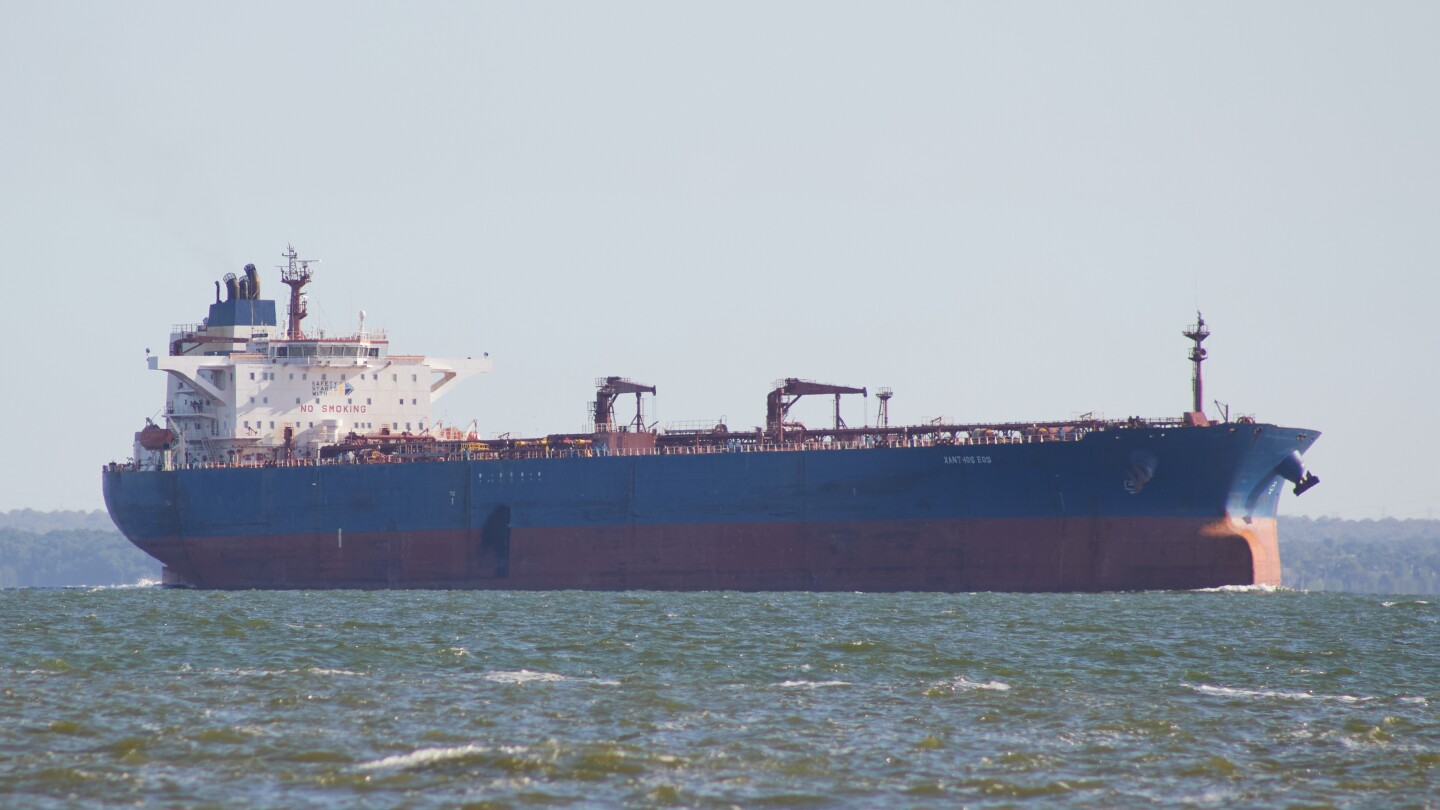
The administration has moved swiftly to adjust oil policy, announcing that Venezuela would provide 30 to 50 million barrels of oil to the United States. According to the Energy Department, sanctions have been “selectively” lifted to enable the shipping and sale of Venezuelan oil globally, with proceeds directed to U.S.-controlled accounts for distribution to both American and Venezuelan populations.
These maneuvers suggest a strategic effort to establish a long-term foothold in a nation possessing approximately 17% of the world’s crude oil reserves, estimated at 303 billion barrels by the U.S. Energy Information Administration. Despite this wealth, Venezuela currently produces just 1% of global oil output due to years of infrastructure neglect.
“Venezuela has enormous reserves,” explains Claudio Galimberti, global market analysis director at Rystad Energy. “If you ask any oil company around the world, go to their exploration team, their geologists, and ask them where is oil going to come from in the 2030’s and 2040’s, their answer is a rather scary, ‘We don’t know.’ So there is going to be a problem of finding oil in the next few years.”
While current global oil supply exceeds demand, the International Energy Agency projects that roughly 25 million barrels per day of new oil supply will be needed by 2035 to maintain market balance under current policies. Venezuela’s reserves could play a crucial role in addressing this future supply gap.
The heavy, sour crude that Venezuela produces is particularly well-suited for U.S. Gulf Coast refineries, which are specifically designed to process this type of oil. This contrasts with the lighter, sweet crude typically produced in the United States. An increased flow of Venezuelan oil could potentially reduce gasoline prices while benefiting American refineries.
“There seem to be two objectives,” says Kevin Book, managing director of ClearView Energy Partners. “The first is to overall lower energy prices by adding to global supply, and second is to produce more of the heavy, sour crude that is currently in short supply relative to other grades. The first generally benefits end-users everywhere because lower prices reduce transportation and energy costs.”
However, increased Venezuelan production could potentially harm U.S. oil producers by pushing global prices lower, making it more difficult for domestic companies to maintain profitability.
Trump has proposed that major oil companies could return to Venezuela, invest in rebuilding infrastructure, and profit from oil sales. This would mark a significant reversal from 2007, when Chavez nationalized hundreds of foreign-owned assets, including projects run by Exxon Mobil and ConocoPhillips. While international arbitration panels ordered Venezuela to pay billions in compensation to these companies, these debts remain outstanding.
Despite Trump’s optimistic 18-month timeline for rebuilding Venezuela’s oil industry, experts remain skeptical. “Imagine you are Exxon and you have global operations. Where are you going to put your money? Where it’s going to give you most return,” Galimberti notes.
Daniel Sternoff, senior fellow at Columbia University’s Center on Global Energy Policy, emphasizes the prerequisite for political stability: “You need to start with basic political stability before you’re going to have companies that are interested in making those kinds of investments. We have more questions than answers over what the government of Venezuela will be.”
The challenges extend beyond political uncertainty. Years of neglect have severely damaged essential infrastructure, with leaking pipelines, unstable electricity supply, and widespread equipment deterioration. Additionally, Venezuela has experienced a significant “brain drain” as skilled workers fled the country during the Chavez and Maduro regimes.
Rystad Energy estimates that maintaining Venezuela’s current production of 1.1 million barrels per day would require $54 billion in oil and gas investment over 15 years. Increasing production beyond 1.4 million barrels daily would demand an additional $8-9 billion annually.
History provides little encouragement for rapid production increases following regime changes. As Amy Myers Jaffe, director of NYU’s Energy, Climate Justice and Sustainability Lab, points out: “One of the lessons from Iraq is that the companies did go back, but that it was very difficult to operate when there was a difficult political and local backdrop that can range from insurgency to governance issues and corruption to infrastructure challenges.”
While Venezuela’s massive oil reserves represent significant potential, the path to realizing that potential faces substantial political, economic, and infrastructural obstacles.
Fact Checker
Verify the accuracy of this article using The Disinformation Commission analysis and real-time sources.

10 Comments
It’s concerning to see the US so aggressively eyeing Venezuela’s oil reserves amid the ongoing political crisis. This smacks of resource imperialism, regardless of the stated rationale. The people of Venezuela should have the primary say in how their national resources are managed.
The US has a history of interventionism in Latin America, often with disastrous consequences. I hope they tread carefully here and prioritize stability and the will of the Venezuelan people over narrow self-interest.
While the US may have legitimate concerns about the political and economic situation in Venezuela, using oil as leverage is a dangerous game. The people of Venezuela should be the ones to determine the future of their natural resources, not outside powers pursuing their own agendas.
The US has long had a strategic interest in Venezuela’s vast oil reserves, dating back to the nationalization of foreign assets under Chavez. With the political turmoil, it’s not surprising the Trump administration is maneuvering to gain more control over this critical energy resource.
Securing access to Venezuela’s oil could help offset disruptions from sanctions on Iran and other producers. But it’s a delicate geopolitical situation that requires a deft touch.
The US’s maneuvering around Venezuela’s oil is concerning, but not surprising given its long history of interventionism in Latin America. Any heavy-handed approach risks further destabilizing the region and undermining democratic self-determination. A more balanced, multilateral approach is needed.
This move by the US seems more about asserting its influence in the region than purely commercial interests. Venezuela’s oil wealth has long been a source of tension, and the current political instability provides an opportunity for the US to try to gain a stronger foothold.
While the US may cite historical grievances, any heavy-handed approach risks further destabilizing the situation and alienating Venezuela’s population. A more balanced, diplomatic approach may yield better long-term results.
The US’s designs on Venezuela’s oil reserves are understandable from an energy security perspective, but the administration needs to be extremely cautious in how it proceeds. Unilateral action could further inflame regional tensions and make the situation even more volatile.
I hope the US works closely with regional partners and the international community to find a balanced, diplomatic solution that respects Venezuelan sovereignty and the will of its people. Stability in the region should be the top priority.