


Listen to the article
Waymo’s autonomous vehicles are taking to highways across multiple U.S. cities, marking a significant expansion of the company’s robotaxi service. Beginning Wednesday, Waymo’s driverless cars will operate on freeways and interstates around San Francisco, Los Angeles, and Phoenix, the company announced.
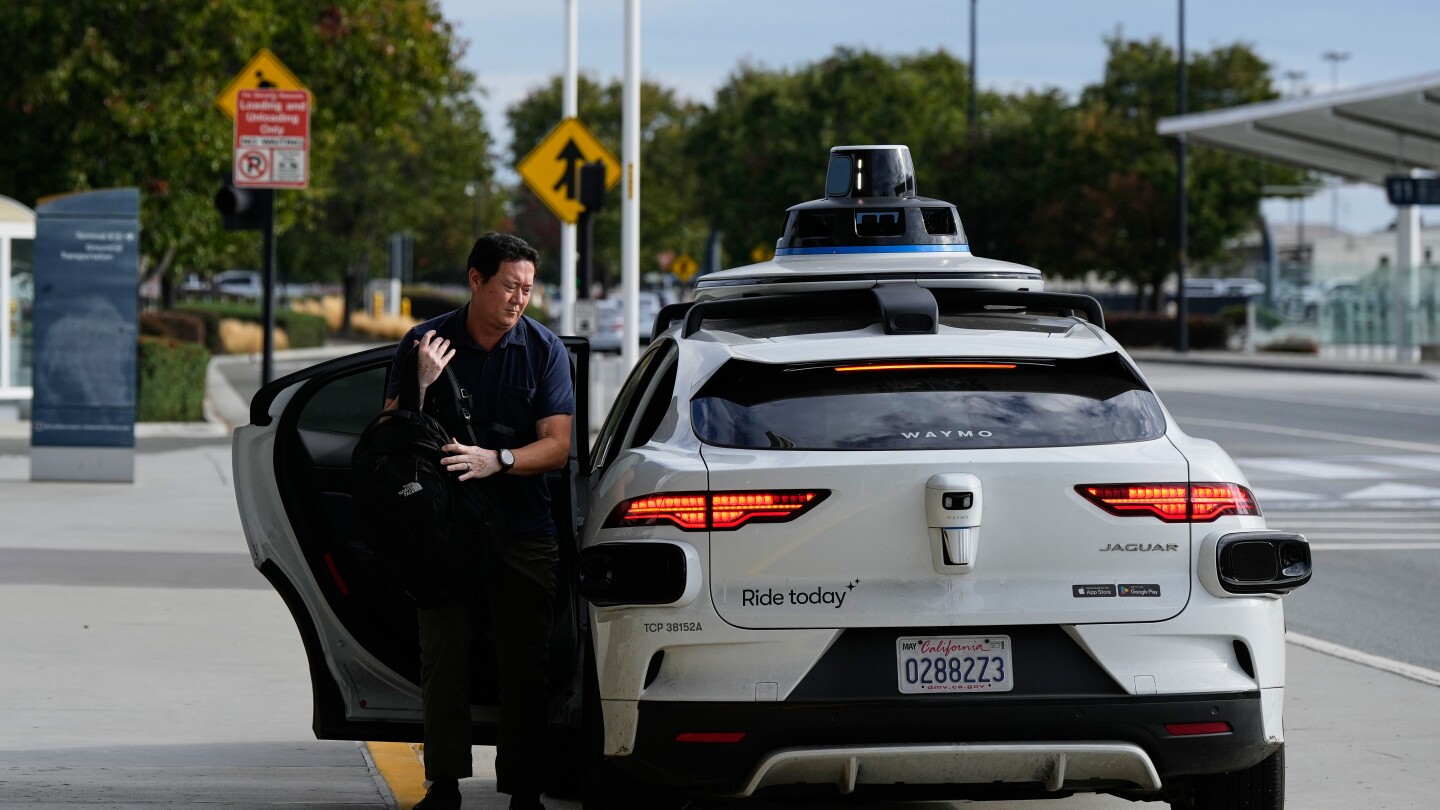
In a notable development for Bay Area travelers, passengers can now be picked up and dropped off curbside at San Jose Mineta International Airport in fully autonomous vehicles. The company is currently testing similar service at San Francisco International Airport.
The expansion in the San Francisco region is particularly extensive, covering the entire peninsula south of the city, including key Silicon Valley locations such as Palo Alto and Mountain View. This means passengers can now hail a driverless car near San Francisco City Hall and travel 45 miles on U.S. 101 to San Jose’s airport, showcasing the growing capabilities of Waymo’s autonomous technology.
Los Angeles will see a more gradual rollout of highway service, though Waymo’s driverless vehicles have become increasingly common in downtown areas and residential neighborhoods throughout the city. In Phoenix, where Waymo first launched its robotaxi service in 2020, highway routes are also being expanded.
The company plans to bring highway capabilities to additional markets in the future, with Atlanta and Austin, Texas, next in line for these services.
Since its beginnings as Google’s “Chauffeur” project in 2009 and subsequent spinoff from the tech giant in 2016, Waymo has established itself as the frontrunner in the emerging autonomous vehicle industry. The Alphabet-owned company has managed to maintain this position despite growing competition.
Amazon represents one of the more formidable challengers entering the space. The e-commerce giant announced in June plans to manufacture up to 10,000 robotaxis annually near Silicon Valley. This move comes five years after Amazon acquired self-driving startup Zoox for $1.2 billion. Zoox launched a limited robotaxi service in Las Vegas this September.
Tesla has also staked a claim in this market, with CEO Elon Musk promising a “Cybercab” service by 2026. However, industry observers have expressed skepticism about this timeline, given Tesla’s history of unfulfilled promises regarding autonomous driving technology.
Not all major automakers are pursuing full autonomy. General Motors recently scaled back its investment in the Cruise autonomous vehicle unit, refocusing instead on driver-assist systems like Super Cruise, which allows drivers to take their hands off the steering wheel while maintaining supervision of the vehicle.
Beyond passenger transportation, autonomous technology is transforming delivery services as well. DoorDash has developed a bright red delivery robot called Dot, capable of reaching speeds up to 20 miles per hour while carrying up to 30 pounds of cargo. The company created its own robot after finding existing delivery machines weren’t suitable for suburban operations. DoorDash is also testing drone deliveries in Australia, Texas, and North Carolina.
On an industrial scale, shipping giant Maersk has implemented driverless electric cargo handlers at four terminals in the ports of Los Angeles and Long Beach, America’s largest dockyard complex.
The rapid expansion of autonomous vehicles has prompted regulatory responses. A new California law taking effect next year will help authorities hold driverless car companies accountable for traffic violations. The legislation follows a widely publicized incident in San Bruno, California, where police attempted to ticket a self-driving vehicle for an illegal U-turn but found their “citation books don’t have a box for ‘robot.'”
Waymo maintains that its autonomous driving system undergoes close regulatory scrutiny to ensure safety and compliance.
As autonomous vehicle technology continues to advance, the industry faces both tremendous growth opportunities and increasing regulatory oversight, reflecting the complex balance between innovation and public safety in this transformative transportation sector.
Fact Checker
Verify the accuracy of this article using The Disinformation Commission analysis and real-time sources.

11 Comments
The ability to travel 45 miles between San Francisco and San Jose without a human driver is an impressive feat of engineering. Waymo is clearly pushing the boundaries of what’s possible with autonomous driving.
Agreed, the extended range and seamless passenger experience are really noteworthy advancements. It will be interesting to see how this impacts transportation patterns in the region.
While exciting, the expansion of Waymo’s robotaxi service also raises questions around liability, insurance, and regulatory oversight. Navigating these complex issues will be important as the technology matures.
I’m curious to see how the public reacts to driverless cars on highways. Safety and reliability will be key as Waymo scales up its operations across more cities.
Absolutely, public trust and confidence in the technology will be crucial for wider adoption. Rigorous testing and safety measures will be critical.
Exciting to see Waymo expanding its robotaxi service to major highways and airports. This highlights the rapid advancements in autonomous driving technology and its potential to transform transportation.
It will be fascinating to see how Waymo’s highway-focused service compares to the urban environments it has operated in so far. Adapting to higher speeds and more complex traffic patterns will be a significant challenge.
I’m skeptical about the widespread public acceptance of driverless cars on highways. There are still many concerns around safety, liability, and the ethical dilemmas of autonomous decision-making.
This is a significant milestone for Waymo and the broader autonomous vehicle industry. Connecting major hubs like airports with driverless cars could improve mobility and accessibility for many.
You raise a good point. Improved access to airports and other key destinations could be a game-changer, especially for those with limited transportation options.
This expansion is an important step, but there is still a long way to go before autonomous vehicles become a ubiquitous part of our transportation landscape. Regulatory hurdles and technological limitations remain significant challenges.