


Listen to the article
Virtual Reality Opens New Worlds for Inmates, Preparing Them for Life After Prison
Jacob Smith has spent two decades behind bars, but recently found himself wandering through the vibrant streets of Bangkok without ever leaving prison grounds.
“I went to Thailand, man!” Smith recalled with a grin, describing his first experience with a virtual reality headset that transported him from Valley State Prison near Fresno to the lush landscapes and bustling markets of Southeast Asia.
Smith is one of many California inmates participating in an innovative program run by Los Angeles-based nonprofit Creative Acts. The organization is bringing VR technology to correctional facilities with dual purposes: providing prisoners a momentary mental escape and preparing them for real-world scenarios they’ll face upon release.
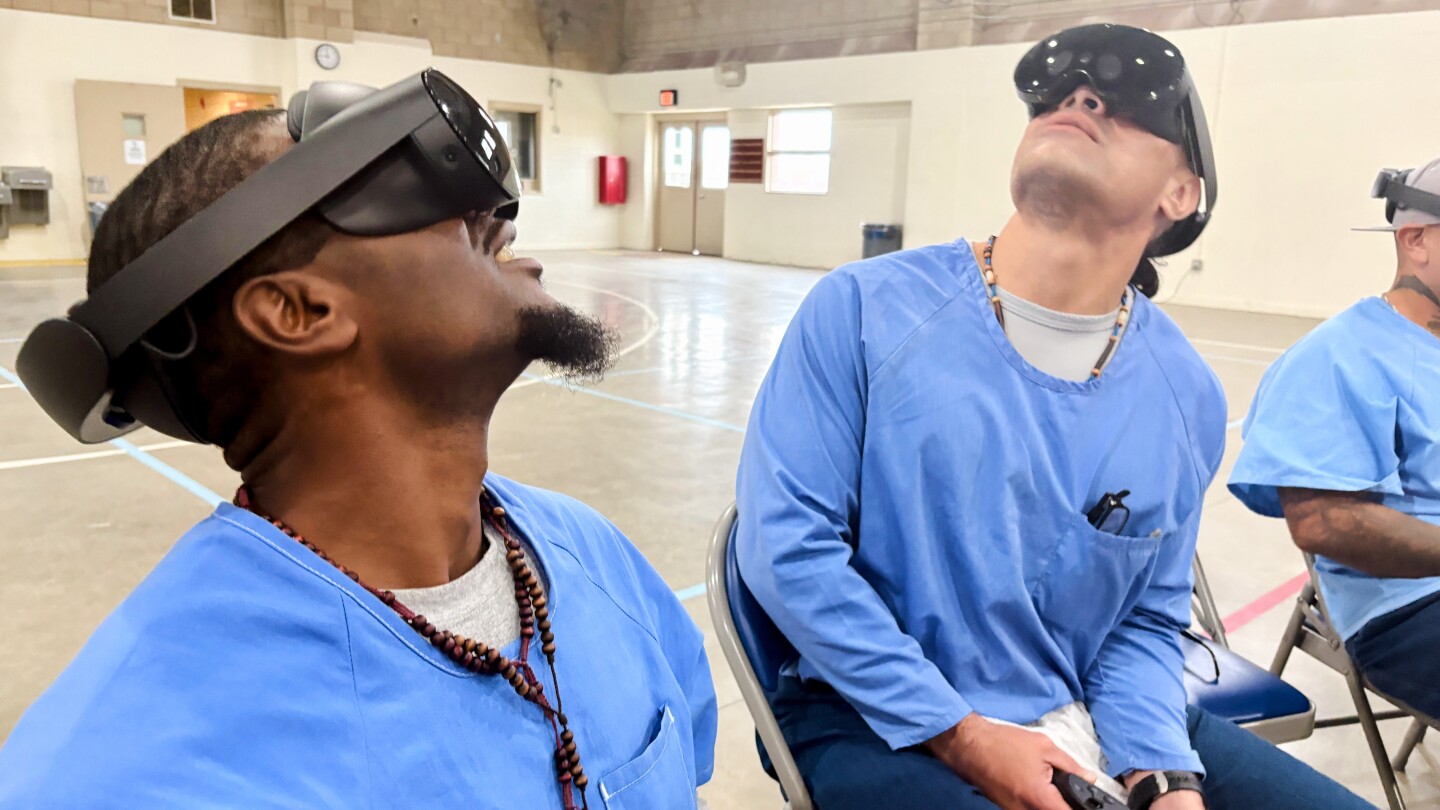
During a weeklong session last month, incarcerated men sat on metal folding chairs in a common area, their faces transforming with wonder as they donned the headsets. Some toured global destinations, while others practiced for job interviews, sitting across virtual desks from both easy-going and demanding interviewers.
“For a lot of us, the workforce has changed and things are different with the application process,” said Smith, who becomes eligible for parole in 2031 and now volunteers helping fellow inmates navigate the VR experience. “It’s a nerve-wracking experience going to sit in front of somebody and telling them why I’m good for the job.”
The program’s significance extends beyond temporary escapism. After each session, volunteers help participants process emotions or traumas triggered during their virtual experiences. Sabra Williams, founder of Creative Acts, has dubbed the VR devices a “hope machine.”
Williams developed the concept after running prison arts projects incorporating theater, music, and other creative outlets. When former inmates shared their struggles with adapting to technology advancements that occurred during their incarceration – simple things like self-service gas pumps, supermarket checkout systems, or ATM transactions – she recognized a critical gap in rehabilitation.
“What I hear from them is that it made them feel like they didn’t belong, and that they only belong in prison,” Williams explained.
Her team initially sourced footage from YouTube to recreate everyday activities, but quickly moved to creating original videos focusing on travel, civic engagement, conflict resolution, art, and meditation – content designed to both inspire and educate.
Nancy La Vigne, dean of Rutgers-Newark School of Criminal Justice in New Jersey, believes such technology could play a crucial role in rehabilitation and reintegration. She envisions people who’ve been disconnected from society using VR to practice navigating government offices or public transportation systems.
Research supports additional benefits of the technology. Studies published by the American Psychological Association found that incarcerated people who viewed short nature videos showed reduced aggression levels and fewer disciplinary issues.
However, La Vigne acknowledges practical concerns about implementation, including cost barriers and potential inequities in access. “You can’t just hand them out or sell them at commissary,” she noted.
Richard Richard, a former inmate who first experienced the program six years ago, has since been released and returned as a Creative Acts volunteer. He marvels at the technology’s advancement and values watching fellow inmates’ progress as they work through emotional issues.
“You may physically be here, but mentally, spiritually you can actually transcend this environment,” Richard said.
The program currently operates three times yearly at four California prisons, using 100 Oculus headsets donated by Meta. Sessions are available to general population inmates, those in solitary confinement, and youth offenders. Williams hopes to expand the initiative throughout California and eventually nationwide.
The California Department of Corrections and Rehabilitation has endorsed the approach, stating that it “welcomes innovative approaches that help keep our communities safe.” When introducing VR at California Men’s Colony prison last August, the department noted the technology’s potential “to heal trauma, regulate emotional response, and prepare for a safe, successful reentry into society.”
For many participants, even the brief introductory experience – a two-minute virtual trip to Thailand – proves profoundly emotional, especially for those who have never traveled.
“So many times people would take off the headsets and they’d be crying,” Williams said. “Because they’d be like, ‘I never knew the world was so beautiful.'”
Fact Checker
Verify the accuracy of this article using The Disinformation Commission analysis and real-time sources.

16 Comments
Wow, using VR as a ‘hope machine’ inside prisons is such a creative and thoughtful approach. Providing that mental escape and practical skills training seems like it could make a huge difference in helping inmates envision and prepare for a better future. I’m really interested to see the long-term outcomes of this program in terms of recidivism and successful reintegration.
Absolutely, this seems like a far more constructive approach than just keeping inmates confined all day. Anything we can do to give them a sense of hope and agency, while also equipping them with valuable skills, has to be better for both the individuals and society as a whole.
I’m really impressed by this innovative use of VR technology in the prison system. Providing that mental escape and practical skills training seems like a much more constructive approach than just keeping inmates confined all day. Anything we can do to give them hope and prepare them for life after release is hugely important.
Absolutely agree. This kind of forward-thinking program has the potential to be truly transformative. It’s great to see prisons exploring new ways to rehabilitate and empower inmates, rather than just punishing them.
This is a fascinating initiative. Giving inmates the chance to virtually explore the world and practice professional skills seems like a win-win – it can provide a therapeutic escape while also helping them gain crucial real-world experience. I’m curious to see how the long-term outcomes compare to traditional rehabilitation programs.
Me too. The virtual job interview practice in particular seems really valuable. Helping inmates develop those soft skills and build confidence for reintegrating into the workforce could make a big difference in reducing recidivism.
This VR program in California prisons sounds like a really innovative and promising initiative. Giving inmates a chance to mentally escape their surroundings and practice critical life skills seems like it could have a profound impact. I’m curious to learn more about the specific outcomes and whether this model could be replicated in other correctional facilities.
Agreed, the potential benefits are really exciting. Anything we can do to empower inmates and prepare them for success after release is so important. I hope this program continues to grow and that we see more prisons adopting similar VR-based rehabilitation approaches.
This VR program in California prisons is a really intriguing concept. Giving inmates the chance to virtually explore new environments and practice professional skills could be incredibly powerful in terms of rehabilitation and reintegration. I’m curious to learn more about the specific outcomes and whether this model could be replicated in other correctional facilities.
Agreed, the potential benefits seem significant. Providing that mental escape and hands-on job preparation could make a big difference in helping inmates build confidence and envision a better future for themselves. I hope this program continues to grow and inspire similar innovative approaches in the criminal justice system.
Fascinating use of VR technology to provide inmates with a mental escape and practical job interview skills. This seems like a really innovative program that could make a meaningful difference in helping prisoners prepare for life after release.
I agree, VR has so much potential to enhance rehabilitation and reintegration efforts in the criminal justice system. Providing these kinds of immersive experiences seems like a great way to reduce recidivism and give inmates a better chance at success.
Using VR as a ‘hope machine’ is a really creative approach. It’s great to see programs that go beyond just basic job training and try to address the deeper psychological and emotional needs of inmates. Anything we can do to help them envision and prepare for a better future is valuable.
Absolutely. Providing that mental escape and exposure to new environments and experiences could be transformative for inmates who have been confined for years. It’s a thoughtful way to introduce hope and inspiration.
What an interesting and unique approach to prison rehabilitation. Using VR to transport inmates to different environments and prepare them for job interviews is really clever. I’m curious to see if this leads to better outcomes in terms of successful reintegration and reduced recidivism compared to traditional programs.
Yes, it will be fascinating to track the long-term impact. Providing that sense of hope and agency, along with practical skills, seems like it could make a big difference. I’m glad to see prisons exploring more innovative, holistic approaches to rehabilitation.