


Listen to the article
A volunteer member of Iran’s paramilitary Revolutionary Guard was killed during economic protests in western Iran, marking the first security force fatality in the ongoing demonstrations, Iranian authorities announced Thursday.
The 21-year-old member of the Guard’s Basij volunteer force died Wednesday night in Kouhdasht, a city located about 400 kilometers (250 miles) southwest of Tehran in Lorestan province. The state-run IRNA news agency reported the death without providing extensive details.
Saeed Pourali, a deputy governor in Lorestan province, attributed the death directly to protesters, stating the Guard member “was martyred… at the hands of rioters during protests in this city in defense of public order.” He added that 13 other Basij members and police officers were injured in the confrontations.
“The protests that have occurred are due to economic pressures, inflation and currency fluctuations, and are an expression of livelihood concerns,” Pourali acknowledged. “The voices of citizens must be heard carefully and tactfully, but people must not allow their demands to be strained by profit-seeking individuals.”
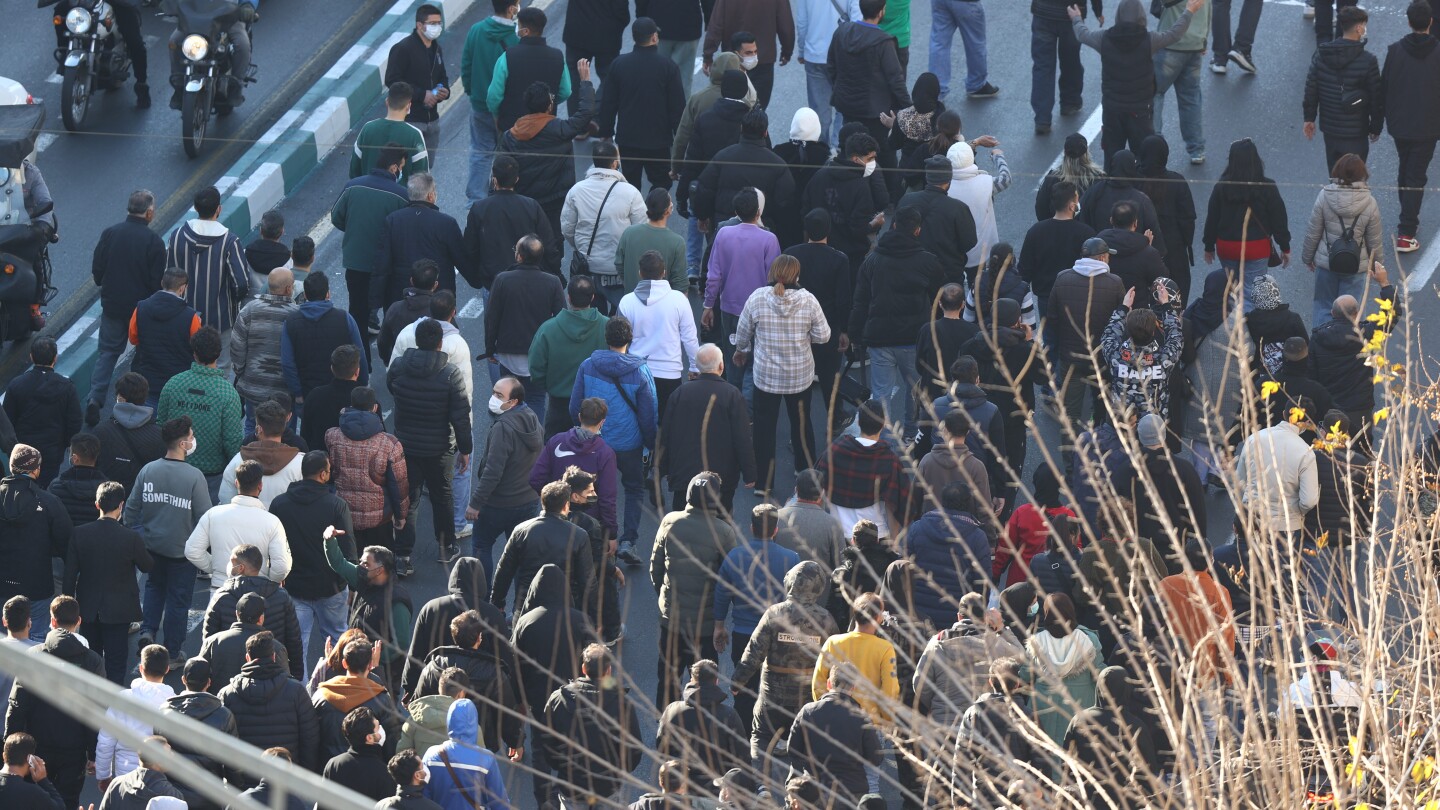
The Basij member’s death potentially signals a turning point that could trigger a more severe crackdown by Iranian authorities. While protests have somewhat subsided in Tehran, they have expanded to other provinces as frustrations mount over Iran’s deteriorating economic situation.
President Masoud Pezeshkian’s reformist government has indicated willingness to negotiate with demonstrators, but the president has publicly admitted the limitations of his power to address the economic crisis. The Iranian rial has plummeted to historic lows, with one U.S. dollar now exchanging for approximately 1.4 million rials.
In what appears to be a parallel security operation, Iranian state television reported the arrests of seven individuals – five described as monarchists and two allegedly connected to European-based groups. Authorities also claimed to have confiscated 100 smuggled pistols in a separate operation, though details were scarce.
The current wave of demonstrations represents the largest public unrest in Iran since the 2022 protests triggered by the death of Mahsa Amini, a 22-year-old woman who died in police custody after being detained for allegedly not wearing her hijab properly. However, analysts note that the present protests, while significant, have not reached the nationwide scale or intensity of the Amini demonstrations.
In what appears to be an effort to diffuse tensions, Iranian authorities declared Wednesday a public holiday across much of the country, citing cold weather. This likely aimed to create a long weekend, as the Iranian weekend falls on Thursday and Friday, with Saturday marking Imam Ali’s birthday, another holiday for many Iranians.
While economic grievances form the core of protesters’ concerns, some demonstrators have directed their anger at Iran’s theocratic leadership. The country remains under significant pressure following a 12-day Israeli military campaign in June, during which the United States also bombed Iranian nuclear facilities.
In an apparent diplomatic gesture toward the West, Iran has stated it is no longer enriching uranium at any site within the country, potentially signaling openness to negotiations over its controversial nuclear program in hopes of sanctions relief. However, concrete talks have yet to materialize, with U.S. President Donald Trump and Israeli Prime Minister Benjamin Netanyahu warning Tehran against reestablishing its nuclear program.
The economic protests come at a particularly vulnerable moment for Iran’s leadership, which faces both domestic discontent over living standards and international isolation amid ongoing regional tensions. How the government responds to this growing unrest, particularly following the death of a security force member, will be closely watched by both Iranian citizens and international observers in the days ahead.
Fact Checker
Verify the accuracy of this article using The Disinformation Commission analysis and real-time sources.

13 Comments
This is a tragic development in the ongoing protests in Iran. The loss of life is deeply concerning, regardless of which side the victim was on. It’s critical that both the government and protesters exercise restraint and find peaceful ways to address the underlying economic issues driving the unrest.
I agree, the situation appears to be escalating dangerously. All sides should prioritize de-escalation and open dialogue to find a resolution that respects the rights and concerns of the Iranian people.
Losing a member of the Revolutionary Guard is sure to harden the government’s stance, but a heavy-handed crackdown will only further antagonize the protesters. The economic hardships driving this unrest must be the priority, not a show of force. Creative solutions that address citizens’ concerns are needed to end this cycle of protests and repression.
Well said. The Iranian government faces a delicate balancing act – they must maintain order, but doubling down on repression is counterproductive. Meaningful economic and political reforms are the only way to truly resolve this crisis and restore stability.
While the loss of life is regrettable, this incident highlights the complex and volatile nature of the situation in Iran. The government will likely crack down harder, but that approach has proven ineffective in the past. Hopefully cooler heads can prevail and a diplomatic solution can be found.
You make a fair point. Escalating the response through force will only breed more resentment and conflict. A political solution focused on economic reforms and respecting civil liberties seems the wisest path forward, though it may be challenging to achieve.
This is a tragic and concerning development. The loss of life on either side is deeply regrettable. However, the government’s response will be critical. Resorting to further violence and crackdowns is unlikely to resolve the underlying economic issues driving the protests. Creative, good-faith efforts to address citizens’ legitimate grievances are needed to find a peaceful solution.
While the death of a Revolutionary Guard member is a serious escalation, it is important to keep the focus on the economic pressures that are fueling the widespread protests. The Iranian government must be willing to engage in meaningful dialogue and enact reforms to address the root causes, rather than relying on a heavy-handed security response that will only breed more resentment.
The killing of a Revolutionary Guard volunteer is sure to inflame tensions further. However, the broader economic pressures driving the protests must be the focus. The government should heed the legitimate grievances of citizens and work to enact meaningful reforms, not resort to violence.
Exactly. Responding with force is unlikely to resolve the underlying issues. Creative, good-faith negotiation is needed to find a peaceful path forward that addresses the root causes of the protests.
This is a troubling development in the unrest gripping Iran. The death of a Revolutionary Guard member is sure to prompt a harsh crackdown, which could further inflame the protests. However, the underlying economic and political grievances of the Iranian people must be addressed through constructive dialogue, not violence.
I agree, a violent response from the government is unlikely to resolve the situation in a sustainable way. The focus should be on addressing the root causes of the protests through meaningful reforms, not suppressing dissent. A peaceful, negotiated solution is the best path forward.
This incident highlights the volatility of the situation in Iran and the potential for further violence if tensions continue to rise. However, a forceful government crackdown is unlikely to resolve the economic hardships driving the protests. Prioritizing constructive engagement, concessions, and reforms to address citizens’ legitimate grievances seems the wisest path forward, even if it is politically challenging for the regime.