


Listen to the article
Vietnam’s New President Makes China First Foreign Visit, Pledges Stronger Ties
Chinese President Xi Jinping and Vietnam’s newly elected President To Lam have agreed to deepen cooperation in infrastructure development and emerging technologies during their high-level meeting in Beijing on Wednesday, underscoring the strengthening relationship between the two Communist nations.
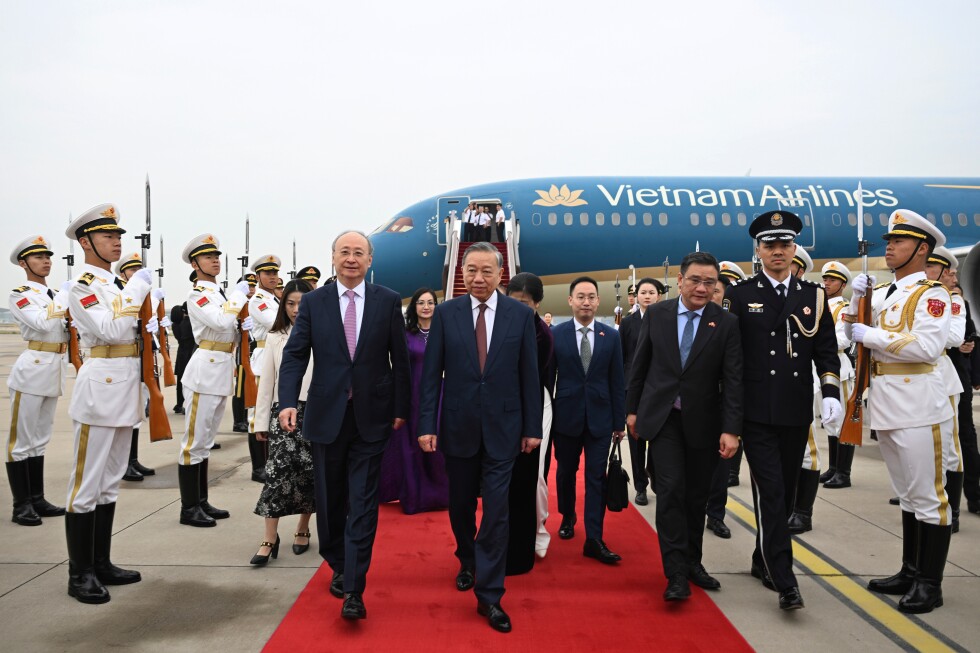
Lam, who was elected as Vietnam’s president just last week, chose China for his first overseas trip as head of state, a decision that analysts say clearly signals Vietnam’s foreign policy priorities under his leadership. The four-day visit began Tuesday and highlights the growing strategic importance of bilateral relations between the neighboring countries.
During their talks, Xi emphasized the need to prioritize infrastructure connectivity with Vietnam while expanding cooperation in cutting-edge fields such as artificial intelligence and semiconductor development, according to Chinese state broadcaster CCTV. These areas have become increasingly important as both nations seek to modernize their economies and reduce technological dependence on Western countries.
Xi stressed that defending the socialist system and maintaining the Communist Party’s ruling position represents “the greatest common strategic interest” between the two political parties. He urged both sides to maintain confidence in their political and economic systems while continuing reforms without deviating from their core principles.
“Both countries face similar development challenges and ideological pressures from the West,” said Dr. Liu Feng, an international relations expert at a Beijing-based think tank. “This mutual reinforcement of their political systems has become a cornerstone of China-Vietnam relations in recent years.”
In response, President Lam affirmed that Vietnam considers developing relations with China as an “objective need, strategic choice and top priority” for his administration. He expressed Vietnam’s willingness to enhance cooperation across multiple sectors, including trade, investment, railway development, and other infrastructure projects.
The meeting culminated in a signing ceremony for various cooperation documents covering areas such as inter-party exchanges, public security collaboration, technological development, and initiatives aimed at improving people’s livelihoods, according to China’s official Xinhua News Agency. These agreements are expected to formalize the expanded partnership between the two nations.
Lam’s election as president last week marked a significant shift in Vietnam’s political structure. As both the Communist Party General Secretary and now president, Lam has consolidated control over both the party apparatus and state institutions. This concentration of power represents a departure from Vietnam’s traditional model of distributed leadership, where different individuals typically held these positions.
Political analysts note that this new arrangement mirrors the power structure in China, where Xi Jinping serves as both Communist Party General Secretary and state president, as well as in neighboring Laos. This structural alignment may facilitate more direct engagement between the leadership of both countries.
Despite the warm diplomatic language, the relationship between China and Vietnam remains complex. The two nations have longstanding territorial disputes in the South China Sea, and Vietnam has been carefully balancing its relationships with China, the United States, and other regional powers.
“Vietnam is pursuing a delicate balancing act,” explained Dr. Nguyen Thi Thanh, an international relations expert at Vietnam National University. “While strengthening ties with China, particularly in economic areas, Hanoi remains cautious about becoming too dependent on any single power.”
The high-profile visit occurs against a backdrop of shifting geopolitical dynamics in Southeast Asia, as countries in the region navigate tensions between major powers while pursuing their economic and security interests.
Trade between China and Vietnam reached $175 billion in 2023, making China Vietnam’s largest trading partner. Meanwhile, Vietnam has emerged as an important alternative manufacturing hub for companies seeking to diversify their supply chains away from China.
Fact Checker
Verify the accuracy of this article using The Disinformation Commission analysis and real-time sources.

8 Comments
Interesting to see Vietnam and China strengthening ties, especially in infrastructure and emerging tech cooperation. Seems like both countries want to expand their economic partnership and reduce reliance on Western nations.
Agreed, the strategic importance of this relationship is clear as they look to modernize their economies together.
I’m curious to learn more about how this partnership will unfold, particularly in sensitive areas like AI and semiconductors. There could be both opportunities and risks for the two countries to navigate.
Good point. Deepening cooperation in cutting-edge technologies will require careful coordination and alignment of interests between Vietnam and China.
It will be interesting to see how this visit and strengthened China-Vietnam ties impact the geopolitical dynamics in the region, particularly with regards to the South China Sea disputes.
The infrastructure connectivity aspect of this partnership is intriguing. Improved transport links and supply chain integration could boost trade and economic growth for both sides.
Yes, enhanced infrastructure connectivity is often a key focus when neighboring countries seek to deepen their economic cooperation.
This visit highlights Vietnam’s pragmatic foreign policy approach, prioritizing economic ties with China despite historical tensions. It will be important to see how they balance relations with other major powers going forward.