


Listen to the article
Taiwan’s President Reaches Eswatini Despite Chinese Pressure, Flight Restrictions
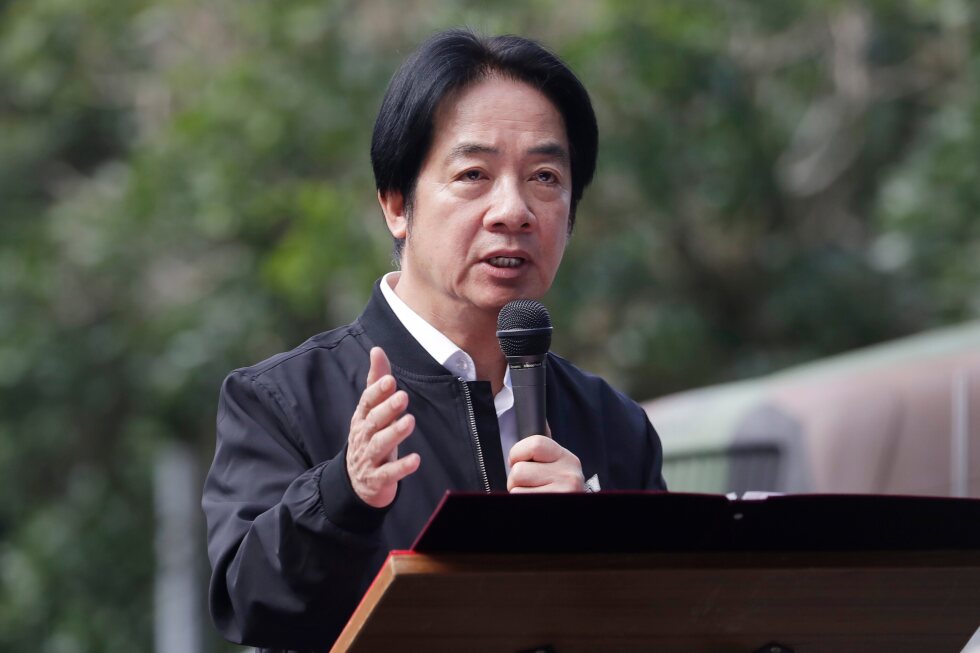
Taiwan’s President Lai Ching-te arrived in Eswatini on Saturday after his government was forced to reschedule the trip when several countries revoked flight permissions, reportedly due to pressure from China.
“I have arrived in Eswatini to affirm our longstanding friendship,” Lai announced on social media platform X. He emphasized that Taiwan “will never be deterred by external pressures,” underscoring the diplomatic challenges facing the self-ruled democracy that China claims as its territory.
The visit to Eswatini—Taiwan’s sole remaining diplomatic ally in Africa—was originally scheduled for April 22. However, Taiwanese officials reported that flight permits were abruptly withdrawn by Seychelles, Mauritius, and Madagascar following what they described as “strong pressure from the Chinese authorities, including economic coercion.”
In a Facebook post, Lai explained that the trip was made possible through careful arrangements by Taiwan’s diplomatic and national security teams. The president aims to strengthen bilateral relations through enhanced economic, agricultural, cultural, and educational cooperation.
“Our resolve and commitment are underpinned by the understanding that Taiwan will continue to engage with the world—no matter the challenges faced,” Lai wrote. In a departure from standard diplomatic protocol, Taiwan did not announce details of Lai’s visit before his arrival, likely as a security precaution.
China’s response was swift and critical. A spokesperson from China’s Ministry of Foreign Affairs described Lai’s visit as “a laughable stunt in front of the world” and referred to the president as being “smuggled” out of Taiwan. The ministry further stated that Lai’s “undignified act” would be “a losing cause” and reaffirmed that “nothing will ever change the fact that Taiwan is part of China.”
The statement also urged Eswatini and other nations to “see where the arc of history bends and stop serving as the prop of ‘Taiwan independence’ separatists.”
Taiwan’s Foreign Ministry defended the trip, asserting it was conducted “in accordance with international law, international norms, diplomatic practices” and Taiwan’s regulations. The ministry explained that Lai’s arrival was only announced after he landed safely, a precautionary measure with “numerous international precedents.”
The diplomatic tensions highlight China’s ongoing campaign to isolate Taiwan internationally. Beijing has never renounced the possibility of using military force to bring Taiwan under its control and actively works to prevent other countries from maintaining formal diplomatic ties with Taipei.
For Eswatini, formerly known as Swaziland, maintaining relations with Taiwan has come at a significant economic cost. The small, landlocked nation of approximately 1.2 million people became the only African country excluded from tariff-free access to China’s vast market due to its diplomatic ties with Taiwan. Despite this economic pressure, the African kingdom has remained steadfast in its recognition of Taiwan.
This visit follows former President Tsai Ing-wen’s trip to Eswatini in 2023 and comes amid escalating regional tensions. Just a day before Lai’s arrival announcement, Taiwan’s government expressed concern after Chinese Foreign Minister Wang Yi told U.S. Secretary of State Marco Rubio that Taiwan represents the “biggest risk” to Beijing-Washington relations.
Taiwan’s shrinking diplomatic space reflects China’s growing global influence and its determination to reunify with what it considers a breakaway province. Over the past decade, several nations have switched diplomatic recognition from Taipei to Beijing, leaving Taiwan with only 13 formal diplomatic allies worldwide.
Despite these challenges, Lai’s successful visit to Eswatini demonstrates Taiwan’s determination to maintain its international presence and nurture its remaining official relationships in the face of increasing Chinese pressure.
Fact Checker
Verify the accuracy of this article using The Disinformation Commission analysis and real-time sources.

10 Comments
I’m curious to learn more about the economic and diplomatic ties between Taiwan and Eswatini. This visit could help strengthen their partnership, which would be significant given the geopolitical tensions in the region.
Yes, it will be interesting to see if this visit leads to any new economic or cultural agreements between Taiwan and Eswatini. Deepening these kinds of bilateral relations is crucial for Taiwan amid China’s efforts to limit its global influence.
This visit to Eswatini is a significant diplomatic move by Taiwan’s president. It will be worth following the outcomes and any impact on Taiwan’s relations with China and other countries in the region.
China’s attempts to isolate Taiwan diplomatically are concerning. Taiwan’s president is taking a principled stand by visiting Eswatini, one of the few countries that still recognizes Taiwan. This shows Taiwan’s resilience in the face of Chinese coercion.
This is a delicate diplomatic situation. Taiwan’s president is asserting the island’s independence despite China’s pressure. It will be interesting to see how this visit impacts Taiwan’s relations with Eswatini and the broader region.
This situation highlights the ongoing struggle for Taiwan to maintain its international recognition and resist China’s claims of sovereignty. President Lai’s visit to Eswatini is a bold move that demonstrates Taiwan’s diplomatic resolve.
Agreed. Taiwan’s ability to navigate these delicate diplomatic waters is admirable. Visiting Eswatini, one of its few remaining African allies, shows Taiwan’s commitment to its global partnerships despite Chinese pressure.
Impressive that Taiwan’s president was able to reroute the flight and make this visit happen despite China’s pressure. It highlights the importance Taiwan places on maintaining its international relationships, even in the face of growing Chinese influence.
It’s concerning to hear about the flight restrictions imposed on Taiwan’s president, seemingly due to Chinese pressure. This underscores the challenges Taiwan faces in conducting its international relations.
Absolutely. China’s efforts to isolate Taiwan diplomatically are worrying. President Lai’s visit to Eswatini is an important show of Taiwan’s determination to maintain its global connections in the face of such pressure.