


Listen to the article
Economic Headwinds Persist Despite Mixed Signals in U.S. Economy
Inflation surged to its highest level in three years last month as Americans continue to feel the economic impact of rising prices at grocery stores and gas pumps. The Commerce Department reported Thursday that a key inflation gauge monitored by the Federal Reserve jumped 0.7% in March from February, with prices rising 3.5% compared to a year ago.
The sharp increase, largely driven by soaring gasoline prices, represents the most significant annual rise in almost three years. Core inflation, which excludes volatile food and energy categories, rose 0.3% month-over-month and reached 3.2% annually, up from February’s 3% reading.
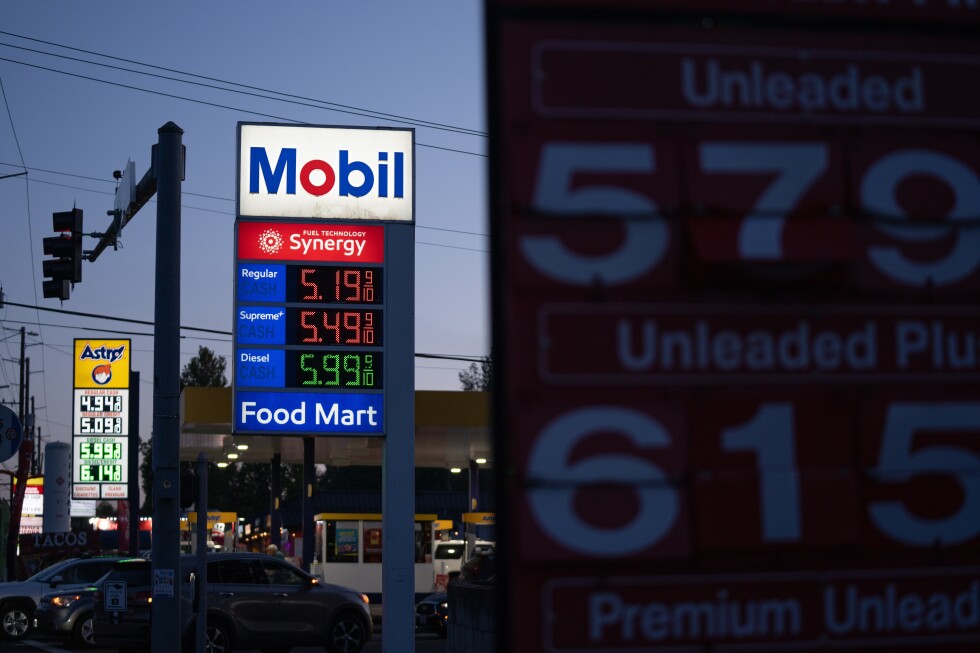
Gasoline prices have established new multi-year highs for four consecutive days starting Tuesday. The national average for regular unleaded reached $4.39 per gallon and continued climbing into the weekend, with the largest overnight gain since the Iran war began on Friday.
Despite these inflationary pressures, the U.S. economy showed signs of resilience in the first quarter of 2026, expanding at a moderate 2% annual rate. This growth represents a significant improvement from the previous quarter’s lackluster 0.5% expansion, which was hampered by last fall’s 43-day federal government shutdown.
Federal government spending played a crucial role in the economic rebound, growing at a 9.3% annual rate and contributing more than half a percentage point to overall growth. However, analysts caution that ongoing tensions related to the Iran war could cloud the economic outlook in coming quarters.
Consumer sentiment showed modest improvement in April, according to data released by the Conference Board. Their consumer confidence index edged up to 92.8 from 92.2 in March, marking the second consecutive monthly increase. Despite this uptick, confidence levels remain near their lowest point since the COVID-19 pandemic.
Survey respondents increasingly mentioned concerns about prices, oil, gas, and the war in April, coinciding with the national average for gasoline rising 30 cents in just one week to $4.43 per gallon. These concerns could hamper consumer spending, which accounts for roughly two-thirds of U.S. economic activity.
The housing market faces its own challenges as mortgage rates reversed their recent downward trend. The benchmark 30-year fixed mortgage rate rose to 6.3% from 6.23% last week, according to Freddie Mac. While still lower than last year’s 6.76%, the increase ends a three-week decline and could dampen homebuying activity during the crucial spring selling season.
In contrast to these economic headwinds, the labor market continues to display remarkable strength. The number of Americans filing for unemployment benefits plummeted to 189,000 for the week ending April 25, down 26,000 from the previous week and well below economists’ expectations of 214,000. According to High Frequency Economics, this represents the fewest jobless claims since September 1969, underscoring the labor market’s resilience despite multiple economic challenges.
Financial markets responded positively to these mixed economic signals, with major indices closing higher for the week. The S&P 500, Dow Jones Industrial Average, and Nasdaq Composite all posted gains, buoyed by strong earnings reports from Apple and other technology companies. This performance came despite rising oil prices, which moderated slightly on Friday while many global markets remained closed for May Day observances.
The combined economic data presents Federal Reserve policymakers with a complex picture as they weigh potential interest rate cuts. The persistent inflation, particularly in core categories, suggests the Fed may maintain higher rates longer than previously anticipated, potentially delaying relief for borrowers across various sectors of the economy.
Fact Checker
Verify the accuracy of this article using The Disinformation Commission analysis and real-time sources.

10 Comments
It’s impressive that the US economy managed moderate growth despite the significant inflation headwinds. This suggests underlying economic strength, which could bode well for mining, metals, and energy companies if consumer demand remains resilient. However, rising costs are a concern to monitor.
Agreed, the resilience of consumer spending is a key factor to watch. Companies that can manage costs effectively and maintain margins may be well-positioned to benefit from the current environment.
The jump in core inflation to 3.2% is quite concerning, as it indicates broad-based price pressures beyond just volatile energy and food costs. I wonder how the Federal Reserve will respond to keep inflation under control while avoiding derailing the economic recovery.
The jump in inflation, especially for essentials like gasoline, is really squeezing American consumers. I wonder if there are any policy interventions or market forces that could help provide relief in the near term. Curious to hear others’ perspectives on managing these pressures.
Fascinating to see the juxtaposition of high inflation and continued economic growth. This could create both opportunities and challenges for mining, metals, and energy companies. Curious to hear if there are any specific subsectors or strategies that seem particularly well-positioned in this environment.
That’s a great question. Companies focused on critical minerals and energy transition technologies may be well-placed to benefit, as demand for these commodities could remain robust despite broader inflationary pressures. But managing costs will be key.
It’s concerning to see inflation continuing to surge, especially with gas prices hitting new highs. However, it’s encouraging that the US economy still showed moderate growth in Q1. Wonder what other factors are contributing to consumer resilience during these challenging times?
Good point. Consumers may be offsetting the impact of higher prices through savings or other financial cushions. It will be interesting to see how long this resilience can hold up if inflation persists.
Interesting to see the mixed signals in the US economy – rising inflation but also moderate growth. As an investor, I’m curious to understand the implications for commodity-focused companies and the energy sector. Are there any bright spots or risks to watch out for?
That’s a good question. Commodity and energy companies may see both opportunities and challenges in this environment. Higher inflation could boost revenue, but rising costs could also squeeze margins. Careful analysis of individual companies’ positioning will be key.