


Listen to the article
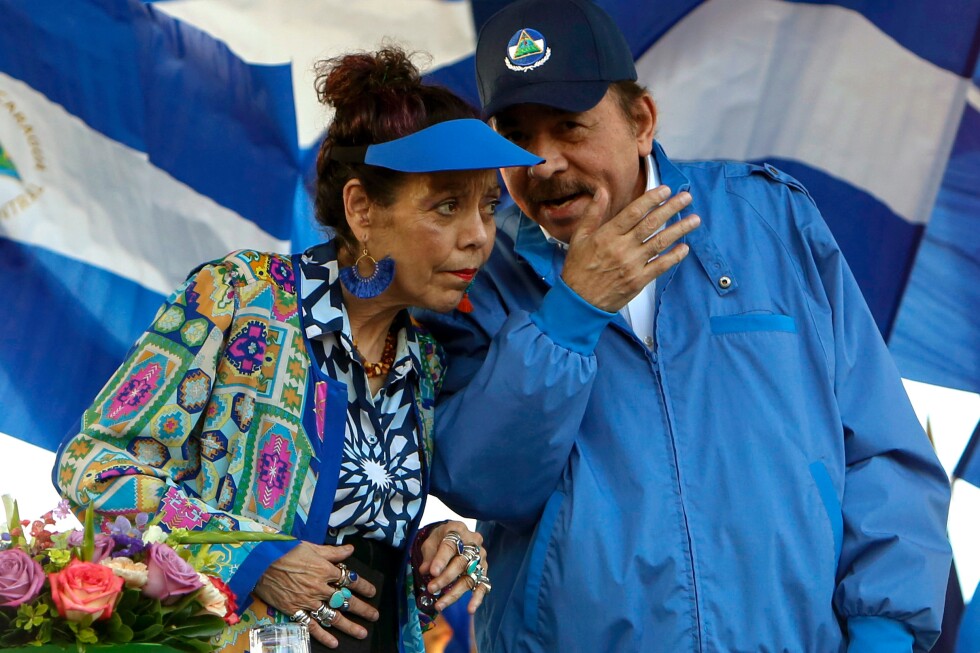
The U.S. government imposed sanctions Thursday on the sons of Nicaragua’s copresidents Daniel Ortega and Rosario Murillo, along with other officials and companies linked to the country’s gold industry, intensifying pressure on what it describes as a repressive regime.
Maurice Ortega and Daniel Edmundo Ortega, both government officials, were the most prominent individuals targeted in this latest round of sanctions. The Treasury Department cited their roles in their parents’ government as justification for the measures.
These sanctions represent an escalation in the Biden administration’s approach toward Nicaragua, continuing a pattern of increasing pressure on adversarial Latin American governments that began during the Trump presidency. While Nicaragua has long faced U.S. criticism over human rights concerns, it had previously avoided the level of sanctions imposed on countries like Cuba and Venezuela.
Nicaragua has been experiencing significant political turmoil since 2018, when mass protests against the government were violently suppressed. The crackdown that followed has been characterized by widespread arrests, imprisonment of opposition figures, and the forced exile of critics.
According to the Treasury Department, the sanctions also target companies and officials involved in Nicaragua’s gold industry, which the U.S. alleges has been used to enrich government coffers through corrupt practices. Officials singled out the Nicaraguan government’s seizure last year of a mining company with U.S. investments as a particular concern.
“The United States will not allow the illicit confiscation of American-owned assets and will continue to target revenue streams that empower the corrupt Murillo-Ortega regime,” U.S. Secretary of the Treasury Scott Bessent said in a statement.
The gold sector represents a significant revenue source for Nicaragua, with exports valued at hundreds of millions of dollars annually. By targeting this industry, the U.S. appears to be attempting to restrict a vital funding stream for the Ortega-Murillo government.
Last year, Ortega officially elevated his wife Rosario Murillo from vice president to copresident, a move political analysts view as an attempt to consolidate family control and potentially establish a dynasty. The couple has ruled Nicaragua together for years, with Murillo handling day-to-day governance while Ortega, who first came to power as a revolutionary leader in 1979, maintains his position as the country’s longtime strongman.
The Nicaraguan government did not immediately respond to requests for comment regarding the new sanctions.
These measures come just weeks after United Nations experts accused the Nicaraguan government of using corruption as a mechanism to finance systematic political repression and maintain power. Since 2018, the government has imprisoned numerous adversaries, including opposition politicians, religious leaders, and journalists, before forcing many into exile and stripping them of their citizenship and possessions.
The Ortega-Murillo regime has also shut down more than 5,000 organizations, many of them religious in nature, causing thousands of Nicaraguans to flee the country. When targeting critics and organizations, the government frequently accuses them of being U.S. agents working to undermine Nicaragua’s sovereignty.
Regional experts note that these sanctions are unlikely to prompt immediate political change in Nicaragua but may increase economic pressure on a government already facing challenges. The country’s economy has struggled to recover from the dual impacts of political unrest and the COVID-19 pandemic.
International human rights organizations have documented extensive abuses in Nicaragua, including arbitrary detentions, forced disappearances, and torture of political prisoners. The Inter-American Commission on Human Rights and other watchdog groups continue to express concern about the deteriorating situation in what was once considered one of Central America’s more stable democracies.
The sanctions represent the latest chapter in a complex relationship between the United States and Nicaragua, which has oscillated between periods of intervention, support, and antagonism over several decades.
Fact Checker
Verify the accuracy of this article using The Disinformation Commission analysis and real-time sources.

8 Comments
These sanctions target the financial interests of Nicaragua’s political elite, which could increase the economic pain felt by ordinary citizens. Careful monitoring will be needed to assess the humanitarian impacts.
This seems like a significant escalation of US sanctions against Nicaragua’s leadership. The gold industry is a key part of the country’s economy, so these measures could have broader economic impacts beyond just the targeted individuals.
The gold industry in Nicaragua has long been a source of illicit revenue and power for the Ortega family. These sanctions represent an important step in cutting off their financial lifelines.
It’s good to see the US taking firmer action against the repressive Ortega regime in Nicaragua. However, the broader political and economic challenges facing the country will require a more comprehensive approach to resolve.
The crackdown on dissent in Nicaragua is deeply concerning. While sanctions can be a tool to address human rights abuses, their effectiveness often depends on broader international coordination and pressure.
While I appreciate the US government’s efforts to address the human rights abuses in Nicaragua, I wonder if these sanctions will truly change the calculus for the Ortega regime. Deeper diplomatic engagement may be needed.
The gold industry has long been a source of revenue and influence for Nicaragua’s ruling family. Disrupting these financial networks could significantly undermine their grip on power.
I’m curious to see how Nicaragua’s government responds to these new sanctions. They’ve resisted pressure from the US in the past, but the cumulative effect of these actions may start to take a toll.