


Listen to the article
Former Washington Post Editor Criticizes Media Ethics Failures in NYU Speech
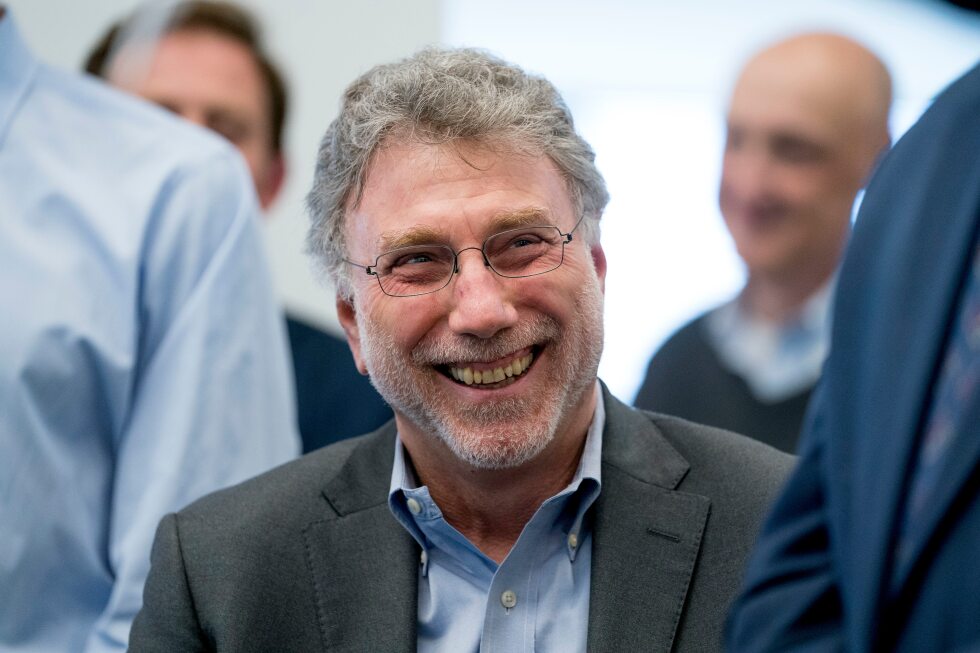
Veteran editor Marty Baron delivered a pointed critique of current journalistic practices during his keynote address at New York University’s journalism awards ceremony Wednesday. The renowned former leader of The Washington Post, The Boston Globe, and The Miami Herald expressed concern about the state of ethics in news media, particularly singling out CBS News leadership and mainstream reporters who he believes failed to properly cover President Biden’s fitness for office.
In his address, Baron warned about the erosion of ethical standards in journalism, suggesting that “to each his own” is replacing a unified ethical compass within the industry. “We will be doing ourselves no favors if that turns out to be the case,” Baron cautioned. “All of us will likely be tainted by the worst practices of any one of us.”
The Associated Press received recognition at the event for its “unyielding defense of ethical standards and principles,” specifically for maintaining its style guidance despite pressure after former President Trump attempted to rename the Gulf of Mexico. The AP is currently engaged in a lawsuit against the White House regarding reduced press access, a case now before an appeals court.
Baron directed particular criticism toward Paramount Global mogul David Ellison and his choice for CBS News editor-in-chief, Bari Weiss, founder of The Free Press. He challenged Ellison’s stated goal of positioning CBS News to prioritize viewers who identify as center-left or center-right politically, calling it “a political goal. It is not a journalistic one.”
“A news organization that employs that as a guiding principle is fated to compromise ethics when a rock-solid story moving toward publication is deemed to fall outside the designated political comfort zone,” Baron explained. CBS News did not immediately respond to requests for comment.
Ellison’s perceived proximity to the Trump administration has become a lens through which much of CBS’s coverage is now scrutinized. The network faced criticism in February for its framing of immigration enforcement statistics, when it shifted focus from reporting that 40% of those arrested by ICE had no criminal history to emphasizing that 60% did have criminal records.
Baron also took aim at cable networks that he described as functioning as “mouthpieces and bullhorns” for the administration. “These outlets render themselves largely indistinguishable from the governments they are supposed to cover,” he said. His remarks came shortly before Defense Secretary Pete Hegseth, a former Fox News host, criticized journalists from the Pentagon podium for what he characterized as negative coverage of the Iran war.
The veteran editor didn’t spare journalists across the political spectrum, condemning those who view everything through a partisan lens and “seize on an isolated fact to make sweeping judgments.” He described this approach as “an outrage and advocacy industry, not a fact-finding profession.”
In one of his most pointed criticisms, Baron suggested that many journalists failed in their duty to properly investigate President Biden’s cognitive and physical health during his presidency. “Did some among us shy from aggressively exploring his intellectual and physical health for fear of aiding Donald Trump’s campaign and alienating loyal readers, viewers and listeners?” Baron asked. “My guess is yes. If so, would that be an ethical breakdown in our profession? Again, I’d say yes.”
The NYU journalism awards also honored The Atlantic for its transparent handling of an incident where its editor was inadvertently included in a text chain with Trump administration and military figures. Student journalists from NYU, Stanford, and the University of Texas at Dallas were also recognized for their work.
Baron, who announced his retirement from the Washington Post in January 2021, just days after Biden took office, has long been regarded as one of American journalism’s most respected voices on ethics and standards. His remarks reflect growing concerns about the increasingly blurred lines between journalism, advocacy, and political alignment in an era of intense polarization.
Fact Checker
Verify the accuracy of this article using The Disinformation Commission analysis and real-time sources.

7 Comments
The concerns raised by Marty Baron about the lack of a shared ethical framework in journalism are deeply troubling. If the industry can’t come together around core principles, the public’s trust will continue to erode. Strong ethical standards should be non-negotiable.
It’s disappointing to hear about the perceived failures in covering President Biden’s fitness for office. The media must strive for objectivity and fairness, even when reporting on sensitive political topics. Skewing coverage to fit a particular agenda undermines credibility.
I share your concern. The media has a responsibility to thoroughly and impartially evaluate the fitness of all political leaders, regardless of party affiliation. Anything less is a disservice to the public.
Kudos to the Associated Press for standing firm on ethical principles despite external pressure. Upholding consistent reporting guidelines is critical, even when it’s politically inconvenient. Journalism should be guided by facts, not partisan agendas.
I agree, the AP’s defense of their style guide in the face of political interference is commendable. Principled, independent journalism is essential for a healthy democracy.
The warning about being ‘tainted by the worst practices of any one of us’ highlights the importance of establishing and upholding universal ethical guidelines in journalism. A lack of consistency across the industry only breeds further public mistrust.
Fascinating insights from a veteran journalist on the troubling erosion of ethics in the media industry. It’s concerning to hear that ‘to each his own’ is replacing a unified moral compass. Maintaining high journalistic standards is crucial for public trust.