


Listen to the article
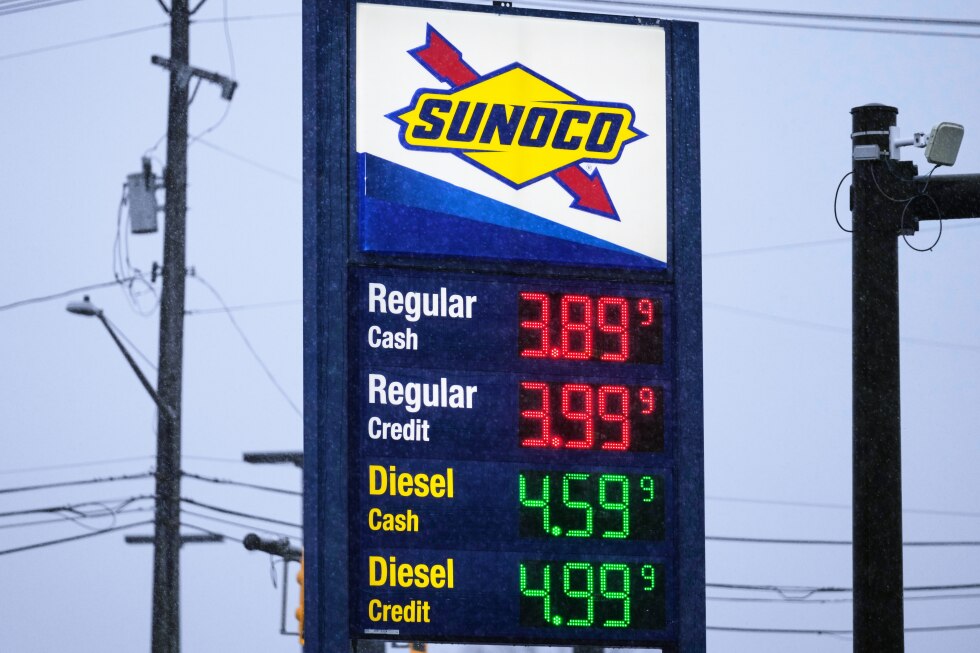
U.S. lawmakers are proposing a suspension of the federal gas tax as prices approach $4 per gallon nationally amid escalating tensions in Iran. The measure aims to alleviate financial pressure on American families and businesses dependent on vehicles for daily transportation needs.
President Donald Trump addressed the possibility during a Cabinet meeting Thursday, saying he has “thought about” suspending the federal gas tax but suggested states might consider suspending their own fuel taxes instead. “People have talked about it,” Trump noted. “It’s something we have in our pocket if we think it’s necessary.”
The administration has already taken several steps to combat rising fuel costs, including releasing millions of barrels from the U.S. Strategic Petroleum Reserve and temporarily lifting sanctions on certain Russian and Iranian oil shipments currently at sea. The U.S. is also working to form a coalition with countries dependent on Middle Eastern oil to secure the Strait of Hormuz, a critical chokepoint through which approximately one-fifth of the world’s traded oil typically flows.
The federal gas tax currently stands at 18.4 cents per gallon for gasoline and 24.4 cents per gallon for diesel fuel, generating over $23 billion annually to fund federal highway and public transit programs. Any suspension would require congressional approval, as the president lacks unilateral authority to enact such a change.
With Republicans controlling both the House and Senate, legislation on this issue is unlikely to advance without explicit support from the Trump administration. Democratic Senators Richard Blumenthal of Connecticut and Mark Kelly of Arizona have co-sponsored the Gas Prices Relief Act, which would suspend the tax through October 1.
“Trump’s war of choice with Iran is driving up gas prices across the country — and Americans shouldn’t have to bear the additional economic burden of Trump’s reckless decision making,” Blumenthal stated. A similar proposal has been introduced in the House by Democratic Representative Chris Pappas of New Hampshire.
The American Road & Transportation Builders Association has expressed concerns about the potential consequences of suspending the gas tax. While the proposed legislation would offset lost Highway Trust Fund revenue with general funds, the industry group warns that a tax suspension could increase the federal deficit and threaten long-term investment in highway and public transit infrastructure.
The association also points to studies indicating that retailers often don’t pass the full tax reduction to consumers. Research suggests that gas prices are determined by a complex matrix of factors, including global oil prices, with state and federal taxes representing just one component.
Several states have already implemented or are considering their own gas tax holidays. Georgia’s Republican Governor Brian Kemp signed legislation on March 20 suspending the state’s 33-cent-per-gallon gasoline tax and 37-cent-per-gallon diesel tax for 60 days. The bipartisan measure has already yielded positive results, with Georgia gas prices falling 15 cents per gallon in the week following implementation, even as the national average rose by 10 cents during the same period.
Other states exploring similar relief measures include California, Connecticut, Florida, Maryland, and Utah. Connecticut’s Democratic Governor Ned Lamont has proposed temporarily suspending the state’s 25-cent-per-gallon gasoline tax and 48.9-cent diesel tax, though implementation remains uncertain. State officials are also considering potential rebate checks to help residents offset high energy costs.
Florida’s Republican Governor Ron DeSantis has expressed skepticism about the effectiveness of gas tax holidays, despite supporting them previously. “Our ability to influence fuel prices are really marginal,” DeSantis said at a recent bill signing. “Sometimes the prices get raised so the consumer doesn’t see any difference…. I don’t think the consumer really felt relief.”
For drivers seeking immediate savings, Consumer Reports recommends adjusting driving habits to maximize fuel economy. Maintaining steady speeds and observing speed limits can significantly improve mileage, with driving at a consistent 55 mph potentially increasing fuel economy by 6 to 8 mpg. The publication notes that “speeding up from 55 to 75 mph is like moving from a compact car to a large SUV” in terms of fuel consumption.
Experts also advise avoiding hard acceleration and braking when possible and using regular rather than premium gasoline in vehicles where it’s optional, as additional measures to combat rising fuel costs affecting American consumers.
Fact Checker
Verify the accuracy of this article using The Disinformation Commission analysis and real-time sources.

14 Comments
While a gas tax suspension could offer some respite, I’m curious to hear more about the administration’s plans to address the underlying drivers of rising fuel costs, such as geopolitical tensions and supply chain disruptions. A holistic strategy is needed to ensure price stability and energy security.
While a gas tax suspension may offer temporary respite, I’m more interested in hearing about the administration’s long-term strategy to address the root causes of rising fuel prices, such as geopolitical tensions and supply chain vulnerabilities. A comprehensive approach is needed to ensure energy security and affordability.
Agreed. Sustainable solutions must go beyond short-term fixes and tackle the structural challenges facing the energy sector. Policymakers should take a holistic view to strengthen national energy resilience.
The gas tax suspension is a pragmatic move to alleviate the burden on consumers, but I hope it’s accompanied by a broader strategy to address the underlying issues driving up fuel prices, such as supply chain disruptions and geopolitical instability. A more diversified and resilient energy system is key to long-term affordability and security.
With tensions in the Middle East and the ongoing pandemic’s impact on global supply chains, it’s not surprising to see fuel prices surge. A temporary gas tax suspension could offer some breathing room for consumers, but policymakers must also focus on long-term energy security.
Absolutely. Diversifying energy sources and supply routes is key to building resilience against future shocks. Proactive measures are needed to address the root causes of price volatility.
Suspending the federal gas tax could provide some relief to American families and businesses struggling with rising fuel prices. It’s a pragmatic move, though the long-term solution requires addressing underlying supply and geopolitical factors.
Agreed. Any short-term measures should be coupled with efforts to boost domestic energy production and strengthen international cooperation to secure critical energy infrastructure.
Suspending the federal gas tax is a reasonable short-term measure, but it’s critical that policymakers also focus on boosting domestic energy production, strengthening international cooperation, and investing in alternative energy sources to build long-term resilience.
Exactly. A multi-pronged approach is required to tackle the current energy crisis and prepare the US for future supply shocks.
The federal gas tax suspension is a reactive measure, but one that could provide timely relief to Americans feeling the pinch at the pump. However, I hope lawmakers also explore more structural solutions to improve energy market stability and affordability.
The proposed gas tax suspension could provide some relief to American consumers, but it’s a band-aid solution. Lawmakers should also explore policies to increase domestic energy production, diversify supply chains, and accelerate the transition to renewable energy sources.
Suspending the gas tax is a pragmatic short-term solution, but the administration should also consider policies to spur domestic production of oil, gas, and critical minerals needed for the energy transition. A comprehensive approach is required to address the current crisis and build long-term resilience.
Well said. Achieving energy security and affordability will require balancing near-term relief with strategic investments in diverse, reliable supply chains.