


Listen to the article
Federal prosecutors have unsealed an indictment detailing how a 63-year-old man with multiple aliases allegedly defrauded a Mexican billionaire out of approximately $450 million through an elaborate stock-backed loan scheme falsely linked to one of America’s most prestigious families.
Vladimir Sklarov, who also operated under the names Gregory Mitchell and Mark Simon Bentley, was arrested Saturday in Chicago following an investigation by the Southern District of New York. According to court documents, Sklarov established a fraudulent enterprise called Astor Asset Group, which claimed connections to the historic Astor family, whose patriarch John Jacob Astor was among America’s wealthiest individuals in the mid-19th century.
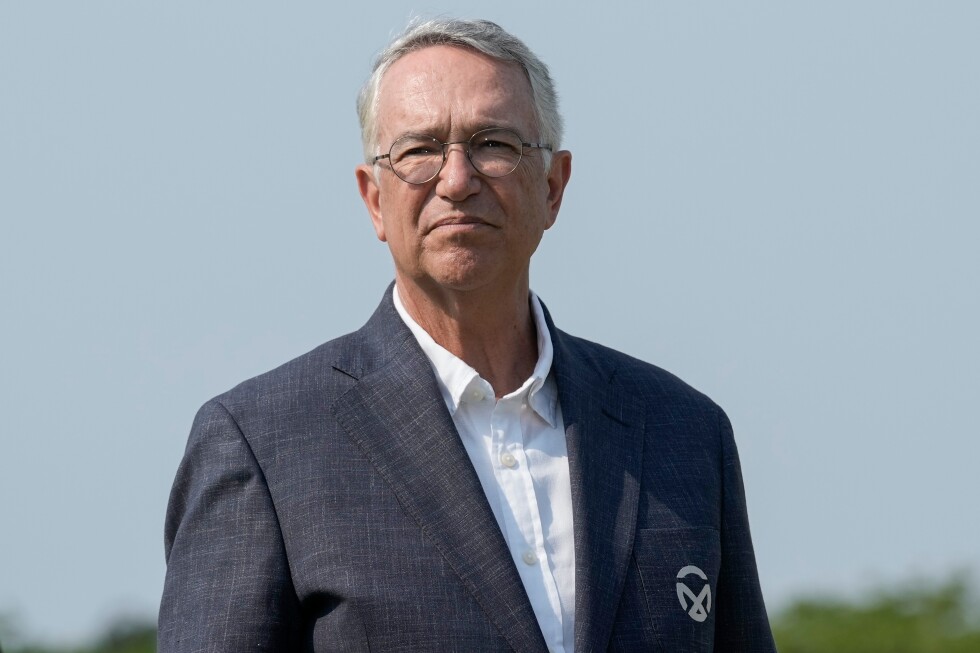
While the indictment does not explicitly name the victim, court records from related litigation in England identify the defrauded party as Ricardo Salinas Pliego, the prominent Mexican billionaire whose business empire spans television, retail, and banking sectors. Salinas confirmed his victimization in a 2023 Wall Street Journal interview, expressing profound regret: “I feel like an absolute idiot. How could I fall for this?”
The scheme began in 2021 when Salinas sought a $100 million loan he planned to secure with shares from a company he owned. Prosecutors allege Sklarov, posing as “Gregory Mitchell” and calling himself the “managing director” of Astor, convinced Salinas that the purported company could provide the financing. Sklarov allegedly collaborated with unnamed co-conspirators, including an individual using the alias “Thomas Mellon” – another surname associated with American wealth and prominence.
“As alleged, Vladimir Sklarov represented his company to be affiliated with, and have the financial backing of the famed New York Astor family in order to burnish his brand,” said Jay Clayton, U.S. Attorney for the Southern District of New York. “That was a complete lie. Sklarov used false prestige to gain control of hundreds of millions of dollars in stock and then liquidated those shares for his own benefit.”
Court documents reveal that Sklarov and his associates misrepresented Astor Asset Group as a legitimate lending institution established from John Jacob Astor’s fortune, falsely claiming relationships with prestigious clients including universities and investment funds. This veneer of respectability played a crucial role in securing Salinas’ trust.
By July 2021, the parties signed an agreement wherein Sklarov would provide Salinas with at least $115 million, supposedly backed by the Astor family’s resources. Salinas secured the arrangement with company shares valued at approximately $450 million, which, according to the agreement, were to be held in trust but not sold.
Prosecutors allege that Sklarov violated this arrangement by liquidating the shares and using a portion of the proceeds to fund the promised loan to Salinas. The remaining hundreds of millions were allegedly diverted to Sklarov and his co-conspirators for personal enrichment.
The fraud remained undetected until July 2024, when Salinas discovered his shares had been liquidated. The following day, according to the indictment, Sklarov’s organization sent Salinas a letter falsely claiming he had defaulted on the loan. A month earlier, the sham company had wrongfully informed Salinas that they possessed the authority to sell his shares.
Federal authorities list Sklarov’s residence as Athens, Greece, though reporting by The Wall Street Journal describes him as a Ukrainian-born American with prior fraud convictions. Sklarov now faces a detention hearing scheduled for Friday in Chicago federal court. Attempts to reach his public defender for comment were unsuccessful.
This case highlights the sophisticated nature of high-value financial fraud and the exploitation of prestigious family names to create legitimacy in financial dealings. It also demonstrates how even experienced, wealthy business figures can fall victim to well-orchestrated deception when it comes wrapped in the veneer of historical prestige.
Fact Checker
Verify the accuracy of this article using The Disinformation Commission analysis and real-time sources.

14 Comments
Fascinating story of an elaborate fraud scheme targeting a prominent Mexican billionaire. It’s concerning to see such sophisticated scams taking advantage of high-net-worth individuals. Curious to learn more about the investigative efforts that led to this indictment.
Agreed, these types of fraud cases seem to be on the rise. It will be interesting to see what kind of sentencing the perpetrator faces and whether any of the stolen funds can be recovered for the victim.
This case is a stark reminder that even the wealthiest individuals are vulnerable to financial fraud. It’s alarming to see such a massive sum stolen through an elaborate scheme. I hope the authorities are able to recover as much of the stolen funds as possible for the victim.
Well said. Fraud of this magnitude can have devastating impacts, even for the ultra-wealthy. Proper safeguards and vigilance are essential to protect against such sophisticated scams targeting high-net-worth individuals.
The audacity of this scheme, claiming connections to the historic Astor family, is quite astounding. It speaks to the lengths some criminals will go to in order to lend an air of legitimacy to their fraudulent activities. Curious to learn more about how the perpetrator was able to so effectively dupe the victim.
Absolutely. The fact that the scam artist was able to leverage a prestigious family name is particularly egregious. It will be interesting to see if the investigation uncovers any other accomplices or co-conspirators who may have aided in perpetrating this fraud.
Fascinating case study on the lengths some fraudsters will go to in order to perpetrate their schemes. Curious to learn more about the specific investigative tactics and evidence that led to this indictment. Hopefully this serves as a wake-up call for investors to exercise extreme caution, even with seemingly reputable entities.
Absolutely. This case underscores the need for robust due diligence, even for the most seasoned and sophisticated investors. The ability of the perpetrator to exploit the victim’s trust is quite troubling, and highlights the importance of verifying claims and connections before committing significant funds.
This story serves as a sobering reminder that even the wealthy are not immune to sophisticated scams. It’s alarming to see such a massive sum of money stolen through fraudulent means. I hope the victim is able to recover at least some of the lost funds.
Agreed. While the victim’s wealth may cushion the blow, a $450 million loss is still incredibly significant. Hopefully the authorities can trace and seize as much of the stolen assets as possible to provide some restitution.
Impressive that the authorities were able to track down and arrest the alleged perpetrator. White-collar crimes of this magnitude can be incredibly difficult to investigate and prosecute. Curious to see if this leads to any broader crackdowns on fraudulent activity in the financial services industry.
Absolutely. High-profile cases like this often spur regulatory scrutiny and reforms. It will be interesting to see if this incident prompts any new initiatives to better protect investors, especially those in the ultra-high-net-worth category.
This case highlights the importance of thorough due diligence, even for the ultra-wealthy. A $450 million loss is staggering, though I’m glad the authorities were able to uncover and shut down the fraudulent scheme. Curious to learn more about the victim’s background and how he was initially drawn into this scam.
A good point. Even the most sophisticated investors can fall victim to clever fraudsters. Proper vetting and verification procedures are crucial, no matter the scale of the investment.