


Listen to the article
U.S. President Donald Trump’s ambitious plan to revitalize Venezuela’s oil industry after capturing President Nicolás Maduro is unlikely to significantly impact global oil prices in the near term, according to energy analysts.
Venezuela, home to the world’s largest proven crude oil reserves of approximately 303 billion barrels—roughly 17% of global reserves—has seen its production capacity severely diminished under Maduro’s leadership. The country currently produces about 1.1 million barrels daily, a dramatic decline from the 3.5 million barrels per day it pumped in 1999.
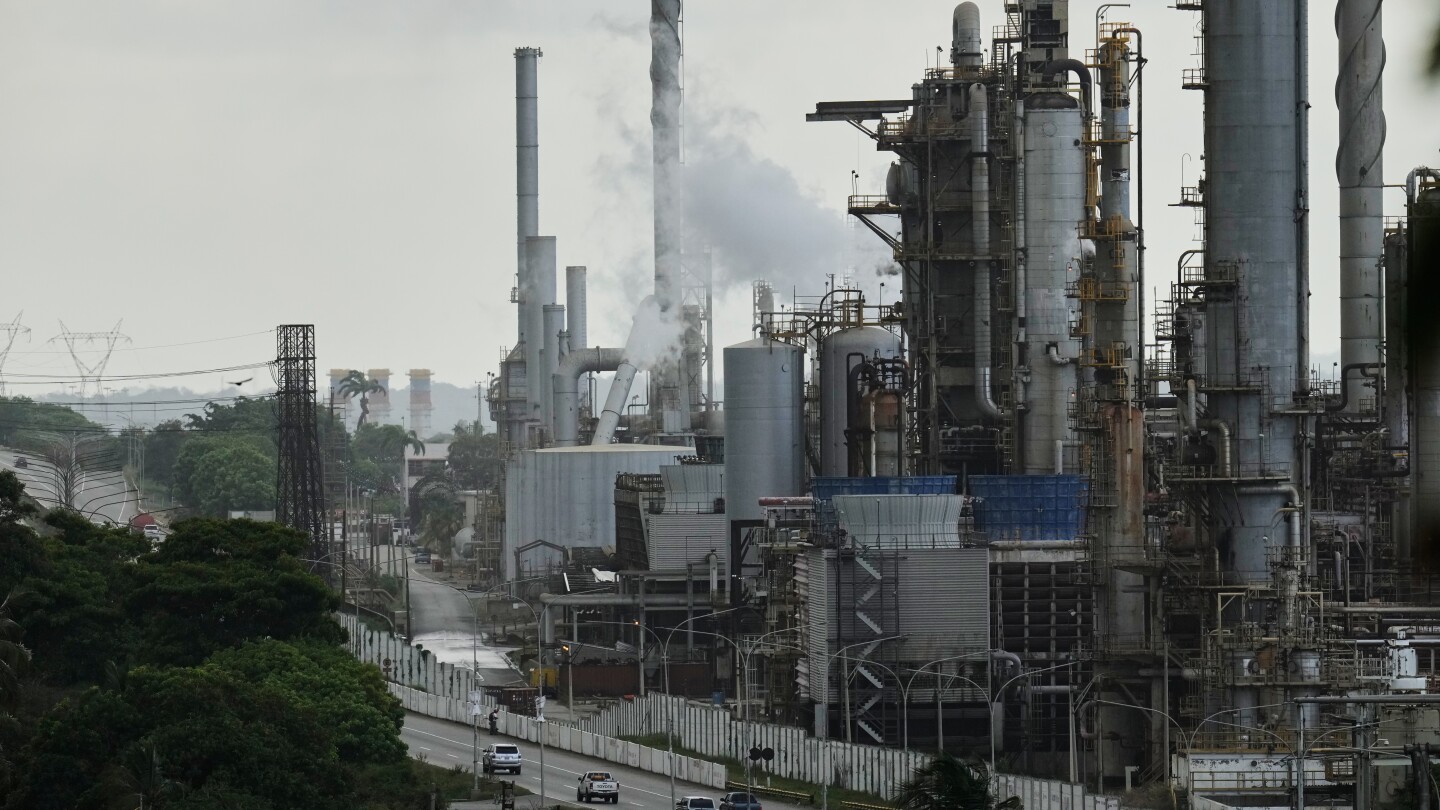
“While many are reporting Venezuela’s oil infrastructure was unharmed by U.S. military actions, it has been decaying for many many years and will take time to rebuild,” said Patrick De Haan, lead petroleum analyst at gasoline price tracker GasBuddy.
The political situation remained fluid on Saturday, with Trump declaring U.S. control while Venezuela’s high court ordered the vice president to assume the role of interim president. This uncertainty presents a significant obstacle to immediate foreign investment.
Phil Flynn, senior market analyst at the Price Futures Group, expressed cautious optimism: “If it seems like the U.S. is successful in running the country for the next 24 hours, I would say there would be a lot of optimism that U.S. energy companies could come in and revitalize the Venezuelan oil industry fairly quickly.”
A revitalized Venezuelan oil sector could have broader geopolitical implications, potentially “cementing lower prices for the longer term” and putting increased pressure on Russia, which has benefited from Venezuela’s diminished production capacity, Flynn noted.
Oil market reaction is expected to be muted when trading reopens. Venezuela’s membership in OPEC means its production is already factored into global supply calculations, and the current global oil market is experiencing a surplus.
The path to restored production faces significant challenges. Francisco Monaldi, director of the Latin American energy program at Rice University, provided context: “The estimate is that in order for Venezuela to increase from one million barrels per day to four million barrels, it will take about a decade and about a hundred billion dollars of investment.”
Beyond infrastructure concerns, companies require political stability and contractual certainty before committing substantial resources. The memory of Hugo Chávez’s 2007 nationalization of oil assets, which forced companies like ExxonMobil and ConocoPhillips to exit the market, continues to influence corporate decision-making.
Currently, Chevron is the only major American company with significant operations in Venezuela, producing about 250,000 barrels daily through joint ventures with state-owned PDVSA. When contacted, ConocoPhillips spokesperson Dennis Nuss stated the company “is monitoring developments in Venezuela and their potential implications for global energy supply and stability,” adding it would be “premature to speculate on any future business activities or investments.”
Venezuela’s heavy crude oil has strategic importance for U.S. refineries along the Gulf Coast, which were designed to process this type of oil when U.S. production was declining and Venezuelan and Mexican crude was abundant. This oil is particularly valuable for producing diesel fuel, asphalt, and other fuels for heavy equipment—products currently in short supply globally due to sanctions on Venezuela and Russia.
Increased Venezuelan production could also provide Europe and other regions an alternative source for diesel and heavy oil, potentially reducing their dependence on Russian exports. “There’s been a big benefit for Russia to see Venezuela’s oil industry collapse. And the reason is because they were a competitor on the global stage for that oil market,” Flynn explained.
The legal implications of Trump’s plan raise additional concerns. Matthew Waxman, a Columbia University law professor and former national security official in the George W. Bush administration, highlighted complex questions about resource ownership. “An occupying military power can’t enrich itself by taking another state’s resources, but the Trump administration will probably claim that the Venezuelan government never rightfully held them,” Waxman noted.
As the situation develops, the international community will be watching closely to see if American companies can navigate these challenges and help restore Venezuela’s once-thriving oil sector to its former productivity.
Fact Checker
Verify the accuracy of this article using The Disinformation Commission analysis and real-time sources.

14 Comments
While the potential rewards are significant, the risks and difficulties of this plan cannot be overstated. Rebuilding Venezuela’s oil industry from its current state of disrepair will be an enormous undertaking.
I agree, the challenges are formidable. Successful execution will require tremendous resources, coordination, and a stable political environment – all of which appear to be lacking at the moment.
Interesting to see how this plays out. Venezuela has massive oil reserves, but the industry has been severely mismanaged. Significant investment and political reforms will be needed to boost production.
Absolutely, the hurdles are substantial. It will be critical to address the underlying political and economic issues to revive Venezuela’s oil sector in a sustainable way.
Venezuela’s oil industry has been in decline for years due to mismanagement and underinvestment. Seizing control and revitalizing it will require overcoming major technical and political challenges.
You raise a good point. The political uncertainty is a major obstacle that will need to be resolved before any meaningful progress can be made on the operational side.
Seizing Venezuela’s oil assets and trying to revive the industry is an audacious plan, but the obstacles are daunting. The political instability and dilapidated infrastructure pose major challenges that will take time and resources to address.
Absolutely. This is an immense undertaking fraught with risk. The U.S. will need to carefully weigh the potential rewards against the significant hurdles and costs involved.
Reviving Venezuela’s oil industry will be a major challenge, even with U.S. involvement. The political uncertainty and infrastructure decay will require substantial time and investment to overcome.
You’re right, the obstacles are significant. Rebuilding the industry will be a long and complex process.
Reviving Venezuela’s oil industry is an admirable goal, but the logistical and political hurdles are immense. Significant investment and a long-term commitment will be needed to overcome the damage done by years of mismanagement.
Well said. This is not a quick fix, and the path forward is anything but clear. Patience and a comprehensive strategy will be critical if the U.S. hopes to make a meaningful impact.
It’s an ambitious plan, but the logistics of seizing and revitalizing Venezuela’s oil assets seem daunting. The country’s oil production has plummeted, and the political situation remains highly unstable.
Agreed, the political dynamics will make this a very difficult undertaking. Restoring Venezuela’s oil output to past levels will be an uphill battle.