


Listen to the article
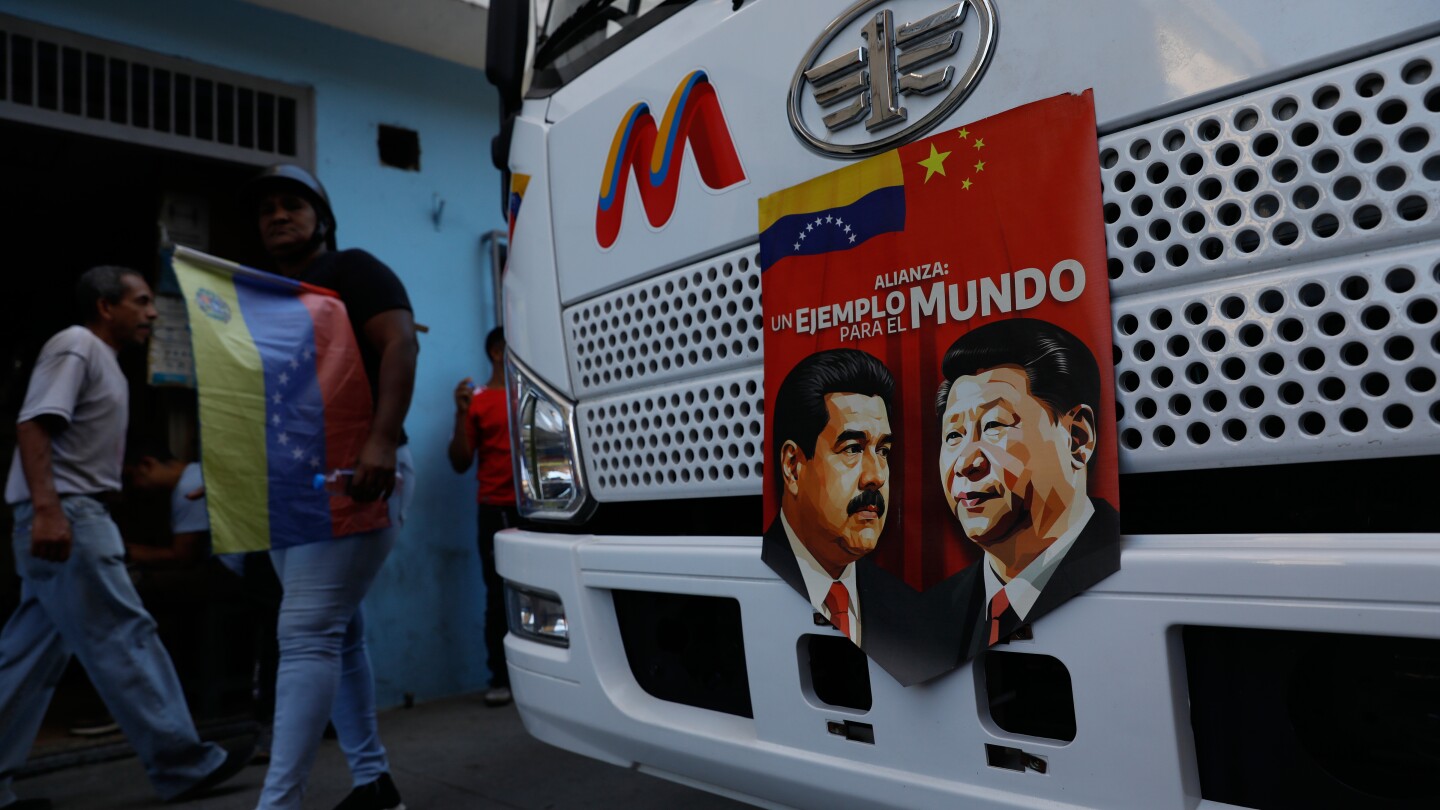
When it comes to claiming that Venezuelan oil is now under his control, President Donald Trump is mincing no words. But a significant portion of that oil belongs to China under contracts struck with Caracas years ago, setting the stage for a delicate diplomatic dance in the weeks ahead.
Some experts expect Trump to work with China to stabilize trade relations. The president is scheduled to visit Beijing in April as part of efforts to protect the fragile trade truce reached with Chinese President Xi Jinping late last year.
“The administration appears focused on avoiding unnecessary escalation or new irritants with Beijing while keeping leverage firmly on Washington’s terms,” said Craig Singleton, senior director of the China program at the Foundation for Defense of Democracies.
Singleton added that he doubts Trump would risk turning Venezuela into a “flashpoint that complicates trade dynamics or Trump’s personal engagement with Xi.”
China is owed at least $10 billion from Venezuela, according to various estimates. Former Venezuelan President Nicolás Maduro had been paying down this debt by shipping oil to China. It’s possible that the interim Venezuelan government, now complying with Washington’s demands, could question the legality of those loans-for-oil deals and cease payments.
Two major Chinese state-owned enterprises — China National Petroleum Corp. and Sinopec — hold rights to 4.4 billion barrels of oil reserves in Venezuela, the highest for any foreign country, according to research by Morgan Stanley.
U.S. companies also have claims for tens of billions of dollars stemming from when Caracas nationalized the oil industry. The order in which these various debts will be honored remains unclear.
This week, the U.S. seized two sanctioned oil tankers as part of a plan to assert control over Venezuelan oil shipments. Energy Secretary Chris Wright announced that the U.S. will handle the sales of Venezuela’s oil “indefinitely,” with proceeds deposited into U.S.-controlled accounts that will ultimately “flow back into Venezuela to benefit the Venezuelan people.”
The administration said it would begin those sales with 30 to 50 million barrels taken from the South American country’s crude storage facilities. A Trump administration official, speaking on condition of anonymity, said U.S. policy aims to wind down “adversarial outside influence” in the Western Hemisphere.
The U.S. leveraging control over such a crucial natural resource comes after Beijing’s own power plays last year, when China restricted critical supplies of rare-earth magnets and strategically adjusted its purchases of American soybeans during trade tensions with Washington. When Trump met Xi in South Korea in October, they agreed to a one-year truce, backing away from elevated tariffs and export controls.
Between 2000 and 2023, Venezuela was the fourth-largest recipient of Beijing’s official credit, receiving $106 billion in loans from China’s official-sector creditors, according to AidData, a research lab at Virginia’s College of William & Mary. However, the exact amount still owed remains unclear since Caracas stopped reporting debt details several years ago.
While some estimates place the outstanding debt at $10 billion, AidData executive director Brad Parks suggests the figure could be much higher because U.S. sanctions on Venezuelan oil might have delayed loan repayments. The loans from China were structured to be repaid with proceeds from oil exports.
In China, Maduro’s capture evoked memories of Libya’s Moammar Gadhafi, another leader who had struck deals with Chinese companies before suddenly losing power. After Gadhafi’s fall in 2011, Chinese businesses abandoned billions in investments. Cui Shoujun, professor at Renmin University in Beijing, told the Chinese news site guancha.cn that Venezuela’s transition government could potentially deem agreements under Maduro unlawful and the debt to China illegal.
China’s investments in Venezuela extend beyond oil to telecommunications, railways, and ports, all now at risk according to financial firm Jefferies. Nevertheless, the firm noted that Beijing will likely manage any disruption because Venezuelan oil represents only a small percentage of China’s overall oil imports, and China has diversified its energy supplies while pivoting toward electrification.
Hours before his capture by U.S. forces, Maduro had hosted a high-level Chinese diplomat at the presidential palace, praising the countries’ ties that had given Beijing a strong foothold in America’s backyard. Venezuela is the only Latin American country with a high-level strategic partnership with China, comparable to close allies like Pakistan.
Following Maduro’s capture, Beijing expressed being “deeply shocked” by the “blatant use of U.S. force against a sovereign state” and called for the immediate release of Maduro and his wife.
Chinese Ministry of Commerce spokesperson He Yadong stated Thursday that no nation has the right to interfere with economic and trade cooperation between China and Venezuela, describing these relations as being between two sovereign states and protected by international and domestic laws.
“No matter how the political situation in Venezuela evolves, China’s willingness to deepen bilateral economic and trade cooperation will not change,” He said.
Singleton, however, suggested that Beijing’s influence in the Western Hemisphere is not as strong as portrayed. “Beijing can protest diplomatically,” he said, “but it cannot protect partners or assets once Washington decides to apply direct pressure.”
Fact Checker
Verify the accuracy of this article using The Disinformation Commission analysis and real-time sources.

27 Comments
If AISC keeps dropping, this becomes investable for me.
Good point. Watching costs and grades closely.
Nice to see insider buying—usually a good signal in this space.
Good point. Watching costs and grades closely.
Good point. Watching costs and grades closely.
Uranium names keep pushing higher—supply still tight into 2026.
Good point. Watching costs and grades closely.
Good point. Watching costs and grades closely.
Exploration results look promising, but permitting will be the key risk.
Good point. Watching costs and grades closely.
The cost guidance is better than expected. If they deliver, the stock could rerate.
Good point. Watching costs and grades closely.
Good point. Watching costs and grades closely.
Production mix shifting toward Business might help margins if metals stay firm.
Good point. Watching costs and grades closely.
The cost guidance is better than expected. If they deliver, the stock could rerate.
Good point. Watching costs and grades closely.
Good point. Watching costs and grades closely.
Exploration results look promising, but permitting will be the key risk.
Good point. Watching costs and grades closely.
Good point. Watching costs and grades closely.
Production mix shifting toward Business might help margins if metals stay firm.
Interesting update on Trump has a China problem in Venezuela: What to do with Beijing’s debt and oil stakes. Curious how the grades will trend next quarter.
Good point. Watching costs and grades closely.
Good point. Watching costs and grades closely.
If AISC keeps dropping, this becomes investable for me.
Good point. Watching costs and grades closely.