


Listen to the article
Trump Administration Suspends East Coast Offshore Wind Projects Citing Security Concerns
The Trump administration on Monday suspended leases for five major offshore wind projects along the East Coast, citing unspecified national security risks identified by the Pentagon. The move represents the latest in a series of actions aimed at curtailing renewable energy development in U.S. waters.
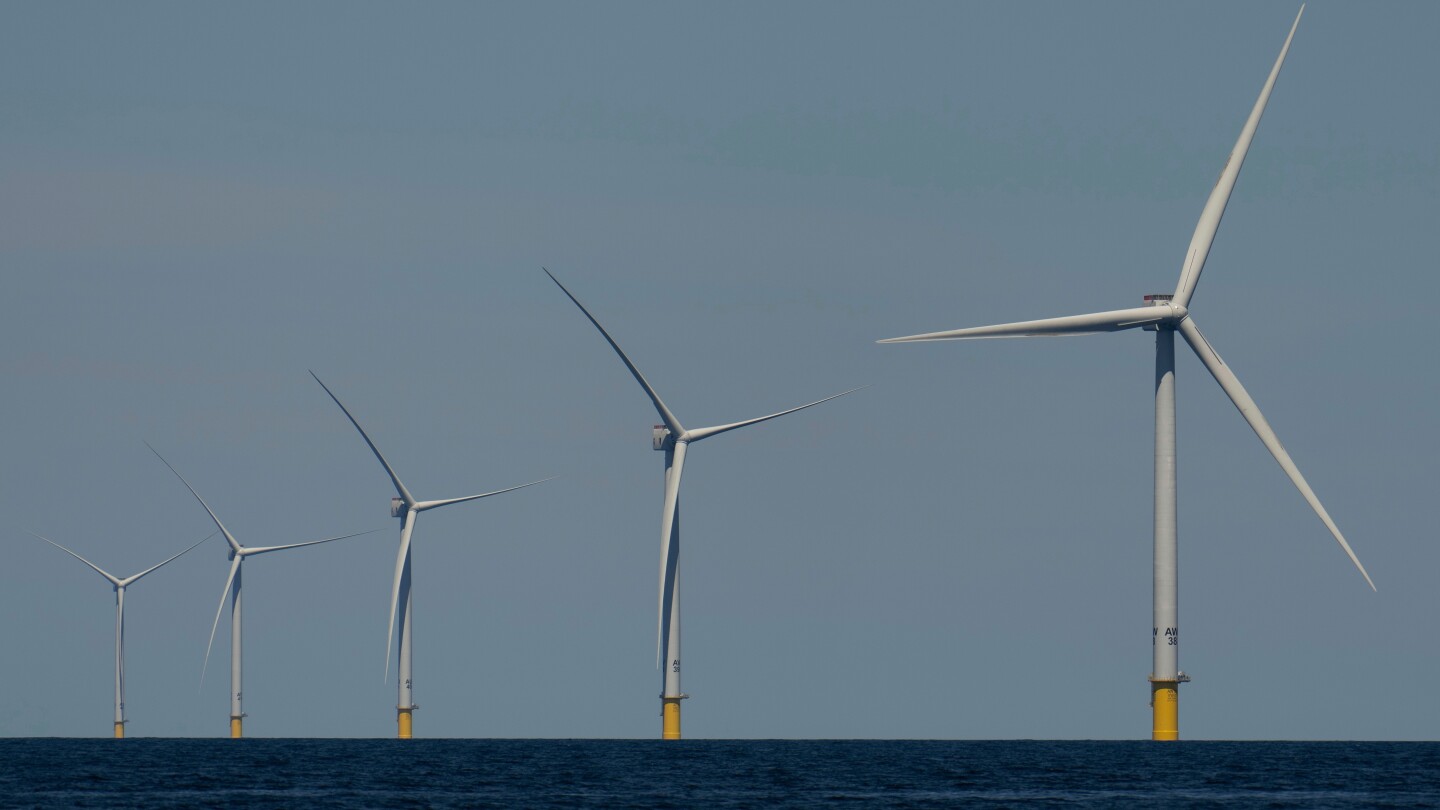
The suspension affects projects already under construction, including Vineyard Wind in Massachusetts, Revolution Wind in Rhode Island and Connecticut, Coastal Virginia Offshore Wind, and two New York projects – Sunrise Wind and Empire Wind.
Interior Secretary Doug Burgum framed the decision as a protective measure for Americans. “Today’s action addresses emerging national security risks, including the rapid evolution of relevant adversary technologies, and the vulnerabilities created by large-scale offshore wind projects with proximity near our east coast population centers,” Burgum said in a statement.
The administration claims that the massive turbine blades and highly reflective towers create radar interference known as “clutter” that could obscure legitimate targets and generate false readings. Officials described the action as a temporary pause to allow the Interior Department to work with Defense and other agencies to assess potential mitigation strategies, though no end date was specified.
The suspension comes just two weeks after a significant legal setback for the administration, when U.S. District Court Judge Patti Saris struck down President Trump’s January executive order that had attempted to block virtually all wind energy projects on federal lands and waters. In that ruling, Saris sided with a coalition of 17 state attorneys general and Washington, D.C., who argued the executive order was “arbitrary and capricious” and violated U.S. law.
Wind energy proponents quickly condemned the new suspension as another unlawful attempt to undermine clean energy development. Ted Kelly of the Environmental Defense Fund called the action “reckless” and said the administration is “illegally blocking clean, affordable energy” at a time when the country’s electricity needs are surging.
Kirk Lippold, a national security expert and former Commander of the USS Cole, disputed the administration’s security concerns, noting that the offshore projects had already received permits “following years of review by state and federal agencies,” including multiple military and defense entities. “The record of decisions all show that the Department of Defense was consulted at every stage of the permitting process,” Lippold said.
Connecticut Attorney General William Tong described the suspension as a “lawless and erratic stop-work order” that revives a previously failed attempt to halt construction. “Every day this project is stalled is another day of lost work, another day of unaffordable energy costs, and another day burning fossil fuels when American-made clean energy is within reach,” Tong said, adding that his office is evaluating legal options.
The Conservation Law Foundation characterized the pause as “a desperate rerun of the Trump administration’s failed attempt to kill offshore wind,” pointing out that courts have already rejected similar arguments. “Trying again to halt these projects tramples on the rule of law, threatens jobs and deliberately sabotages a critical industry that strengthens — not weakens — America’s energy security,” said Kate Sinding Daly, the foundation’s senior vice president.
However, not all groups opposed the administration’s move. Robin Shaffer, president of Protect Our Coast New Jersey, a nonprofit advocacy group against offshore wind development, praised the decision, saying: “Placing largely foreign-owned wind turbines along our coastlines was never acceptable,” and agreeing with the administration that the projects posed national security risks.
The suspension is part of a broader pattern of Trump administration policies favoring fossil fuel development over renewable energy. Critics note that while obstructing wind projects, the administration has simultaneously worked to expand coal mining opportunities and provided substantial financial support for coal-fired power plants.
Energy analysts suggest that using national security arguments to halt the wind projects could complicate legal challenges, though environmental and state leaders appear confident these claims will ultimately be found insufficient, just as the previous attempt to block wind energy development was overturned in court.
Fact Checker
Verify the accuracy of this article using The Disinformation Commission analysis and real-time sources.

7 Comments
While I understand the need to carefully consider national security risks, it’s concerning to see these renewable energy projects being paused. Offshore wind is a crucial part of the transition to clean energy. I hope the administration can find a way to address any legitimate concerns without unduly hampering this important industry.
The vague rationale provided by the administration raises more questions than answers. If there are genuine national security risks, the public deserves a more detailed explanation. Otherwise, this decision appears to be more about politics than sound policy.
This decision seems to put short-term security concerns ahead of long-term climate and energy needs. Offshore wind is a critical piece of the clean energy puzzle. I hope the administration can find a way to address any legitimate risks without completely halting these important projects.
This is a complex issue that pits national security against renewable energy development. I can understand the administration’s caution, but more transparency around the specific risks would help the public evaluate the decision. Renewable energy is crucial, so I hope a workable solution can be found.
The security issues cited by the administration seem quite vague. I’d be curious to know more about the ‘rapid evolution of relevant adversary technologies’ and how exactly these wind projects pose vulnerabilities. Renewable energy is vital for combating climate change, so I hope a reasonable compromise can be reached.
This is an interesting development in the ongoing debate around offshore wind projects and national security concerns. I wonder what specific vulnerabilities the administration has identified that warrant suspending these projects. It would be helpful to have more transparency around the analysis and rationale.
Radar interference from wind turbines is an interesting technical challenge. I wonder if there are mitigation strategies or alternative radar systems that could address these concerns without halting the projects entirely. It’s important to find a way to balance national security with the need for clean energy infrastructure.