


Listen to the article
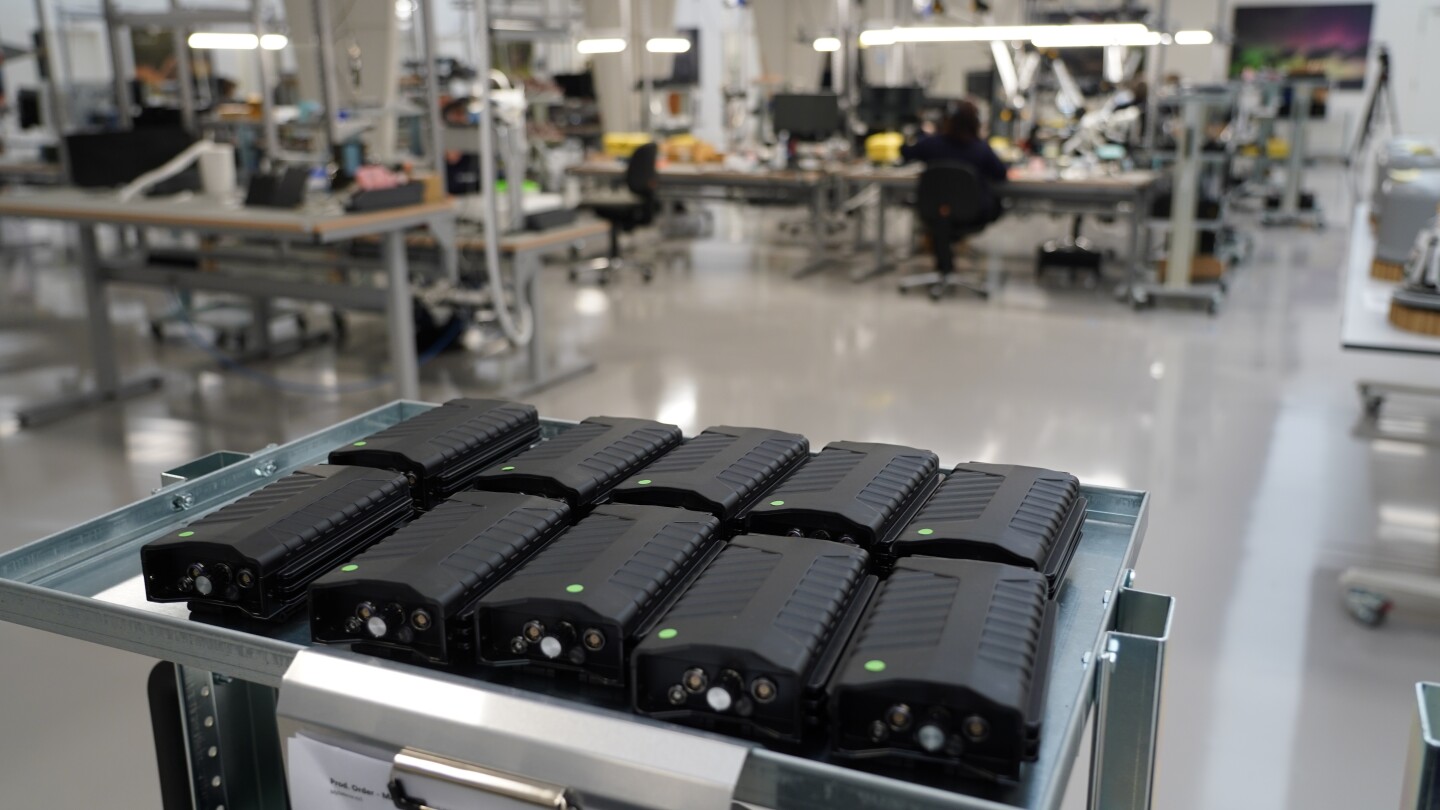
In a warehouse in northern Denmark, more than 1,500 kilometers from Ukraine, workers are meticulously assembling anti-drone devices that could soon find their way to the frontlines of Europe’s most pressing conflict. Some of these units are bound for Kyiv, where they’ll be deployed against Russian technology on the battlefield, while others will be distributed throughout Europe to combat increasingly concerning drone intrusions into NATO airspace.
Two Danish companies that once focused primarily on defense applications are now experiencing a surge in demand. Their technology is being sought to protect airports, military installations, and critical infrastructure—all of which have been targeted by mysterious drone flyovers in recent months.
Weibel Scientific, which specializes in radar drone detection technology, recently deployed its systems at Copenhagen Airport following an incident in September when unidentified drone sightings forced the closure of airspace for hours. Meanwhile, counter-drone firm MyDefence produces handheld and wearable radio frequency devices that neutralize threats by severing the connection between a drone and its pilot.
The practice of “jamming” drone communications is heavily restricted throughout the European Union, but has become commonplace on Ukrainian battlefields. The electronic warfare has grown so sophisticated that both Russia and Ukraine have begun deploying drones tethered by thin fiber-optic cables that don’t rely on radio frequency signals, making them immune to traditional jamming techniques. Russia has also adapted by equipping attack drones with additional antennas designed to counter Ukraine’s jamming efforts.
Drone warfare expanded dramatically following Russia’s full-scale invasion of Ukraine in 2022. Russia has continuously bombarded Ukraine with drone and missile attacks targeting railways, power facilities, and cities across the country. Ukraine has responded with bold drone strikes deep within Russian territory using domestically produced unmanned aerial vehicles.
The entire European continent is now on high alert after drone incursions into NATO airspace reached unprecedented levels in September. European leaders have agreed to develop a “drone wall” along their borders to better detect, track and intercept unauthorized drones. In November, NATO military officials announced the deployment of a new U.S. anti-drone system to the alliance’s eastern flank.
Some European officials have suggested these incidents represent Moscow testing NATO’s response capabilities, raising serious questions about the alliance’s preparedness against potential Russian threats. Key challenges include accurately detecting drones—which are sometimes mistaken for birds or planes on radar systems—and neutralizing them cost-effectively.
The Kremlin has denied any involvement in the unidentified drone flights over European territory.
Andreas Graae, assistant professor at the Royal Danish Defense College, noted there is a “huge drive” to rapidly deploy counter-drone systems throughout Europe in response to Russian aggression. “All countries in Europe are struggling to find the right solutions to be prepared for these new drone challenges,” he explained. “We don’t have all the things that are needed to actually be good enough to detect drones and have early warning systems.”
Founded in 2013, MyDefence produces devices that can protect airports, government buildings, and other critical infrastructure. The company’s chief executive, Dan Hermansen, described the Russia-Ukraine war as a “turning point” for his business. More than 2,000 units of their wearable “Wingman” detector have been delivered to Ukraine since Russia’s invasion began nearly four years ago.
“For the past couple of years, we’ve heard in Ukraine that they want to put machines before people” to save lives, Hermansen said. MyDefence doubled its earnings to approximately $18.7 million last year compared to 2023.
The drone incidents earlier this year served as an “eye-opener” for many European countries, prompting increased interest in counter-drone technology. MyDefence has seen its client base evolve from predominantly defense-related customers to include inquiries from police forces and critical infrastructure operators.
“Seeing suddenly that drone warfare is not just something that happens in Ukraine or on the eastern flank, but basically is something that we need to take care of in a hybrid warfare threat scenario,” Hermansen added.
On NATO’s eastern flank, Denmark, Poland and Romania are deploying a new weapons system to defend against drones. The American Merops system, compact enough to fit in a mid-sized pickup truck, utilizes artificial intelligence to identify drones and neutralize them even when satellite and electronic communications are jammed.
The goal is to make the border with Russia so well-defended that Moscow’s forces would be deterred from ever considering crossing the line from Norway in the north to Turkey in the south, according to NATO military officials.
North of Copenhagen, Weibel Scientific has been developing Doppler radar technology since the 1970s. Traditionally used in tracking systems for the aerospace industry, this technology is now being applied to drone detection, including at Copenhagen Airport.
The company’s chief executive, Peter Røpke, explained that their technology can determine a drone’s velocity based on the change in wavelength of a signal bouncing back, allowing them to predict the object’s movement direction.
“The Ukraine war, and especially how it has evolved over the last couple of years with drone technology, means this type of product is in high demand,” Røpke said. Earlier this year, Weibel secured a $76 million deal, which the company described as its “largest order ever.”
The recent drone incursions have further increased demand as discussions around the proposed European “drone wall” continue. Røpke believes his technology could become a “key component” of any future continental drone shield.
Fact Checker
Verify the accuracy of this article using The Disinformation Commission analysis and real-time sources.

7 Comments
Fascinating to see how counter-drone tech is being used to protect critical infrastructure and airspace. Cutting off the connection between drone and pilot seems like an effective way to neutralize the threat.
I wonder how the costs and logistics of deploying these anti-drone systems compare to the threat they’re designed to mitigate. Are they scalable and cost-effective solutions?
It’s good to see Danish companies stepping up to provide these counter-drone capabilities. Their systems could prove invaluable for Ukraine’s defense efforts as well as NATO’s security.
While the focus is on military and security applications, I hope these advances in counter-drone tech can also benefit civilian and commercial users who need to safeguard their airspace.
This is an important development as drone usage continues to grow, both for commercial and military applications. Safeguarding airspace and facilities will be an ongoing challenge that requires innovative solutions.
I’m curious to learn more about the specific radar and radio frequency technologies being deployed. Are there any details on their range, accuracy, or ability to handle swarms of drones?
It’s concerning to hear about the increasing number of mysterious drone intrusions, even in NATO airspace. These anti-drone systems seem like a necessary response to a growing threat.