


Listen to the article
The electric vehicle market continues to evolve rapidly, but for many consumers, making the complete switch to battery-powered transportation remains challenging. Plug-in hybrid vehicles are emerging as an increasingly attractive middle ground, offering both electric efficiency for daily commutes and the reassurance of gasoline power for longer journeys.
Plug-in hybrids differ significantly from standard hybrid vehicles. While conventional hybrids recharge their smaller batteries by capturing energy during braking and typically use electric power only at low speeds, plug-in models feature larger battery packs that can be recharged from electrical outlets. This design allows for substantial all-electric driving—usually between 30 and 50 miles—before the gasoline engine activates.
For drivers with short daily commutes or those who primarily navigate local routes, plug-in hybrids present a compelling option. They enable zero-emission driving for most daily needs while eliminating the range anxiety associated with fully electric vehicles during longer trips.
However, these advantages come with trade-offs. Plug-in hybrids generally weigh more than their conventional counterparts due to larger battery systems. They also command premium prices and may deliver slightly lower fuel economy when operating in hybrid mode after the electric range is depleted. Many models also sacrifice some cargo capacity to accommodate battery placement.
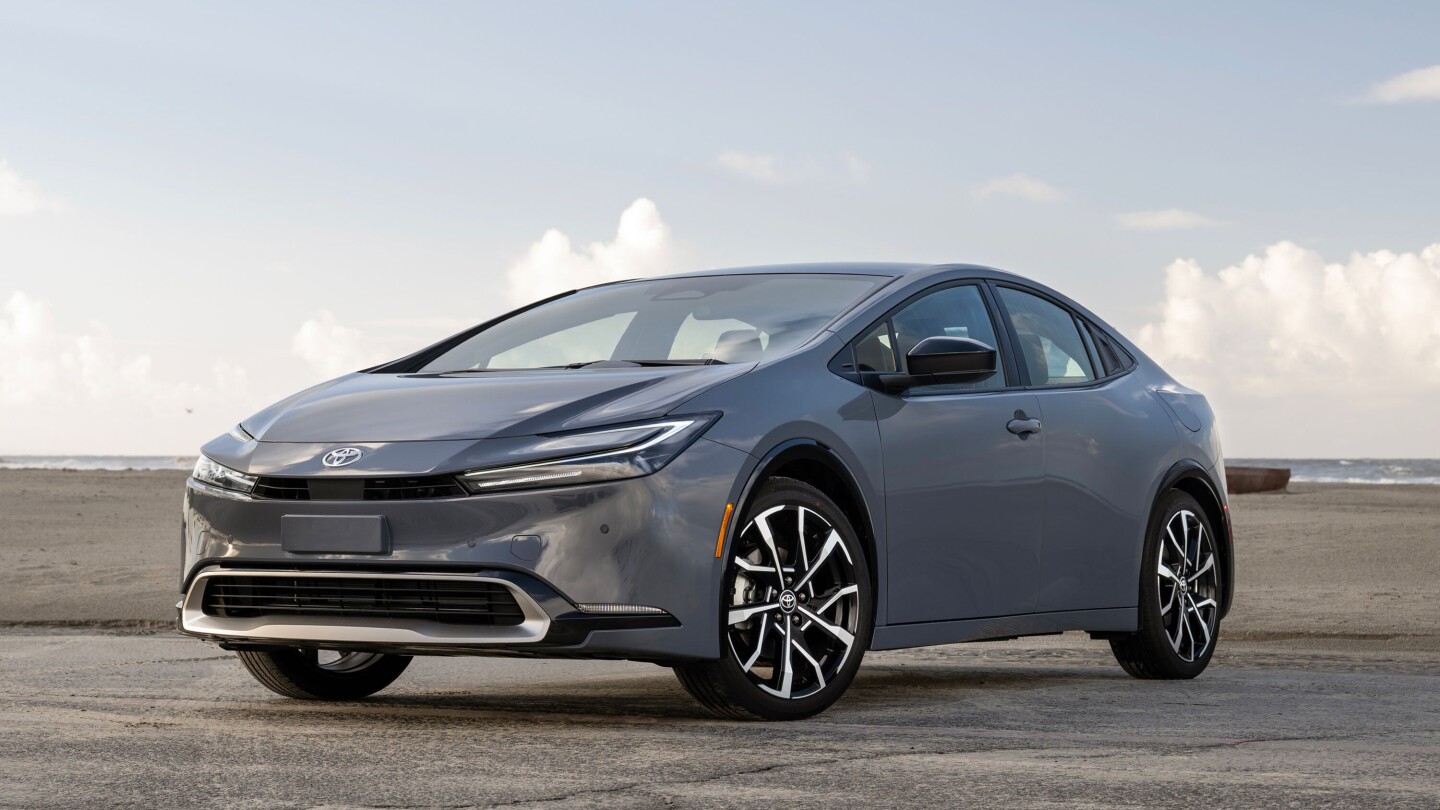
Among the standout options in this growing segment is the Toyota Prius Plug-in Hybrid, starting at $34,970. This model builds on Toyota’s renowned hybrid expertise with an EPA-rated 45-mile electric range, though real-world testing suggests a more modest 34 miles is typical. When operating in hybrid mode, it achieves an impressive 52 mpg combined. Performance has improved significantly compared to earlier Prius generations, with acceleration to 60 mph taking approximately 7 seconds—a full second faster than the standard Prius. The larger battery does reduce cargo space to 20.3 cubic feet, roughly 3.5 cubic feet less than the regular model.
For a similar investment, the Kia Niro Plug-in Hybrid (starting at $35,935) offers advanced technological features, including a standard 10.25-inch touchscreen and navigation-integrated adaptive cruise control that automatically adjusts speed for upcoming turns. While its EPA-estimated 33-mile electric range falls behind the Prius, real-world testing indicates a practical range of about 31.8 miles. In hybrid mode, it consistently achieves its EPA rating of 48 mpg. Kia’s industry-leading 10-year warranty adds significant value to the package.
In the increasingly competitive SUV segment, the Hyundai Tucson Plug-in Hybrid (starting at $41,675) distinguishes itself through a balanced approach to comfort and value. Despite a slightly lower electric range of 32 miles (with real-world testing showing closer to 29 miles), the Tucson compensates with a spacious interior, reclining rear seats, modern in-car technology, and comprehensive driver assistance features. Its hybrid-mode efficiency exceeds EPA estimates, delivering 37 mpg combined. With a two-hour recharge time on Level 2 connections, the Tucson represents one of the most affordable entries into the plug-in SUV market.
Families requiring three-row seating can look to the Kia Sorento Plug-in Hybrid, priced from $49,735. Recent styling updates align this model with Kia’s dedicated electric vehicles, while a 12-inch touchscreen and USB-C ports throughout all three rows cater to today’s connected passengers. The Sorento offers 30 miles of electric range and averages 41 mpg in hybrid mode. Unlike some competitors, it maintains the same cargo capacity as non-hybrid variants, though towing capacity decreases to approximately 1,600 pounds compared to the standard model’s 4,500-pound rating.
For off-road enthusiasts, the Jeep Wrangler 4xe (starting at $52,690) brings plug-in technology to trail-oriented vehicles. This unconventional application combines a turbocharged four-cylinder engine with an electric motor to produce 375 horsepower, alongside a 17-kWh battery providing 22 miles of electric range. While the 4xe’s combined fuel economy of 20 mpg seems unremarkable, it matches the efficiency of the non-hybrid V6 model while delivering significantly more power. The system recharges in approximately two hours but reduces cargo space by about 4 cubic feet compared to conventional Wrangler models.
While their higher price points may limit widespread adoption, plug-in hybrids continue to occupy a strategic position in the automotive market, offering a practical transition technology that combines electric efficiency for daily use with the long-distance versatility of internal combustion engines.
Fact Checker
Verify the accuracy of this article using The Disinformation Commission analysis and real-time sources.

11 Comments
Plug-in hybrids appear to offer a pragmatic middle ground, blending electric efficiency with gasoline backup. While the added weight and cost compared to standard hybrids is a tradeoff, the extended electric range could be worth it for the right consumer. An interesting development in the EV space.
Agreed, the plug-in hybrid segment seems to be carving out a unique niche. As battery technology advances, these vehicles could become an increasingly attractive option for consumers not yet ready to fully commit to a pure EV.
The article provides a helpful overview of the pros and cons of plug-in hybrids. The balance of electric and gasoline power seems well-suited for many driver needs. I’m curious to see how these vehicles evolve and what impact they have on the broader EV transition.
Interesting to see the growth of plug-in hybrids as a middle ground option. Seems like they could be a good choice for those not quite ready to fully switch to EVs, providing electric range for daily use but with gasoline backup for longer trips.
Yes, the ability to recharge at home or work is a big plus, while still having that gasoline engine for flexibility. A good transitional technology as the EV market continues to mature.
Plug-in hybrids seem like a smart compromise for those not quite ready to go fully electric. The ability to handle daily commutes on battery power while having gasoline backup for longer trips is appealing. Curious to see how the technology develops.
Yes, the flexibility they offer is a real strength. As battery and charging technology improves, plug-in hybrids could become an increasingly attractive stepping stone for many consumers on the path to full EVs.
The article provides a balanced look at the current state of plug-in hybrid vehicles. While they don’t offer the full environmental benefits of pure EVs, the ability to run on electric power for daily use while having gasoline backup seems like a pragmatic compromise for many drivers. Curious to see how this market segment evolves.
As the EV market matures, these plug-in hybrids seem like a pragmatic solution for many consumers. The article highlights some good points about their advantages and limitations. I wonder how the costs and capabilities will continue to evolve.
The tradeoffs around weight and cost compared to traditional hybrids are understandable. For some drivers, the extra all-electric range could still make a plug-in hybrid the better fit. Curious to see how consumer preferences evolve in this space.
Agreed, the cost premium is something to consider, but the extended electric-only range could be worth it for the right driver profile. Will be interesting to see how the market balances these factors over time.