


Listen to the article
Eight Democratic Senators Face Party Backlash After Vote to End Government Shutdown
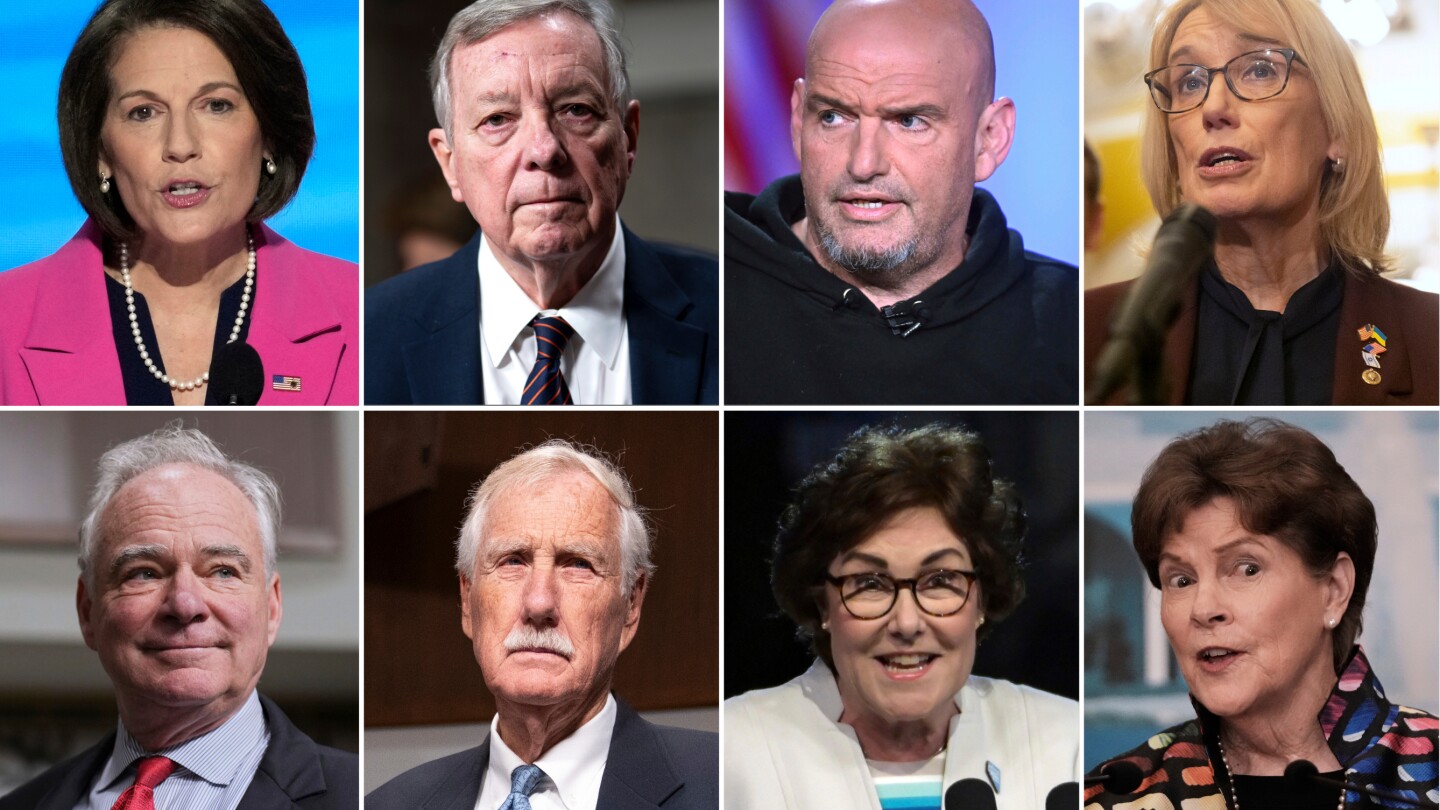
A group of eight Democratic senators faced immediate criticism from within their party after voting Sunday night to advance compromise legislation aimed at reopening the federal government after 40 days of shutdown.
The senators, including several who are retiring and a number of former governors, were quickly labeled as traitors by prominent voices within the Democratic Party. Senator Bernie Sanders, an independent who caucuses with Democrats, called it “a very, very bad vote,” while others described the move as a “betrayal” and “pathetic.”
Despite anticipating the criticism, these moderate Democrats concluded that ending the shutdown had become an urgent priority. They had spent days meeting in Senate basement offices, weighing the political consequences against the growing impact of the shutdown on federal workers and critical services.
Republican House Speaker Mike Johnson praised the Democratic defectors Monday morning, saying they “decided to put principle over their personal politics.” This unusual bipartisan moment highlighted the intense pressure faced by senators from both parties as the shutdown’s effects intensified across the country.
Senator Jeanne Shaheen of New Hampshire, who is retiring after her current term, emerged as a key negotiator for the compromise legislation. Shaheen had prioritized extending subsidies for health plans under the Affordable Care Act (ACA), but ultimately accepted a pledge from Senate Majority Leader John Thune for a December vote on those subsidies instead.
“This was the only deal on the table. It was our best chance to reopen the government and immediately begin negotiations to extend the ACA tax credits that tens of millions of Americans rely on to keep costs down,” Shaheen explained at a news conference following the vote.
Senator Dick Durbin of Illinois, the second-ranking Democrat in the Senate who is also retiring, broke with Senate Democratic Leader Chuck Schumer. Though Durbin maintained that Republicans bore responsibility for the shutdown, he acknowledged that continuing it would cause more suffering.
“This bill is not perfect, but it takes important steps to reduce their shutdown’s hurt,” Durbin said in a statement, noting the legislation would fully fund the Supplemental Nutrition Assistance Program (SNAP) and reverse mass firings ordered during the shutdown.
For Virginia Senator Tim Kaine, a crucial factor was language in the funding bill preventing the Trump administration from conducting further mass layoffs of federal employees—a major concern for his state, which has a large federal workforce. Kaine described the agreement as a “moratorium on mischief” that would protect federal workers who had been “traumatized” by arbitrary dismissals since Inauguration Day.
The growing threat to federal food assistance programs became a tipping point for several senators. New Hampshire’s Maggie Hassan emphasized she had “heard from families about the deep pain that the government shutdown has caused, made worse by a president who illegally and repeatedly chose to cut off help for families who are just trying to buy groceries.”
The approved funding bill replenishes SNAP and ensures states that used their own funds to maintain these programs during the shutdown will be reimbursed.
Senator Angus King of Maine, an independent who caucuses with Democrats, had consistently opposed using government shutdowns as negotiating tactics. After Republicans rejected a proposal from Schumer to extend ACA tax credits for one year, King concluded the shutdown strategy wasn’t working. “The question was: Does the shutdown further the goal of achieving some needed support for the extension of the tax credits? Our judgment was that it would not produce that result,” King explained.
Nevada’s senators, Jacky Rosen and Catherine Cortez Masto, cited severe economic threats to their tourism-dependent state as air travel was increasingly disrupted. Cortez Masto described seeing food bank lines reminiscent of the COVID-19 pandemic’s worst days, calling the stories she heard “horrific.”
Pennsylvania’s Senator John Fetterman, who has frequently broken with party leadership since his 2022 election, criticized Democrats for using the shutdown to demand health care concessions. “I’m sorry to our military, SNAP recipients, gov workers, and Capitol Police who haven’t been paid in weeks,” he posted on social media. “It should’ve never come to this. This was a failure.”
The Democratic senators’ decision highlights the complex political calculations facing lawmakers during extended government shutdowns, when the immediate needs of constituents often clash with broader party strategy and principles.
Fact Checker
Verify the accuracy of this article using The Disinformation Commission analysis and real-time sources.

22 Comments
I like the balance sheet here—less leverage than peers.
Nice to see insider buying—usually a good signal in this space.
I like the balance sheet here—less leverage than peers.
Good point. Watching costs and grades closely.
Silver leverage is strong here; beta cuts both ways though.
Good point. Watching costs and grades closely.
Good point. Watching costs and grades closely.
Interesting update on These 8 Democrats voted with Republicans on the government shutdown deal. Here’s how they explain it. Curious how the grades will trend next quarter.
Good point. Watching costs and grades closely.
Nice to see insider buying—usually a good signal in this space.
Good point. Watching costs and grades closely.
Good point. Watching costs and grades closely.
The cost guidance is better than expected. If they deliver, the stock could rerate.
Good point. Watching costs and grades closely.
Interesting update on These 8 Democrats voted with Republicans on the government shutdown deal. Here’s how they explain it. Curious how the grades will trend next quarter.
Exploration results look promising, but permitting will be the key risk.
Good point. Watching costs and grades closely.
Silver leverage is strong here; beta cuts both ways though.
Interesting update on These 8 Democrats voted with Republicans on the government shutdown deal. Here’s how they explain it. Curious how the grades will trend next quarter.
Good point. Watching costs and grades closely.
Good point. Watching costs and grades closely.
The cost guidance is better than expected. If they deliver, the stock could rerate.