


Listen to the article
Israel Strikes Iran’s Vital South Pars Gas Complex for Second Time
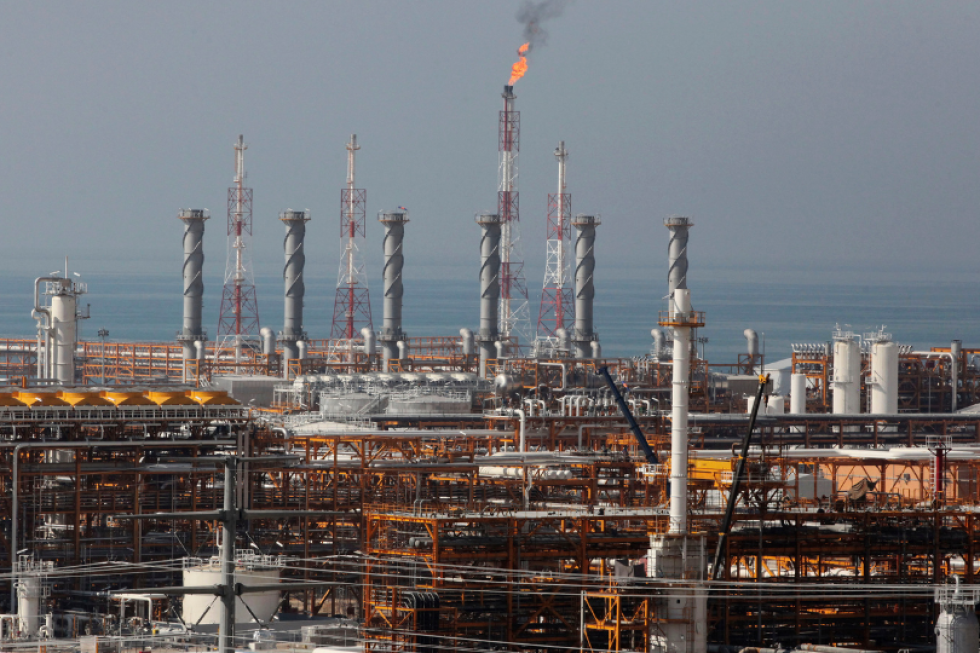
Israel has launched a second attack on Iran’s South Pars natural gas field and its associated petrochemical complex, targeting a critical energy resource that serves as both a domestic necessity and a key source of export revenue for Tehran.
Israeli Defense Minister Israel Katz confirmed Monday that Israel struck a major petrochemical facility at Asaluyeh, the onshore industrial component of the gas field located beneath the Persian Gulf. Katz described it as a “powerful strike” against “the largest petrochemical facility in Iran…responsible for about 50% of the country’s petrochemical production.” He added that with this latest strike, combined with an earlier attack, facilities responsible for approximately 85% of Iran’s petrochemical exports have been knocked out of operation.
The significance of South Pars as a target cannot be overstated. A previous Israeli attack on March 18 prompted Iran to retaliate by targeting energy infrastructure in other Middle Eastern countries, escalating regional tensions. Following that incident, U.S. President Donald Trump stated Israel would not attack South Pars again but warned on social media that if Iran continued attacking critical energy infrastructure in Qatar, the United States would respond by “massively blow[ing] up the entirety” of the field.
South Pars represents Iran’s primary domestic energy source in a country that frequently struggles with electricity production. The gas field, which Iran shares with Qatar (where it’s known as the North Field), is the world’s largest. According to the Center on Global Energy Policy at Columbia University, Iran ranks as the fourth-largest consumer of natural gas globally, behind only the United States, China, and Russia, despite having a much smaller economy. Unlike many Middle Eastern nations, Iran relies heavily on gas for heating due to its colder climate, with much of this consumption being subsidized by the government.
Beyond domestic use, the South Pars petrochemical complex provides crucial export earnings. The gas serves as raw material for producing chemical building blocks like ethylene, propylene, methanol, ammonia, and urea, which are used in manufacturing products ranging from plastic pipes and packaging to clothing, household items, and fertilizer. Turkey, China, India, and Southeast Asian countries represent the largest importers of these products, according to Iranian mining and petrochemical export company Irminex. The industry benefits from competitive advantages due to low raw material costs from South Pars gas.
Israeli Prime Minister Benjamin Netanyahu claimed the attack targeted Iran’s financial resources, stating: “Today we destroyed the largest petrochemical plant in Iran. In other words, we are systematically destroying the money machine of the Revolutionary Guards.”
The attack comes at a particularly vulnerable time for Iran’s energy sector. Despite possessing vast energy reserves on paper, the country has experienced recurring power shortages due to disruptions in gas supplies. Just this past July, a severe heat wave strained the power grid to the point that public buildings had to shut down. Consequently, strikes against South Pars potentially impact both civilian welfare and the country’s export revenues.
The contrast between how Iran and Qatar have developed their portions of the same gas field is striking. Qatar, with just 3 million residents, invested billions in developing liquefied natural gas (LNG) export capabilities, becoming the supplier of approximately one-fifth of global LNG before recent conflicts forced it to shut down operations at its Ras Laffan facility.
Iran, home to 93 million people, has faced a different path. International sanctions and investment shortfalls have prevented the development of LNG export terminals. Instead, Iran primarily channels its gas into domestic pipelines for cooking, heating, electricity generation, and industrial use. Iran exports relatively little gas—about 9 billion cubic meters compared to Qatar’s more than 120 billion cubic meters. As a result, the South Pars petrochemical industries represent one of the few ways Iran can generate export income from its massive gas reserves.
Iran previously planned three LNG export projects along its Persian Gulf coastline, including partnerships with Total Energies and Shell. However, sanctions related to its nuclear program blocked these projects by preventing the import of necessary technology and investment. A third site at Asulayeh reportedly nears completion after nearly two decades of construction.
Fact Checker
Verify the accuracy of this article using The Disinformation Commission analysis and real-time sources.

14 Comments
The South Pars gas complex seems to be a strategic target for Israel, given its importance to Iran’s energy and petrochemical sectors. It’s concerning to see these repeated attacks, as they have the potential to disrupt Iran’s economic and geopolitical position in the region.
Agreed, the significance of the South Pars complex to Iran’s energy security and exports makes it a prime target for Israel. These strikes could have far-reaching consequences, both for Iran’s domestic economy and the broader regional dynamics. It will be crucial to follow how this situation evolves.
The South Pars gas complex is clearly a vital energy asset for Iran. It’s interesting to see how Israel has targeted this facility multiple times, likely aiming to disrupt Iran’s energy supply and export revenue. This highlights the complex geopolitical dynamics in the region.
You’re right, the repeated attacks on South Pars show how strategically important this gas complex is. It will be important to monitor how Iran responds and any potential escalation of tensions in the region.
Attacking critical energy infrastructure like the South Pars complex seems like a risky move that could lead to further retaliation and instability. I wonder what the long-term implications will be for Iran’s energy security and exports.
Good point. Disrupting a major source of Iran’s energy and export revenue is likely to have significant consequences, both for Iran’s domestic economy and regional geopolitics. It will be important to see how this situation develops.
The South Pars gas complex is clearly a strategic target, representing around half of Iran’s petrochemical production. The repeated Israeli strikes highlight the complex regional dynamics and the potential for further escalation.
Absolutely. Attacks on critical energy infrastructure like South Pars have the potential to significantly disrupt Iran’s economy and provoke retaliation. This is a delicate situation that bears close watching.
The South Pars gas complex is clearly a high-value target for Israel given its significance to Iran’s energy and petrochemical sectors. These repeated strikes highlight the ongoing tensions and the potential for further conflict in the region.
I agree, the strategic importance of the South Pars complex makes it a prime target. The fact that Israel has struck it multiple times shows how crucial it is to Iran’s energy and economic security. It will be interesting to see how the situation develops.
It’s concerning to see Israel continuing to target the South Pars gas complex, which is such a vital energy asset for Iran. This seems to be an attempt to undermine Iran’s economic and strategic position in the region.
You raise a good point. Attacking South Pars is a direct strike at Iran’s energy security and economic interests. It will be crucial to monitor how Iran responds and whether this leads to further escalation of tensions in the region.
The repeated attacks on the South Pars gas complex by Israel are a concerning development. This facility is clearly a vital energy asset for Iran, and disrupting its operations could have significant consequences for the country’s economy and geopolitical position.
You’re absolutely right. Targeting critical energy infrastructure like South Pars is a high-stakes move that could lead to escalating tensions and retaliation. It will be important to closely monitor how Iran responds and the broader regional implications.