


Listen to the article
The first day of CES 2026 delivered a wave of innovation dominated by artificial intelligence, with tech giants showcasing their latest advancements while competing for attention with unexpected crowd-pleasers like Star Wars characters and robot demonstrations.
Nvidia continued to cement its position as the leader in AI technology with CEO Jensen Huang introducing “physical AI,” a concept where AI models trained in virtual environments using synthetic data are deployed as physical machines. The company unveiled Cosmos, a foundation model capable of simulating environments governed by actual physics, and Alpamayo, specifically designed for autonomous driving.
Huang also announced that Nvidia’s next-generation AI superchip platform, Vera Rubin, is now in full production, alongside a new partnership with Siemens. However, despite these significant announcements, it was Huang’s demonstration of small, waddling, chirping robots that truly captivated the audience, highlighting how novel physical implementations of AI technology can still create buzz in a tech-saturated environment.
In the competitive chip sector, AMD CEO Lisa Su revealed a new line of Ryzen AI processors as the company expands its presence in AI-powered personal computing. For the gaming community, AMD showcased its latest gaming processor, the AMD Ryzen 7 9850X3D, demonstrating the company’s commitment to maintaining relevance in multiple market segments.
Intel, meanwhile, announced its new Panther Lake AI chip for laptops (also known as the Intel Core Ultra Series 3) and outlined plans for a new platform targeting the growing handheld gaming market. These moves come at a critical time for Intel, which has struggled in recent years after missing key market shifts. The company recently received significant government support when the Trump administration secured a 10% stake, making the federal government one of Intel’s largest shareholders—a move officials described as supporting domestic technology manufacturing.
The transportation sector saw Uber making a significant return to autonomous vehicle technology, unveiling what it calls “the most luxurious robotaxi yet.” Developed in partnership with Lucid Motors and vehicle tech company Nuro, the robotaxi features an array of cameras, sensors, and radars providing 360-degree perception. A distinctive low-profile roof “halo” with integrated LEDs displays riders’ initials to help them locate their vehicle.
Inside, passengers can personalize their experience from climate control to music selection, while real-time visuals show what the vehicle sees on the road. Autonomous testing began last month in San Francisco, with a commercial launch planned before year’s end.
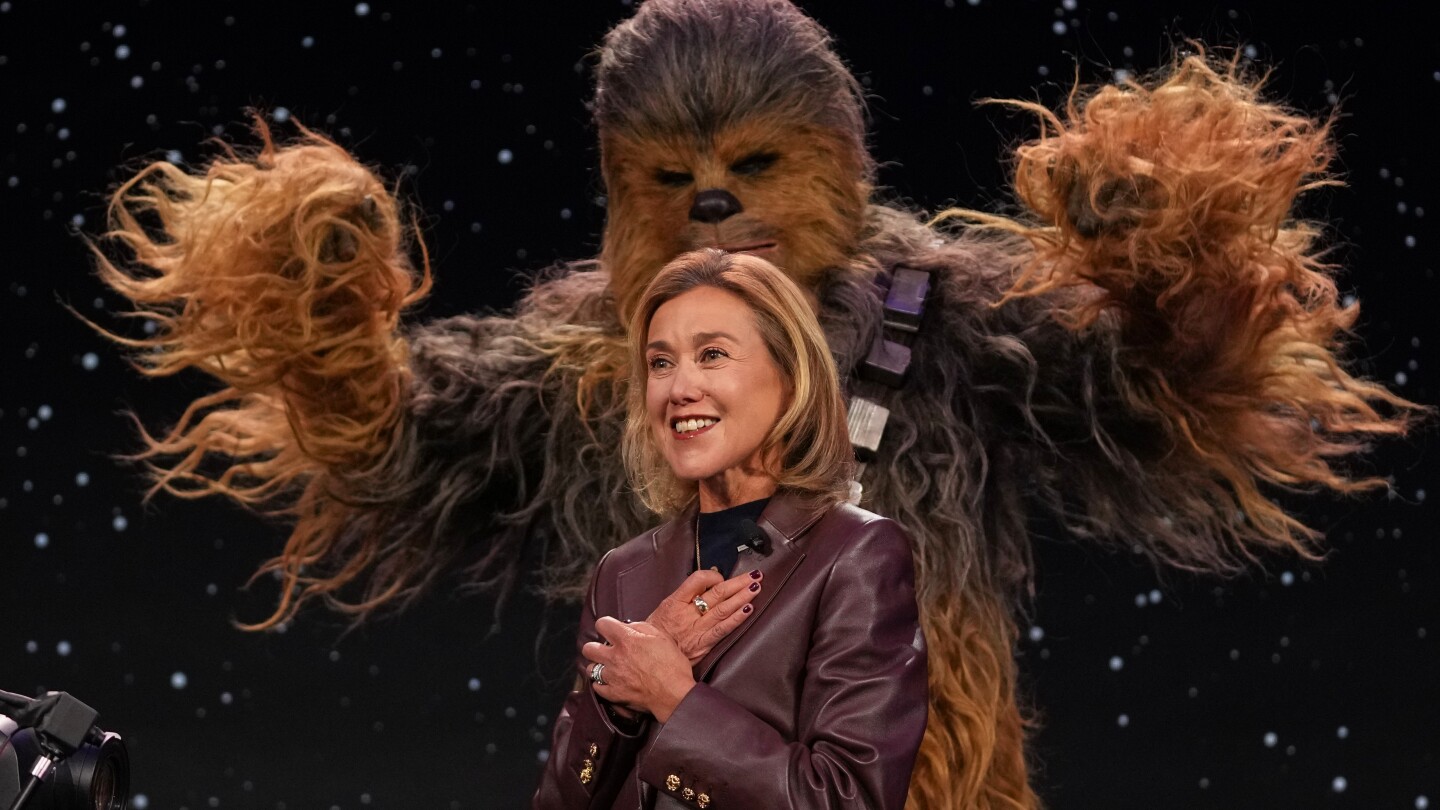
In consumer technology, Lego unveiled its Smart Play platform featuring new sensor-equipped bricks that respond to light and distance with various effects. The announcement gained additional excitement through a partnership with Lucasfilm, demonstrated by chief creative officer David Filoni who brought X-Wing pilots, Chewbacca, R2-D2, and C-3PO to the stage.
LG introduced a humanoid robot designed for household chores like folding laundry and retrieving food. As one of the largest tech companies promising to bring service robots into homes, LG’s demonstration will be closely watched as CES continues.
Hyundai-owned Boston Dynamics publicly demonstrated its humanoid robot Atlas for the first time, intensifying competition with Tesla and others in human-like robotics. The company revealed that a version of Atlas is already in production and will be deployed by 2028 at Hyundai’s electric vehicle facility near Savannah, Georgia.
In more novel innovations, Lollipop Star showcased candy that plays music through “bone induction technology” while being consumed, with tracks from artists like Ice Spice and Akon available. The $8.99 musical lollipops will be available for purchase after CES.
Delta Air Lines announced a multiyear partnership with Sphere Entertainment Co., becoming the “official airline” of the Las Vegas Sphere. The collaboration includes a Delta SKY360° Club lounge and exclusive experiences for SkyMiles members, starting with private suite access during the final weekend of the Backstreet Boys’ residency in February.
As CES 2026 continues, industry observers will be watching to see how companies translate these technological showcases into viable consumer products in an increasingly AI-saturated marketplace.
Fact Checker
Verify the accuracy of this article using The Disinformation Commission analysis and real-time sources.

13 Comments
Nvidia’s advancements in physical AI are fascinating. Deploying virtual AI models as physical machines could open up all sorts of real-world applications. I’m curious to learn more about the Cosmos foundation model and how it might be used.
The small, waddling robots do sound like quite a crowd-pleaser. It’s a clever way to showcase the capabilities of physical AI in an engaging way.
I’m curious to learn more about the Alpamayo AI system and its potential applications in autonomous driving. Ensuring the safety and reliability of self-driving tech is so important.
The use of synthetic data to train physical AI models is an intriguing approach. I wonder how it compares to traditional methods and what the benefits might be.
It’s exciting to see the chip sector heating up with AMD’s new Ryzen AI processors. Competition often drives innovation, so I’m looking forward to seeing how this tech evolves and what new use cases emerge.
The partnership with Siemens is an interesting development. I wonder how that will impact the capabilities and applications of Nvidia’s AI platform.
The partnership between Nvidia and Siemens is an intriguing development. I wonder how it might impact the capabilities and market positioning of Nvidia’s AI platform going forward.
The focus on physical AI implementations is really exciting. I’m curious to see how these technologies evolve and what new use cases emerge in the coming years.
The AI announcements at CES 2026 seem to really highlight the rapid progress being made in the field. It will be interesting to see how these new technologies are adopted and implemented across different industries.
It’s great to see the continued advancements in AI hardware and software. The chip sector competition is really heating up, which should benefit consumers and businesses alike.
The focus on AI at CES 2026 underscores just how rapidly the technology is advancing. It will be fascinating to see how these new AI-powered innovations impact various industries in the years to come.
The demonstration of the waddling robots sounds like it really captured the audience’s attention. It’s a clever way to showcase the potential of physical AI in an engaging and accessible way.
I’m curious to learn more about the specific use cases and applications that Nvidia envisions for its Cosmos foundation model. The ability to simulate physical environments could be quite powerful.