


Listen to the article
Texas Highway Agency Makes Surprising Push for Public Transit Expansion
In a remarkable shift for car-dominated Texas, the state’s highway department has acknowledged that highways alone cannot support Texas’ explosive growth. A draft of the Texas Department of Transportation’s first-ever Statewide Multimodal Transit Plan outlines the urgent need for expanded public transportation options throughout the state.
The document, released in October, represents a significant departure from TxDOT’s traditional focus on highway construction. It calls for enhanced public transit in rural and smaller urban areas, as well as improved rail connections between major metropolitan centers.
“We have almost 32 million Texans, millions of jobs, thousands of companies locating to Texas in droves,” said Caroline Mays, TxDOT’s director of planning and modal programs. “The fundamental need is, how do we address mobility needs for this growing Texas?”
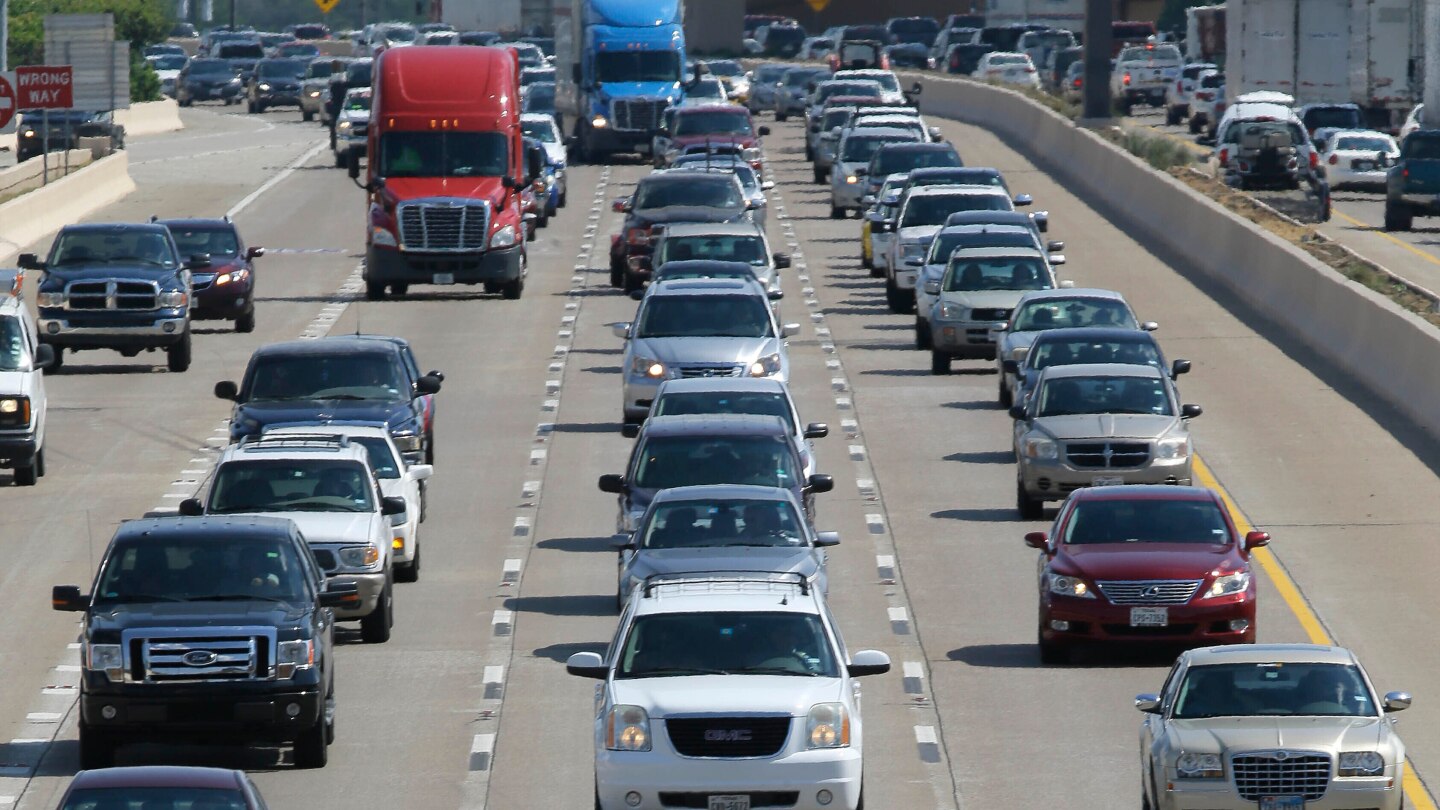
With Texas projected to add more than 9 million residents by 2050, the report acknowledges a critical reality: the number of drivers has vastly outpaced the state’s ability to build highway capacity. Simultaneously, demographic shifts are creating new transportation demands. Younger generations in urban areas increasingly seek transit options, while aging rural populations face mounting challenges with the rising costs of car ownership.
The plan represents a striking evolution for an agency that plans to spend $146 billion over the next decade on highway projects. Texas has historically prioritized automobile infrastructure while often opposing major public transit initiatives, including the Texas Central high-speed rail project and Austin’s Project Connect.
“It is completely out of character for TxDOT to be addressing mass transit,” said state Rep. Terry Canales, an Edinburg Democrat who previously chaired the Texas House Transportation Committee. However, he added that ignoring these needs would be “foolish, short-sighted and moronic” given projected population growth.
Though public transit has formally been part of TxDOT’s responsibilities since 1975, when the state’s Mass Transportation Commission merged with the Texas Highway Department, the agency’s focus on non-car transportation options has been minimal. Currently, state transit funding primarily goes to rural and smaller urban transit agencies, with major urban systems like Dallas Area Rapid Transit receiving no state support.
Recent years have seen subtle shifts in TxDOT’s approach. The agency has applied for federal planning grants for intercity rail connections and is implementing an “active transportation plan” to improve walking and cycling infrastructure.
Transit advocates view the new multimodal plan as a significant milestone. “It’s a great opportunity to understand what could be possible for our future,” said Jay Blazek Crossley, executive director of Farm & City, an urban planning advocacy group.
The plan specifically identifies critical gaps in the state’s transit network, particularly within the “Texas Triangle” – the densely populated region connecting Dallas-Fort Worth, Houston, and San Antonio. By 2050, this megaregion could house 80% of Texas’ population, with hundreds of thousands of daily trips between these major centers.
Current intercity transportation options are limited. Passenger rail service is slow or nonexistent between major cities, and while private bus companies like Greyhound and Vonlane provide some service, they often don’t connect with local transit networks.
The financial requirements for implementing the plan would be substantial. TxDOT estimates that connecting all Texas cities with populations over 10,000 via some form of transit would cost at least $30 billion in capital expenses and $5 billion annually in operating costs.
State Sen. Robert Nichols, a Jacksonville Republican who chairs the Senate Transportation Committee, acknowledged the need but expressed skepticism about funding. “Is the Legislature willing to step up and lock in multibillion dollars per year for mass transit? I don’t hear anybody talking about it,” said Nichols, a former Texas Transportation Commissioner.
Constitutional constraints present another challenge, as most of TxDOT’s budget must be spent on highways. Securing dedicated transit funding would likely require a constitutional amendment.
The plan also makes an economic case for transit investment, citing American Public Transportation Association estimates that every dollar invested in transit yields $5 in economic returns. It points to Austin’s CapMetro Red Line as an example, where areas near the commuter rail line saw a 62% increase in jobs after opening in 2010.
Public sentiment appears to recognize the need for alternatives. In an agency-commissioned poll, 86% of Texans said improving the state’s public transportation network is at least somewhat important.
“We can’t pave our way out of the population growth,” Rep. Canales said. “Mass transit has to be an option.”
TxDOT is holding its final public input meetings this week in San Antonio and Austin, with public feedback accepted until November 20. The final plan is expected by year-end.
Fact Checker
Verify the accuracy of this article using The Disinformation Commission analysis and real-time sources.

17 Comments
The cost guidance is better than expected. If they deliver, the stock could rerate.
Good point. Watching costs and grades closely.
Good point. Watching costs and grades closely.
Silver leverage is strong here; beta cuts both ways though.
Production mix shifting toward Business might help margins if metals stay firm.
Production mix shifting toward Business might help margins if metals stay firm.
Good point. Watching costs and grades closely.
Uranium names keep pushing higher—supply still tight into 2026.
Good point. Watching costs and grades closely.
I like the balance sheet here—less leverage than peers.
Good point. Watching costs and grades closely.
Good point. Watching costs and grades closely.
Uranium names keep pushing higher—supply still tight into 2026.
Good point. Watching costs and grades closely.
Production mix shifting toward Business might help margins if metals stay firm.
Good point. Watching costs and grades closely.
The cost guidance is better than expected. If they deliver, the stock could rerate.