


Listen to the article
Sysco announced plans to acquire Restaurant Depot in a landmark deal valued at over $29 billion, marking a significant consolidation in the food service distribution industry. The acquisition would strengthen Sysco’s position in the rapidly growing “cash-and-carry wholesale” segment of the market.
Houston-based Sysco, already the nation’s largest food distributor with more than 700,000 clients including restaurants, hospitals, schools, and hotels, aims to expand its reach into the immediate-needs supply chain that Restaurant Depot has dominated for decades.
Industry analysts note this acquisition represents a strategic pivot for Sysco, which has traditionally operated on a planned delivery model where restaurants and institutions order supplies in advance based on anticipated needs. Restaurant Depot, by contrast, offers a membership-based model allowing smaller food service businesses to access warehouse supplies on short notice when they run out of essentials.
“This acquisition addresses a critical gap in Sysco’s business model,” said Maria Rodriguez, food industry analyst at Market Insights Group. “Restaurant Depot has built its reputation on being the emergency supplier for independent restaurants when they run out of ingredients or equipment. Now Sysco can capture both the planned and unplanned purchasing needs of these businesses.”
Under the terms of the agreement, Restaurant Depot shareholders will receive $21.6 billion in cash and approximately 91.5 million Sysco shares. Based on Sysco’s closing share price of $81.80 as of March 27, 2026, the total enterprise value comes to roughly $29.1 billion.
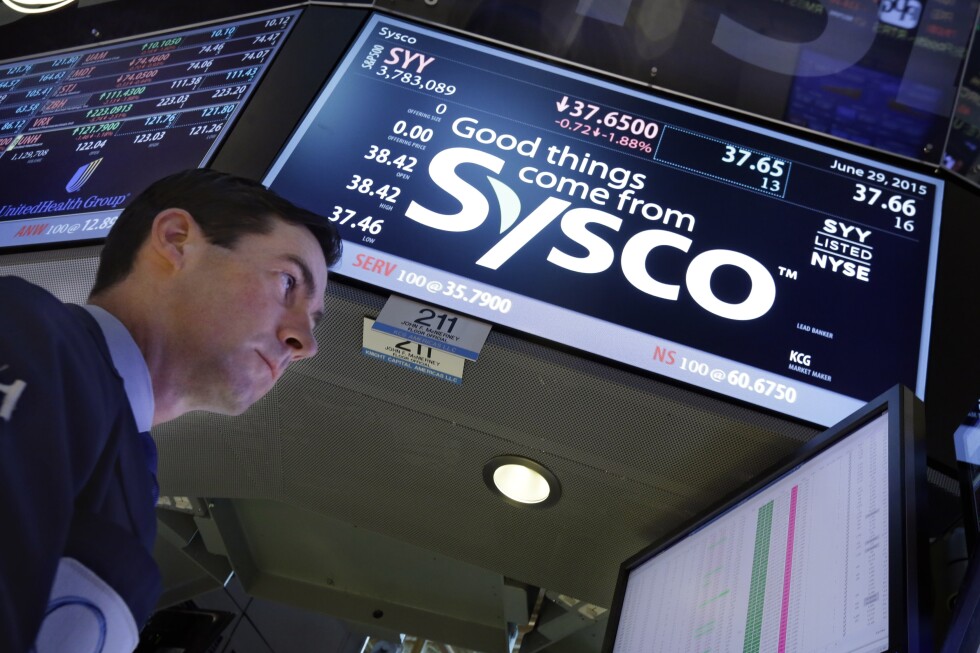
The deal represents one of the largest acquisitions in the food service industry in recent years. Wall Street’s initial reaction was cautious, with Sysco shares dropping 13% to $71.26 following the announcement on Monday. Market analysts suggest this decline reflects investor concerns about the substantial cost of the acquisition and potential integration challenges.
Restaurant Depot, founded in 1976 in Brooklyn as Jetro Restaurant Depot, has grown from a family business into the country’s largest cash-and-carry wholesaler. Its business model focuses on serving small to medium-sized independent restaurants that often operate with tighter margins and less inventory space than chain establishments.
The cash-and-carry segment has seen significant growth in recent years, particularly as independent restaurants have faced increasing economic pressures and sought more flexible purchasing options. Industry data shows this segment growing at nearly twice the rate of traditional food service distribution.
“This combination creates a more complete ecosystem for restaurant operators,” noted James Chen, restaurant industry consultant. “Particularly for small operators who may plan their major orders with Sysco but then need immediate access to products between deliveries, having both services under one roof streamlines their supply chain.”
The acquisition also comes at a time when the restaurant industry continues to evolve in response to changing consumer patterns and economic pressures. Independent restaurants, which make up a substantial portion of Restaurant Depot’s customer base, have been particularly vulnerable to inflation and labor costs in recent years.
While the boards of both companies have approved the deal, it still requires regulatory approval. Given the size of both entities and Sysco’s already dominant position in food distribution, analysts expect the acquisition will face significant scrutiny from antitrust regulators.
If approved, the combined company would control an unprecedented share of restaurant supply chains across the country, potentially creating efficiencies but also raising questions about market concentration and pricing power.
The companies have not yet announced a timeline for regulatory review or anticipated closure of the transaction.
Fact Checker
Verify the accuracy of this article using The Disinformation Commission analysis and real-time sources.

13 Comments
The food service industry has been facing a lot of disruption, so I can understand Sysco’s motivation to expand into new high-margin segments. However, I’m a bit skeptical about how well the cultures and operations of these two very different companies will blend together. Only time will tell if this proves to be a successful strategic move.
That’s a fair assessment. Sysco is taking a big risk with this $29 billion acquisition. The cultural integration and operational alignment will be critical to realizing the full potential synergies.
This is a bold move by Sysco to diversify its business and tap into the high-margin restaurant supply segment. The acquisition of Restaurant Depot provides an opportunity to strengthen Sysco’s distribution capabilities, but the cultural and operational challenges shouldn’t be underestimated. Sysco will need to be very thoughtful about how it integrates Restaurant Depot without losing the qualities that have made it successful.
This is a bold move by Sysco to diversify its business and target a higher-margin segment of the food service industry. The acquisition of Restaurant Depot provides an opportunity to strengthen Sysco’s distribution capabilities, but the cultural and operational challenges shouldn’t be underestimated.
You raise a good point. Sysco will need to be very thoughtful about how it integrates Restaurant Depot without losing the qualities that have made it successful. Maintaining the agility and customer focus of the smaller operator will be critical.
Interesting move by Sysco to expand into the high-margin restaurant supply segment. The cash-and-carry model of Restaurant Depot seems like a complementary fit that could strengthen Sysco’s distribution network. I’m curious to see how this acquisition impacts smaller food service businesses that rely on the quick turnaround of Restaurant Depot.
Yes, the strategic pivot into the immediate-needs supply chain is a smart play by Sysco. It will be important for them to maintain the responsiveness and flexibility that has made Restaurant Depot successful with smaller operators.
The food service industry is ripe for consolidation, so this acquisition isn’t too surprising. Sysco is clearly looking to expand its reach and capture a larger share of the high-margin restaurant supply market. However, the integration risks are significant, and Sysco will need to tread carefully to avoid disrupting Restaurant Depot’s successful model.
Absolutely. Sysco has to be very strategic in how it approaches this integration. Preserving the agility and customer-centric focus of Restaurant Depot will be just as important as realizing the operational synergies. Missteps could open the door for competitors to capitalize on any disruption.
This acquisition represents a significant consolidation in the food service distribution industry. Sysco is clearly seeking to diversify its business model and capture a larger share of the high-margin restaurant segment. It will be interesting to see if they can successfully integrate the two very different operating models.
You make a good point. Integrating the planned delivery model of Sysco with the cash-and-carry approach of Restaurant Depot will be a key challenge. Sysco will need to balance efficiency gains with maintaining the agility that Restaurant Depot customers have come to expect.
As the largest food distributor in the US, Sysco is clearly trying to cement its dominant market position through this acquisition. Expanding into the cash-and-carry restaurant supply segment is a smart play, but they’ll need to be careful not to disrupt the agile model that has made Restaurant Depot successful.
Agreed. Sysco will need to strike the right balance between leveraging scale and maintaining the responsiveness that Restaurant Depot’s customers expect. Missteps in this integration could open the door for more nimble competitors.