


Listen to the article
Middle East Conflict Exacerbates Medical Crisis in War-Torn Sudan
Finding essential medicines has become increasingly difficult for residents of Sudan, as the ongoing conflict with Iran in the Middle East compounds existing shortages caused by Sudan’s three-year civil war.
In the village of Qoz Nafisa outside Sudan’s capital, 61-year-old Abbas Awad struggles to maintain his glaucoma treatment. “I’ve been spacing out my medicine, worried I won’t be able to find more or afford it when I do,” Awad explained. “Money was already an issue because of the war at home. Now we have the problem of the war in the Middle East. It’s just made things worse.”
The Iran conflict has severely disrupted global shipping routes, particularly affecting the critical Strait of Hormuz and transportation hubs like Dubai. These disruptions have created significant obstacles for aid organizations attempting to deliver essential supplies to crisis regions worldwide.
According to the United Nations, shipping costs have increased by up to 20% due to higher fuel prices and insurance rates. These added expenses, combined with delivery delays as goods are rerouted around conflict zones, have strained humanitarian supply chains to their breaking point.
For organizations like the International Rescue Committee (IRC), which supports the clinic where Awad receives treatment, the impact has been immediate. Approximately $130,000 worth of pharmaceuticals destined for Sudan were stranded in Dubai for weeks, only recently beginning their journey to the region.
“Medicines and supplies such as antibiotics, painkillers, and stethoscopes that were supposed to be flown from the United Arab Emirates to Port Sudan had to be transported by road to neighboring Oman before being flown out,” an IRC representative explained.
Despite U.S. President Donald Trump’s recent extension of a fragile ceasefire with Iran, humanitarian organizations remain concerned about ongoing disruptions.
“There’s still a real lag in the system. Shipments remain blocked or delayed, and that’s deeply worrying,” said Madiha Raza, associate director for global public affairs and communications for IRC. Raza emphasized that Sudan is experiencing what many experts describe as the world’s worst humanitarian crisis, where any delay in delivering food, medicine, and fuel has devastating consequences.
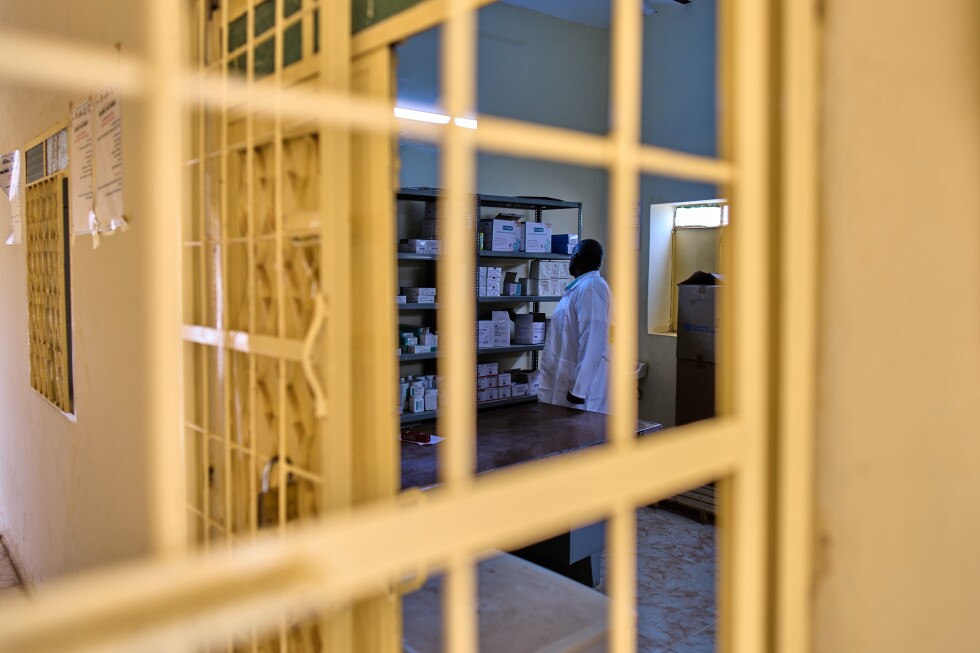
The public health clinic in Qoz Nafisa, supported by the IRC, serves approximately 5,000 people. Since the Iran conflict began in late February, clinic staff report significant difficulties meeting patient needs. When supplies run short, residents must search for medications at other facilities and pay out of pocket—a financial burden many cannot afford.
Dr. Amira Sidig, the center’s medical director, confirmed that the last shipment from IRC arrived in December. Shipments expected in February and April have not materialized.
“Sudan’s health ministry tries to fill the gap, but it only accounts for half of what’s needed,” Sidig explained. “It’s never enough because they also have a shortage, and we’re again out of stock quickly.”
The situation reached a critical point earlier this month when the clinic ran out of malaria treatment for several days, despite approximately half of all patients seeking care for the disease.
Ahmed Ibrahim, a clinic worker, described growing frustration among patients. “When people come to the window, they say, ‘Why are you here and there is no medicine?'” he recounted.
The compounding crises—Sudan’s internal conflict and the broader Middle East tensions—have created a perfect storm for vulnerable populations already living on the edge. Without reliable access to medications, chronic conditions like Awad’s glaucoma go untreated, and treatable illnesses like malaria become potentially deadly.
As global attention remains focused on major geopolitical conflicts, the secondary impacts on already fragile healthcare systems highlight how interconnected today’s humanitarian crises have become. For residents of places like Qoz Nafisa, these distant conflicts translate directly into empty pharmacy shelves and deteriorating health outcomes.
Aid organizations continue to advocate for humanitarian corridors and exemptions to ensure medical supplies can reach those most in need, regardless of ongoing military tensions.
Fact Checker
Verify the accuracy of this article using The Disinformation Commission analysis and real-time sources.

8 Comments
The impact of the Middle East conflict on global shipping is alarming. It’s tragic that Sudanese citizens like Abbas Awad are struggling to maintain essential treatments due to these disruptions. I hope a resolution can be found to restore reliable aid deliveries.
You’re right, the ripple effects of geopolitical conflicts can be devastating for vulnerable populations. Innovative logistics solutions may be needed to circumvent the supply chain issues.
This is a concerning situation. The confluence of ongoing conflicts is exacerbating an already dire medical crisis in Sudan. I hope aid organizations can find ways to overcome the supply chain disruptions and ensure essential medicines reach those in need.
Absolutely. The Sudanese people are facing immense hardship, and ensuring access to critical medicines should be an urgent priority.
It’s heartbreaking to hear stories like Abbas Awad’s, who is forced to ration his glaucoma medication due to the cascading effects of these conflicts. The Sudanese people deserve access to essential healthcare, and I hope aid organizations can find ways to deliver supplies more reliably.
Agreed. The human toll of these disruptions is devastating. Innovative logistical solutions and increased international cooperation will be crucial to providing the necessary medical support.
This is a complex and deeply troubling situation. The Sudanese people are caught in the crosshairs of geopolitical conflicts, with the medical crisis only worsening. I hope a coordinated, humanitarian-focused response can be mobilized to ensure essential medicines reach those in desperate need.
This is a distressing situation. The compounding crises in Sudan and the Middle East have created a perfect storm, severely hampering the ability to provide basic medical care. I hope the international community can coordinate a robust response to address this urgent humanitarian need.