


Listen to the article
Democrats Challenge Trump Administration’s Changes to Student Loan Forgiveness Program
Congressional Democrats have launched an effort to overturn recent Trump administration changes to the Public Service Loan Forgiveness program, arguing the modifications could unfairly strip loan relief from qualified public service workers.
The program, which cancels student loan debt for public service workers after ten years of payments, has traditionally been available to employees of government agencies, public schools, fire and police departments, public hospitals, and nonprofit organizations. However, last fall, the Trump administration introduced a new rule giving Education Secretary Linda McMahon the authority to disqualify employers if she determines their work has a “substantial illegal purpose.”
Set to take effect in July, the rule’s vague language has sparked concerns that it could specifically target organizations supporting undocumented immigrants or transgender youth. Critics worry this could affect borrowers working at schools, public hospitals, and legal aid groups that serve these populations.
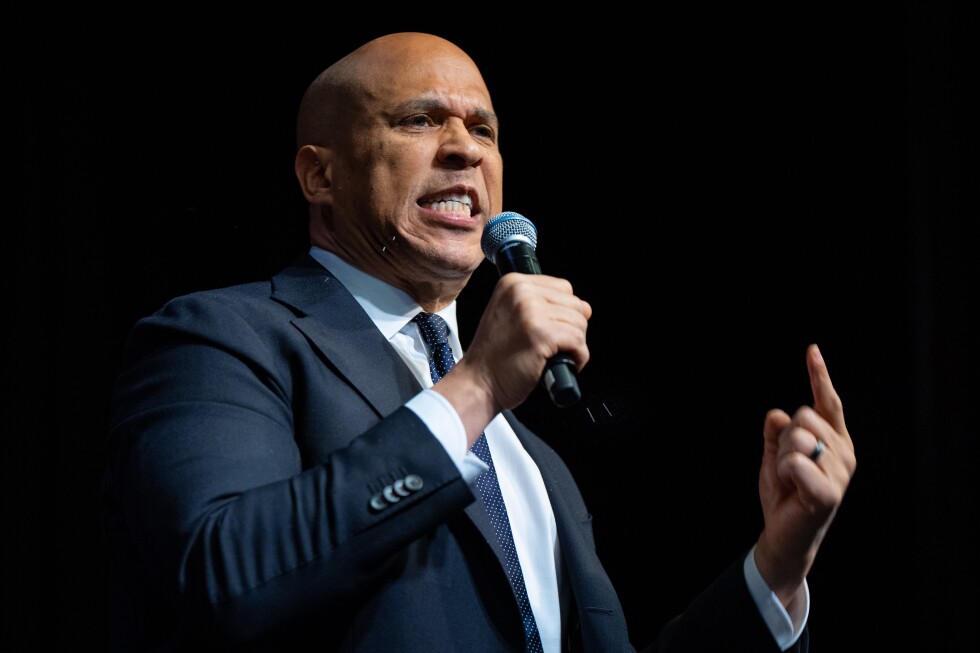
On Tuesday, Democratic Senators Tim Kaine of Virginia, Kirsten Gillibrand of New York, and Cory Booker of New Jersey introduced a resolution seeking to block the rule. In the House, Representatives Joe Courtney of Connecticut, Alma Adams of North Carolina, and Scott Peters of California brought forward a similar measure. The lawmakers characterized the rule as “a clear attempt to intimidate and punish certain organizations.”
Nicholas Kent, the Education Department’s higher education chief, strongly defended the rule while criticizing the Democratic opposition. “This is a commonsense reform that will stop taxpayer dollars from subsidizing organizations involved in terrorism, child trafficking and child mutilation procedures that are doing irreversible harm to children,” Kent stated. He insisted the rule would be enforced neutrally, “without consideration of the employer’s mission, ideology or the population they serve.”
Political analysts note that while the Democratic measures may receive a vote, they face significant hurdles to passage in the current congressional environment.
The controversy highlights the growing politicization of student loan forgiveness programs under different administrations. The Public Service Loan Forgiveness program, established in 2007, was designed to encourage graduates to pursue careers in public service by offering debt relief after meeting specific service and payment requirements.
Student loan advocacy groups have expressed alarm about the rule change. Some experts point out that introducing subjective criteria like “substantial illegal purpose” could create uncertainty for borrowers who have already spent years working toward loan forgiveness, potentially undermining the program’s reliability and effectiveness.
The debate occurs against the backdrop of broader student loan policy battles. The Biden administration has made several attempts to provide student debt relief, though many initiatives have faced legal challenges. Meanwhile, total student loan debt in the United States has surpassed $1.7 trillion, affecting over 40 million Americans.
For public service workers currently participating in the loan forgiveness program, the outcome of this congressional challenge could have significant financial implications. Many have made career decisions based on the promise of eventual loan forgiveness, and changes to eligibility requirements midstream could disrupt their long-term financial planning.
Education policy experts note that frequent changes to student loan programs create confusion among borrowers and potentially undermine trust in government financial aid initiatives. Some argue that regardless of political perspective, stability and clarity in these programs should be prioritized to allow borrowers to make informed decisions about their education and careers.
As the July implementation date approaches, affected borrowers and institutions are closely monitoring the legislative challenge, though political observers suggest the Democratic effort faces long odds in the current congressional environment.
Fact Checker
Verify the accuracy of this article using The Disinformation Commission analysis and real-time sources.

8 Comments
This seems like a concerning move by the Trump administration. Overly broad language around “substantial illegal purpose” could unfairly disqualify many public service workers from loan forgiveness. I hope Democrats can get this overturned to protect those who have dedicated their careers to serving the public good.
Agreed, the vague wording is problematic and could be abused to target certain organizations. Loan forgiveness is an important program that should be protected, not undermined.
This sounds like an overly broad and potentially discriminatory policy change. While I understand the administration’s desire for oversight, the vague language around “substantial illegal purpose” is worrying. I hope common sense and fairness prevail in the end.
Agreed, the language seems ripe for abuse. Loan forgiveness is an important tool to attract and retain public servants, so changes that could undermine it are problematic.
Student loan debt is a major barrier for many Americans, especially those in public service roles. Any efforts to limit access to forgiveness programs should be met with strong pushback. I’ll be following this story closely to see if the Democrats can get these new rules overturned.
Student loan debt is a major burden for many Americans. Any attempts to limit access to loan forgiveness programs, especially for public servants, is troubling. I’m curious to see how this plays out and whether the Democrats can successfully overturn the new rules.
Yes, this is an issue that deserves close attention. Loan forgiveness can make a big difference for public sector workers struggling with student debt, so it’s important these programs remain accessible.
It’s good to see Democrats pushing back on these changes. Anything that could jeopardize loan forgiveness for public servants is concerning. I hope they can find a way to protect this vital program.