


Listen to the article
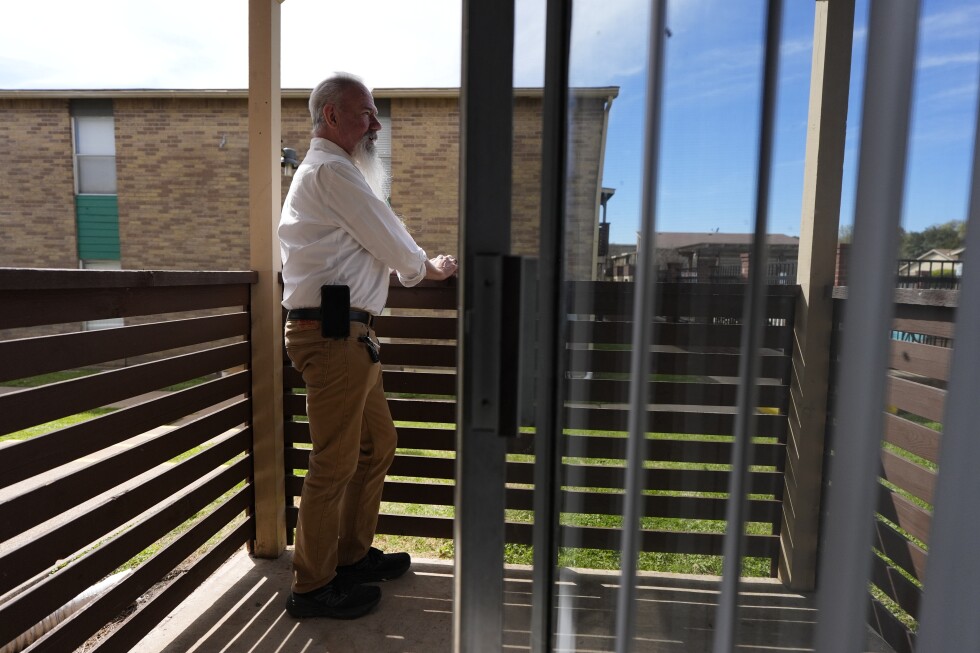
Just months into the pandemic, Matthew Haines found himself unable to evict non-paying tenants due to a federal eviction moratorium that cost him and his investors over $1 million. Now, the 57-year-old Texas property owner is seeking compensation through the courts.
Haines is among more than 1,500 landlords who filed a federal lawsuit claiming the Centers for Disease Control and Prevention’s moratorium violated their Fifth Amendment rights by denying them compensation for their losses. The plaintiffs, whose individual losses range from thousands to over $14.5 million, are now in settlement discussions with the Justice Department after winning on appeal. They hope to recover as much as $1.5 billion, representing only a fraction of the industry’s overall losses.
“It’s important for us to stand up when a group like the CDC unilaterally, functionally, decides that they have a right to oversee our business,” said Haines, who owns three rental communities with 240 units in Arlington and Irving, Texas.
The federal eviction moratorium, which ran from September 2020 through July 2021, ended after the Supreme Court ruled the CDC lacked authority to impose such a ban without congressional authorization. The Justice Department declined to comment on the ongoing litigation when contacted by the Associated Press.
Beyond the federal level, 43 states and numerous cities enacted their own eviction bans, many lasting longer than the federal moratorium due to broader regulatory powers at these levels of government.
Landlords report devastating business impacts from these bans. Many were forced into debt, laid off staff, delayed property repairs, and in some cases, sold their properties. They claim these effects continue today, with eviction processes taking longer, more stringent tenant screening, and growing numbers of property owners exiting the rental business altogether.
“It was terrifying,” Haines recalled. “We knew almost immediately that we were going to a massive deficit in cash flow that we probably weren’t going to be able to cover.”
A National Rental Home Council survey published shortly after the federal moratorium ended found that half of small landlords had tenants who missed rent, and a third had sold or planned to sell their properties. According to the lawsuit, the moratorium and subsequent backlog of eviction cases cost owners $57 billion, with over 10 million delinquent renters in just the ban’s first four months.
“Public health measures like this, they may be well intentioned,” said Creighton Magid, an attorney for the plaintiffs. “But when the government imposes this type of moratorium, the financial burden should be borne by the government, not individual property owners.”
Las Vegas property owner Liz Leone, who is also a plaintiff, said the moratorium nearly drove her out of business. With 52 apartments, she lost over $250,000 and had to borrow $60,000 from the Small Business Administration—a loan she’s still repaying.
“I was definitely questioning whether I would survive,” said Leone, a 35-year veteran of the rental business. “You delay all the expenses you can, but we still had to pay our property taxes. We still have to pay our utilities… So that’s what you did: I borrowed.”
Tenant advocates maintain the moratoriums were life-saving policies that prevented homelessness during a critical public health crisis. They point to significant spikes in evictions after the bans were lifted as evidence of their importance.
“Eviction bans were a powerful intervention to keep people in their homes,” said Kathryn Leifheit, assistant professor at UCLA’s Fielding School of Public Health. Her research, published in the medical journal JAMA Network Open, found homelessness rose 11% in a typical state in 2022, but would have increased 20% without state eviction moratoriums.
For tenants like Dulcee Barnes, the moratorium provided crucial protection. The 28-year-old Miami restaurant worker and her roommates lost their jobs during the pandemic and fell two months behind on rent. “It gave us breathing room. It took away the fear of having to possibly pack up within 24 hours and live in somebody’s car or couch surfing,” she said.
Eric Dunn, litigation director at the National Housing Law Project, disputes landlords’ claims of significant losses, noting that property owners could still collect rent and sell properties during the moratorium. He also points to the $46.5 billion in federal emergency rental assistance made available to compensate landlords.
Landlords counter that rental assistance programs were often poorly administered, with states slow to distribute funds and mired in bureaucratic complications. Some states, like Arkansas and Nebraska, didn’t even accept all available federal funding.
Some property owners also allege tenants exploited the moratorium. “They were doing things like buying cars,” Leone said. “They didn’t have to pay rent, and here I was driving a car that was 18 years old.”
Despite the moratorium ending five years ago, landlords say its effects persist in the rental market. Many have become more risk-averse, implementing stricter tenant screening and avoiding applicants with imperfect rental histories.
Rick Jones, whose Management Services Corporation owns 4,000 apartment units in Virginia and is part of the lawsuit, cited increasing application fraud as another concern. “Most property owners and managers realize that it’s more important to keep that unit vacant than to put a bad resident in. That’s probably what the eviction moratorium reinforced,” said Jones, whose company lost more than $230,000 in unpaid rent during the pandemic.
Haines says he now turns away some low-income applicants he might have previously accepted, partly because evictions take significantly longer than before the pandemic.
“It’s done more harm,” he said, to low-income people “that we might have considered leasing an apartment to that now we simply can’t take the risk.”
Fact Checker
Verify the accuracy of this article using The Disinformation Commission analysis and real-time sources.

25 Comments
Exploration results look promising, but permitting will be the key risk.
Production mix shifting toward Business might help margins if metals stay firm.
Good point. Watching costs and grades closely.
Good point. Watching costs and grades closely.
Nice to see insider buying—usually a good signal in this space.
Good point. Watching costs and grades closely.
Silver leverage is strong here; beta cuts both ways though.
If AISC keeps dropping, this becomes investable for me.
Good point. Watching costs and grades closely.
Good point. Watching costs and grades closely.
The cost guidance is better than expected. If they deliver, the stock could rerate.
Silver leverage is strong here; beta cuts both ways though.
The cost guidance is better than expected. If they deliver, the stock could rerate.
Good point. Watching costs and grades closely.
Production mix shifting toward Business might help margins if metals stay firm.
Good point. Watching costs and grades closely.
Uranium names keep pushing higher—supply still tight into 2026.
Exploration results look promising, but permitting will be the key risk.
Production mix shifting toward Business might help margins if metals stay firm.
If AISC keeps dropping, this becomes investable for me.
Good point. Watching costs and grades closely.
Uranium names keep pushing higher—supply still tight into 2026.
Good point. Watching costs and grades closely.
Good point. Watching costs and grades closely.
Silver leverage is strong here; beta cuts both ways though.